Author: SneakBug8

  • Русский Париж: Секретные места, которые поймут только наши

    Русский Париж: Секретные места, которые поймут только наши

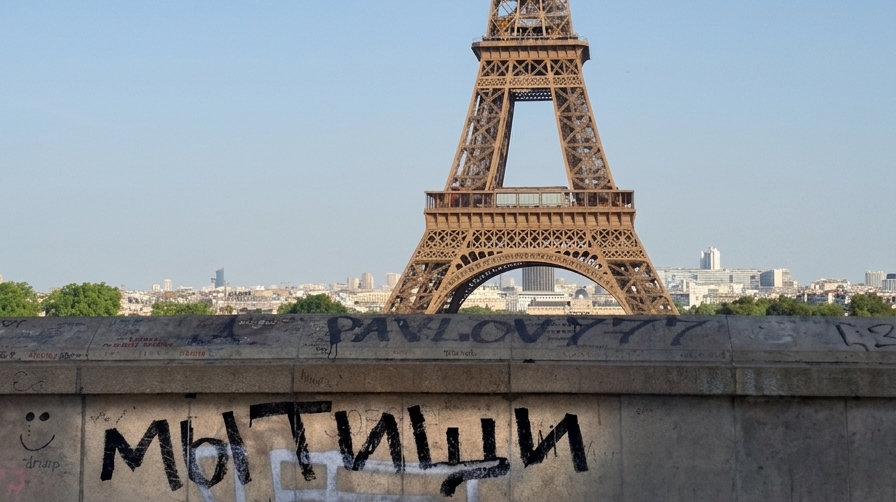
    Париж – город, который не нуждается в представлении. La tour Eiffel, Le Louvre и Les Champs-Élysées известны каждому школьнику. Однако, за этой глянцевой обложкой скрывается совершенно иной город – город, выстроенный русскими эмигрантами, аристократами, художниками и поэтами, бежавшими от революции и искавшими спасения на берегах Сены.

    Мы привыкли считать Париж столицей моды и искусства, но для нас это ещё и город-архив. Здесь на каждом шагу можно найти историческое наследие «той самой» России и следы сложного диалога России и Франции.

    Мост Александра III и тайны метро
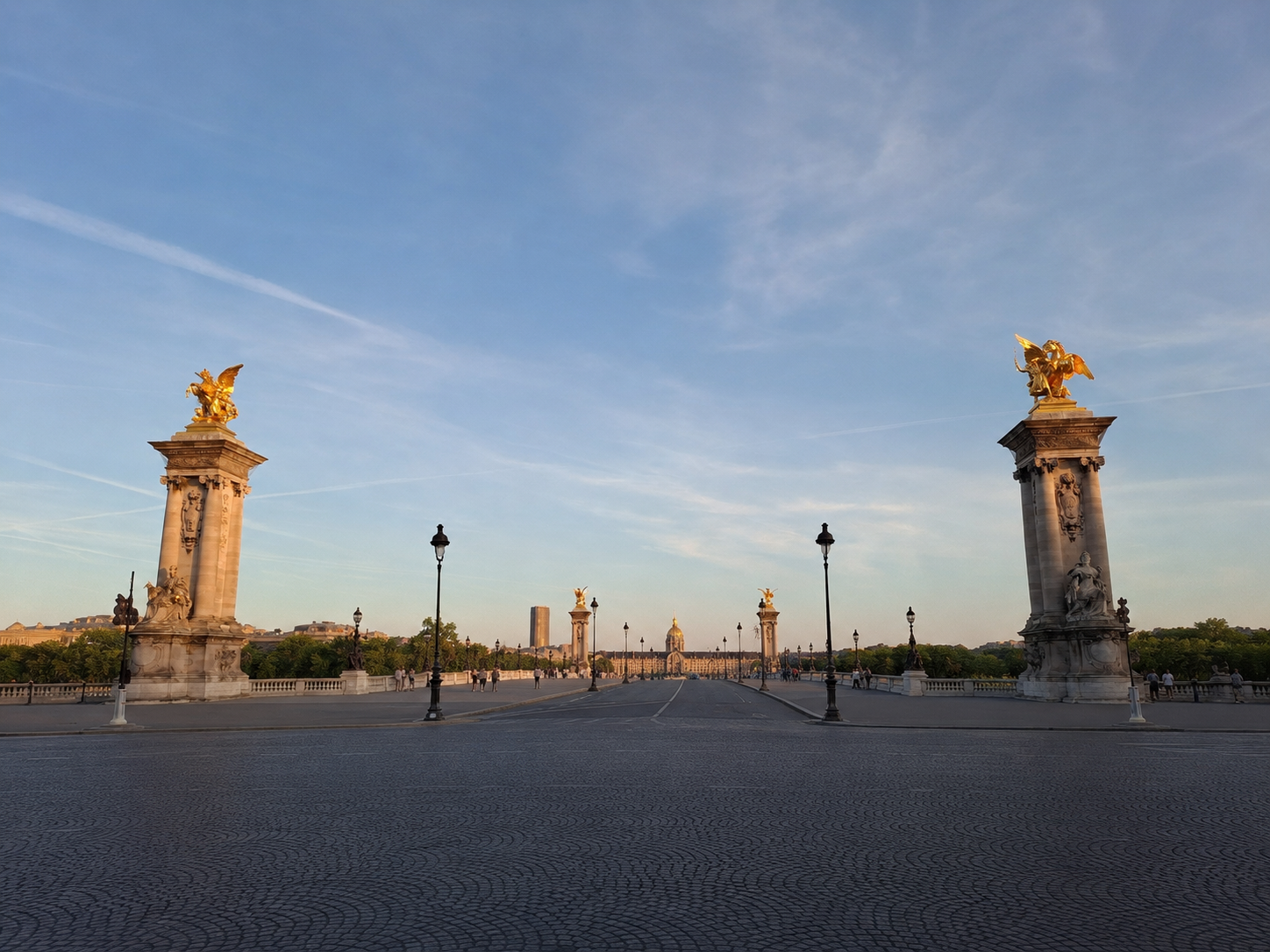
    Пожалуй, самый красивый мост Парижа – Le pont Alexandre-III (Мост Александра III) – назван в честь русского императора. Его строили в 1900 году как символ франко-русского союза. Это массивное, тяжеловесное сооружение с золотыми скульптурами. Французы часто называют мост китчем, но для нас это – открытое признание совместной истории.

    А вот для более продвинутых знатоков есть «подземный» Париж. Вы когда-нибудь обращали внимание на названия станций метро? Stalingrad, Sébastopol, Crimée – это не просто слова. Это отголоски Крымской войны и Второй мировой. Станция «Крым» напрямую отсылает к битве, где французы когда-то воевали с русскими, а сегодня мы просто выходим из вагона и идём пить кофе. Это и есть та самая «тайная история», которую местные жители уже не замечают.

    Духовные маяки

    Любой турист, оказавшись в Париже, неизбежно натыкается на золотые купола на набережной Бранли. Это Cathédrale de la Sainte-Trinité de Paris (Кафедральный собор Святой Троицы) – символ новой России, открытый в 2016 году. Строили его на российские деньги, золото куполов приглушили палладием, чтобы не конфликтовать с позолотой моста Le pont Alexandre-III (Александра III). Внутри – белые стены, как в древнем Новгороде, и удивительное чувство простора.
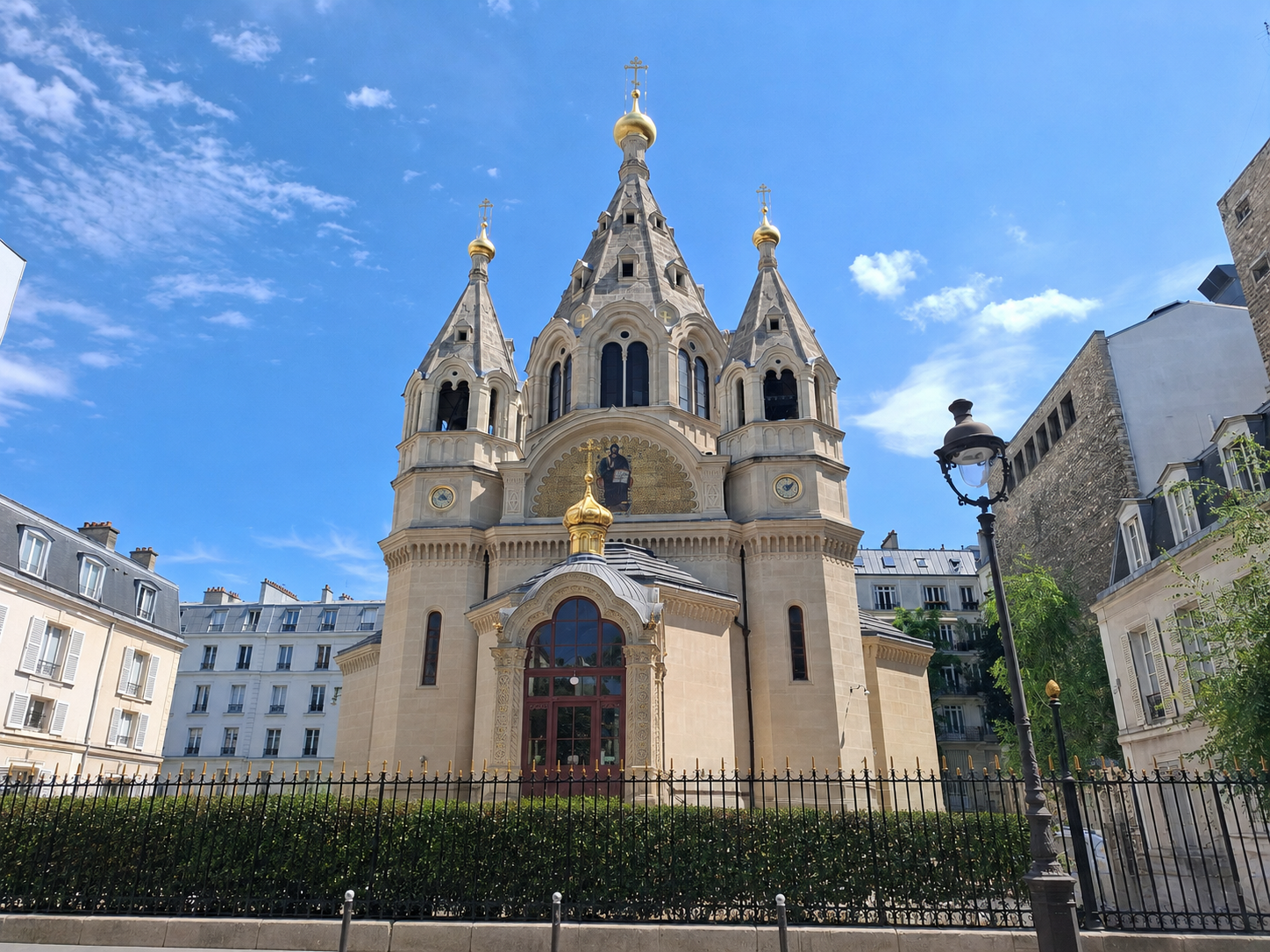
    Однако если вам нужна настоящая, «старая» Россия, отправляйтесь в 8-й округ. La cathédrale Saint-Alexandre-Nevsky (Собор Святого Александра Невского) – тот самый храм, где в 1918 году венчались Пикассо и Ольга Хохлова. Он был построен ещё в 1861 году, и его золотые купола в форме свечей – классика русского зодчества. В храме сохранился дух XIX века и фрески, написанные Бронниковым. Русский язык, православная традиция и тишина в центре шумного города – это неожиданный оазис спокойствия.

    Прогулка по следам аристократии
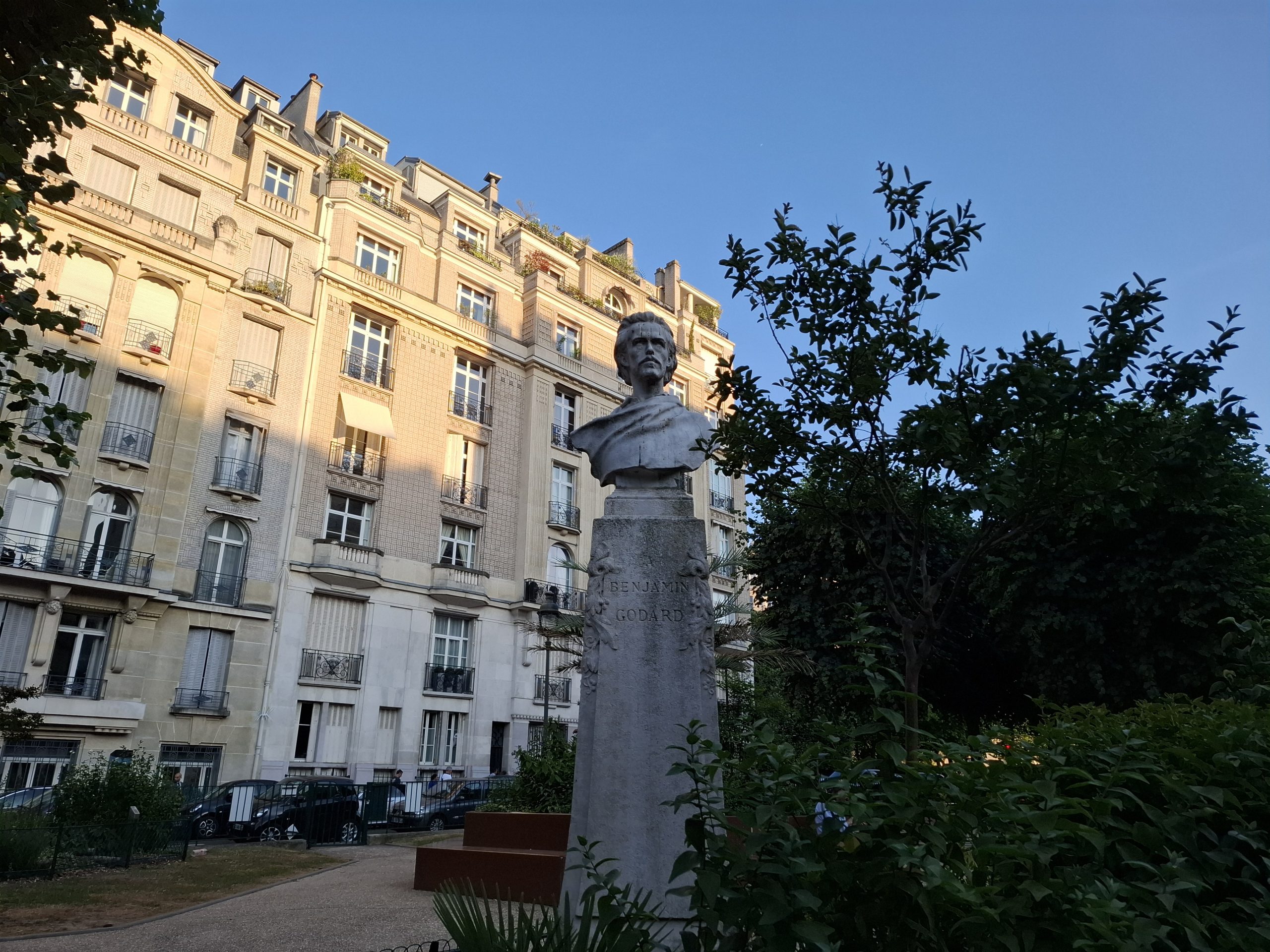
    Больше всего «наших» тайн хранит 16-й округ. Это элитный, дорогой и тихий район между площадью Трокадеро и Булонским лесом. Именно здесь, на улочках вроде rue de la Tour или rue Jean Bologne, селились русские аристократы, потерявшие состояние, но сохранившие привычку к хорошим домам.

    Здесь, на скромной улочке Пьер-Герен, скрывается последний дом князя Феликса Юсупова. Забудьте о роскоши дворцов на Мойке – в Париже Юсуповы жили в бывшей конюшне, переоборудованной под жильё. Дом сохранился, но закрыт для туристов, так как до сих пор жилой. После дворцов Юсуповых в Петербурге, Москве и Крыму, эта табличка – ещё одна возможность прикоснуться к трагедии рода, потерявшего всё, кроме титула, свидетельству ушедшей эпохи дворянства.

    Неподалёку, на rue Jacques Offenbach, находится последняя квартира Ивана Бунина. Именно в Париже он писал свои дневники, получил Нобелевскую премию и вспоминал Россию, в которую ему уже не суждено было вернуться. Сейчас это обычный жилой дом. Великий писатель жил на этой спокойной улочке, в окружении таких же изгнанников.

    🎹 Conservatoire Rachmaninoff: Школа для изгнанников
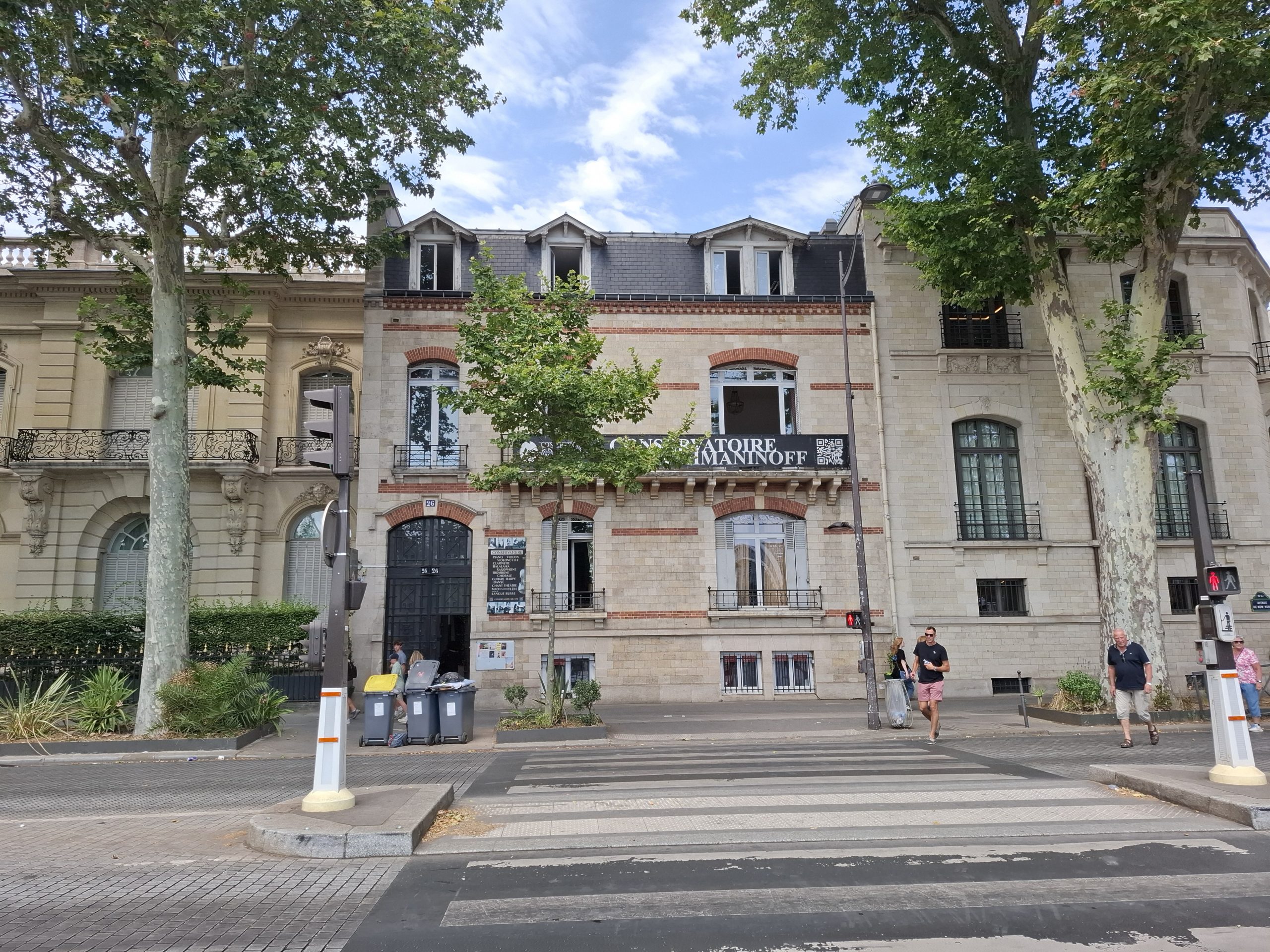
    Если вы, прогуливаясь по набережной Сены напротив Эйфелевой башни, заметите особняк с вывеской Conservatoire Rachmaninoff — знайте: вы стоите у стен храма, где сохранили русскую музыкальную культуру в годы, когда в самой России её пытались переписать заново.

    Консерватория была основана в 1923 году выдающимися эмигрантами — Фёдором Шаляпиным, Александром Глазуновым, Александром Гречаниновым. Первым почётным президентом стал сам Сергей Рахманинов, чьё имя консерватория официально носит с 1953 года.

    Здесь же можно пообедать борщом в La Cantine Russe – ресторане, который некогда открылся как столовая при консерватории.

    Сегодня здесь учат играть на балалайке, на классических инструментах, преподают театральное искусство по системе Станиславского. В стенах этого бывшего эмигрантского особняка до сих пор говорят по-русски. Консерватория Рахманинова – яркий пример того, как диаспора сохраняет, реконструирует и преумножает духовное наследие в условиях изгнания.

    📚 YMCA-Press: Издательство, которое печатало «Архипелаг»

    Мало кто из туристов знает, что в Латинском квартале, в тени Пантеона, расположен офис и магазин издательства YMCA-Press (по-русски его часто называют «ИМКА-Пресс»).

    А между тем, именно здесь печаталась запрещённая литература, которую невозможно было издать в СССР. Основанное в 1921 году в Праге, а с 1925 года обосновавшееся в Париже, это издательство стало главным голосом русской эмиграции. Его первым послевоенным директором был философ Николай Бердяев.

    Именно «YMCA-Press» впервые опубликовало «Архипелаг ГУЛАГ» Солженицына – тиражом 50 000 экземпляров, что по тем временам стало сенсацией. Здесь же издавались Бердяев, Бунин, Шмелёв и другие.

    Сейчас при издательстве работает книжный магазин. Если хотите привезти из Парижа книгу с историей – вам сюда.

    ⛲ Фонтан Стравинского: Музыка в воде
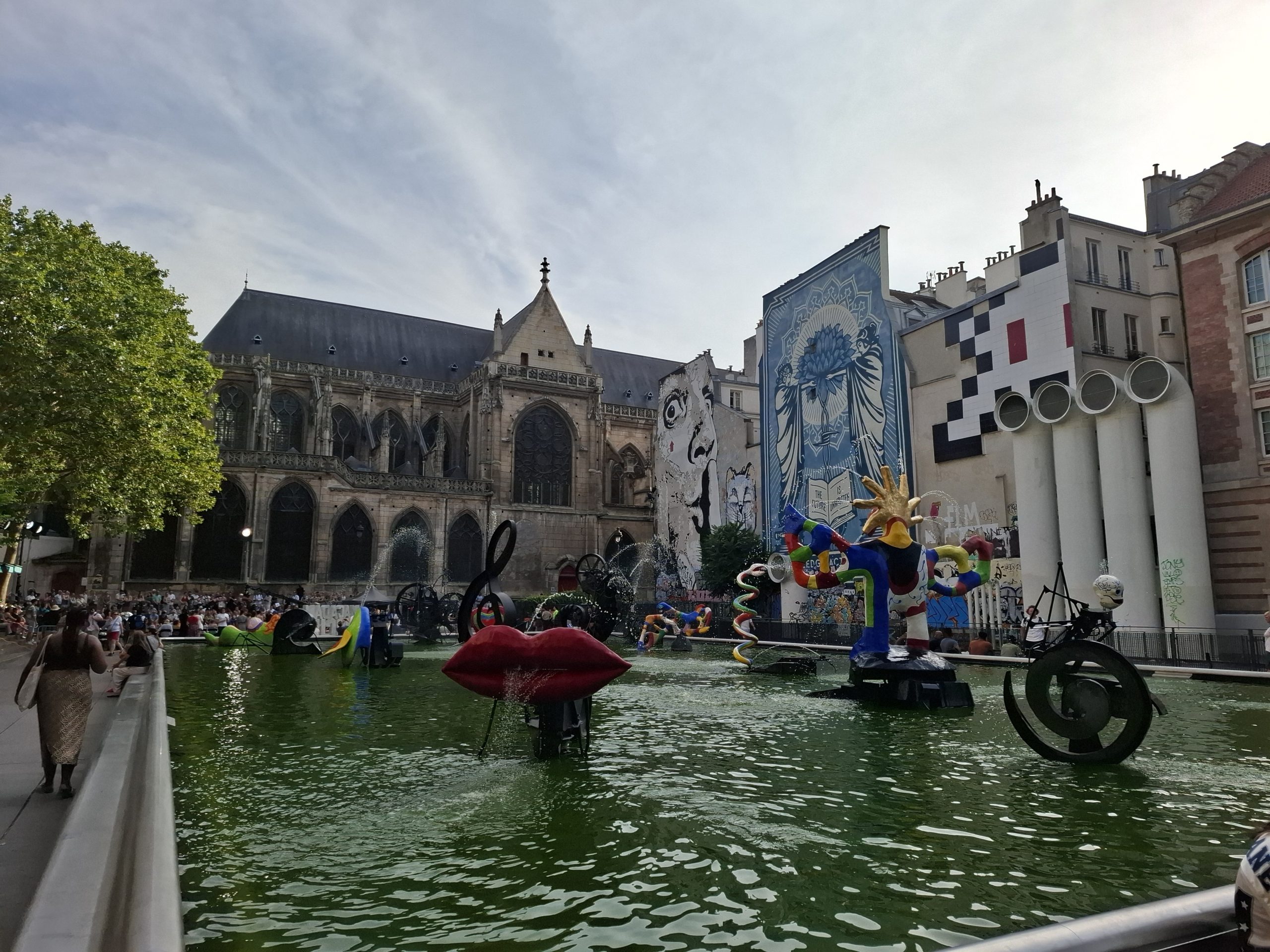
    Современный, яркий, немного безумный – Fontaine Stravinsky был создан в 1982-1983 годах швейцарским скульптором Жаном Тенгели и его супругой Ники де Сен-Фалль.

    Фонтан посвящён Игорю Стравинскому – композитору, который значительную часть жизни провёл во Франции и был награждён французским орденом Почётного Легиона. 16 чёрных механических скульптур (работа Тенгели) и множество ярких, раскрашенных фигур (работа де Сен-Фалль) изображают мотивы из его знаменитых произведений – «Жар-птицу», «Петрушку», «Весну священную».

    Фонтан – это дань уважения русскому композитору, который стал одним из символов европейской музыки XX века.

    ✈️ Мемориал «Нормандия-Неман» в Ле-Бурже

    В пригороде Парижа, в Ле-Бурже, в музее Авиации и космоса (Musée de l’Air et de l’Espace) находится памятник лётчикам легендарного авиаполка «Нормандия-Неман».

    Mémorial Normandie-Niemen – это фигуры французского лётчика и русского авиамеханика, которые вглядываются в небо. Он был открыт в 2006 году в память о том, что с 1943 по 1945 годы французские пилоты плечом к плечу с советскими лётчиками уничтожили почти 300 немецких самолётов и форсировали реку Неман. Это памятник военной доблести и дружбе, скреплённой кровью.
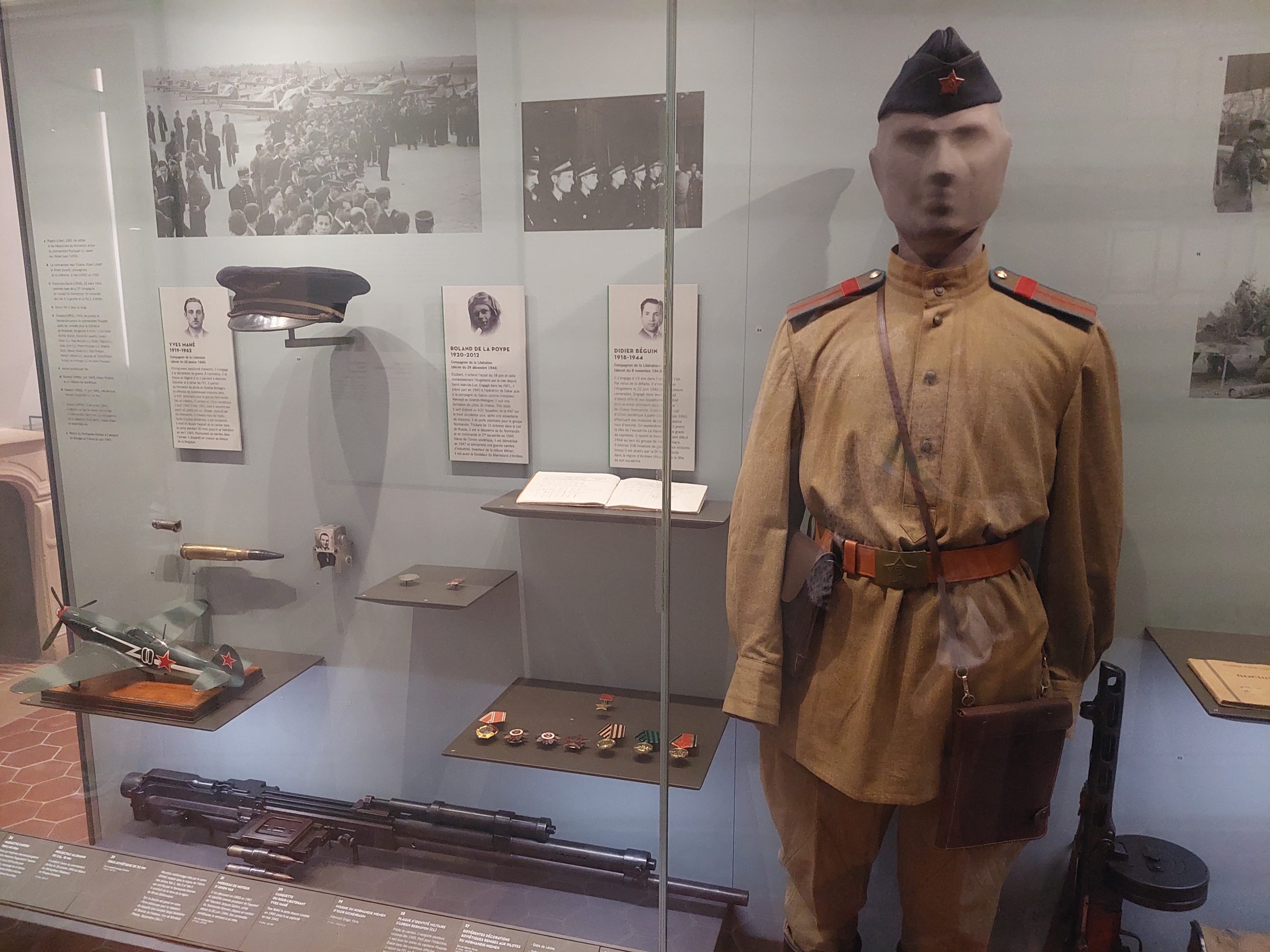
    Советские документы и личные вещи пилотов авиаполка Нормандия-Неман можно также найти в музее Ордена Освобождения (Musée de l’Ordre de la Libération) в доме Инвалидов (Hôtel des Invalides).

    🪦 Monument du corps expéditionnaire russe (Памятник Русскому экспедиционному корпусу)
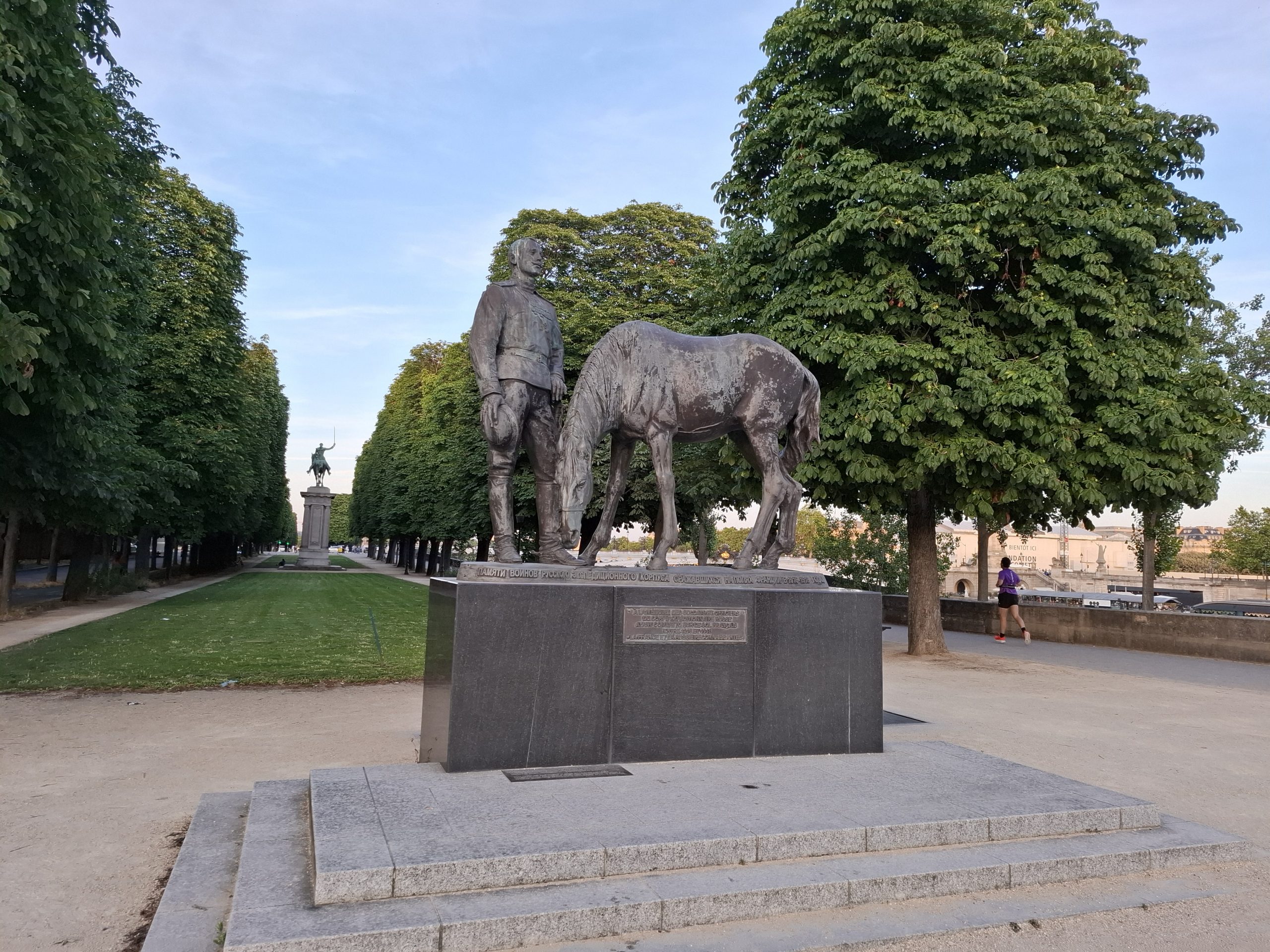
    Этот монумент — один из самых недавних в нашем списке (открыт в 2011 году), но по своему смыслу он уходит корнями в самую кровавую эпоху XX века. Он посвящён Русскому экспедиционному корпусу — бригадам, которые в 1916–1918 годах воевали на французском фронте Первой мировой войны. Памятник расположен в самом центре Парижа – на аллее вдоль Сены около Большого дворца (Le Grand Palais). Вокруг Малого и Больших дворцов находятся статуи Шарля Де Голля, Уинстона Черчилля, президента Франции Жоржа Клемансо, латиноамериканского революционера Симона Боливара, маркиза Лафайетта и Альберта Первого, короля Бельгии. Здесь ежедневно проходят тысячи парижан, и каждый из них видит напоминание о том, что в час смертельной опасности Россия и Франция были союзниками.

    Для Франции этот монумент — признание того, что в защите их земли участвовали не только французы. Он расширяет пантеон национальных героев, включая в него иностранных солдат, которые проливали кровь за ту же идею. Для России — это ещё один камень в фундаменте общей исторической памяти, подтверждение того, что наши солдаты сражались за будущее Европы задолго до Второй мировой.

    ⚰️ Кладбище Père Lachaise: Русский след
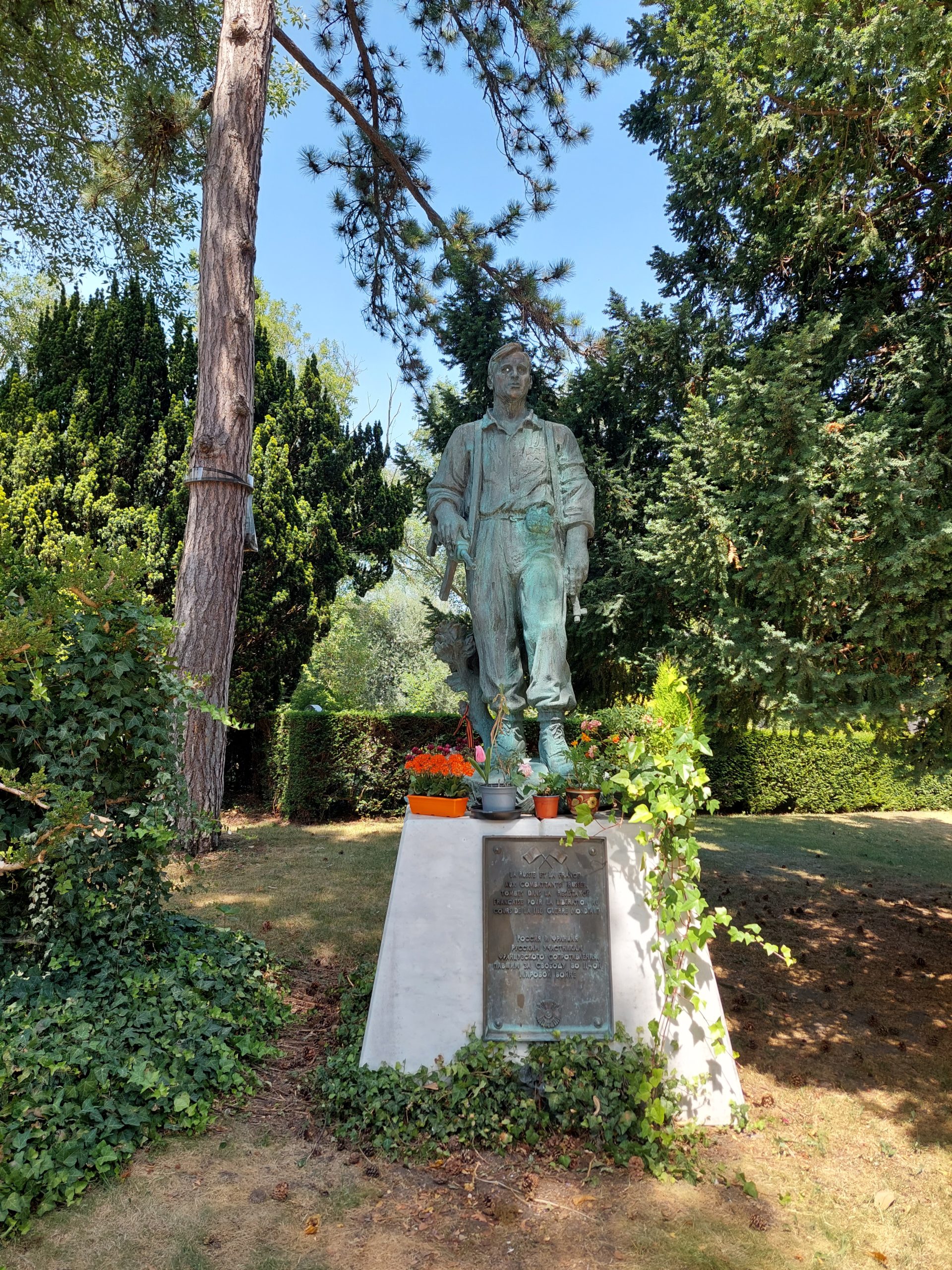
    Все знают Cimetière du Père-Lachaise (кладбище Пер-Лашез) как место упокоения Мольера, писателя Оноре де Бальзака, художника Ежена Делакруа, писателя Оскара Уайльда, военного Иоахима Мюрата, писателя Марселя Пруста, композитора Фредерика Шопена, и, конечно, певицы Эдит Пиаф. Но мало кто замечает, что здесь же разбросаны десятки русских могил – целый пласт истории, который легко пропустить.

    На кладбище Пер-Лашез покоятся: анархист Нестор Махно, танцовщица Айседора Дункан, супруга Сергея Есенина, княгиня Трубецкая, княгиня Елизавета Демидова, княгиня Зинаида Долгорукова, декабрист Николай Тургенев, основоположник финансовой науки в России, Юлия Самойлова, муза Карла Брюллова, оперная певица Фелия Литвин, советский художник Виталий Стацинский.

    Это не просто захоронения – это портрет русской эмиграции: от декабристов, не вернувшихся из ссылки, до тех, кто бежал от революции. Если знаете, где искать, ваш визит в Cimetière du Père-Lachaise станет чем-то большим чем прогулкой по общеизвестному кладбище.

    Русское Кладбище Sainte-Geneviève-des-Bois
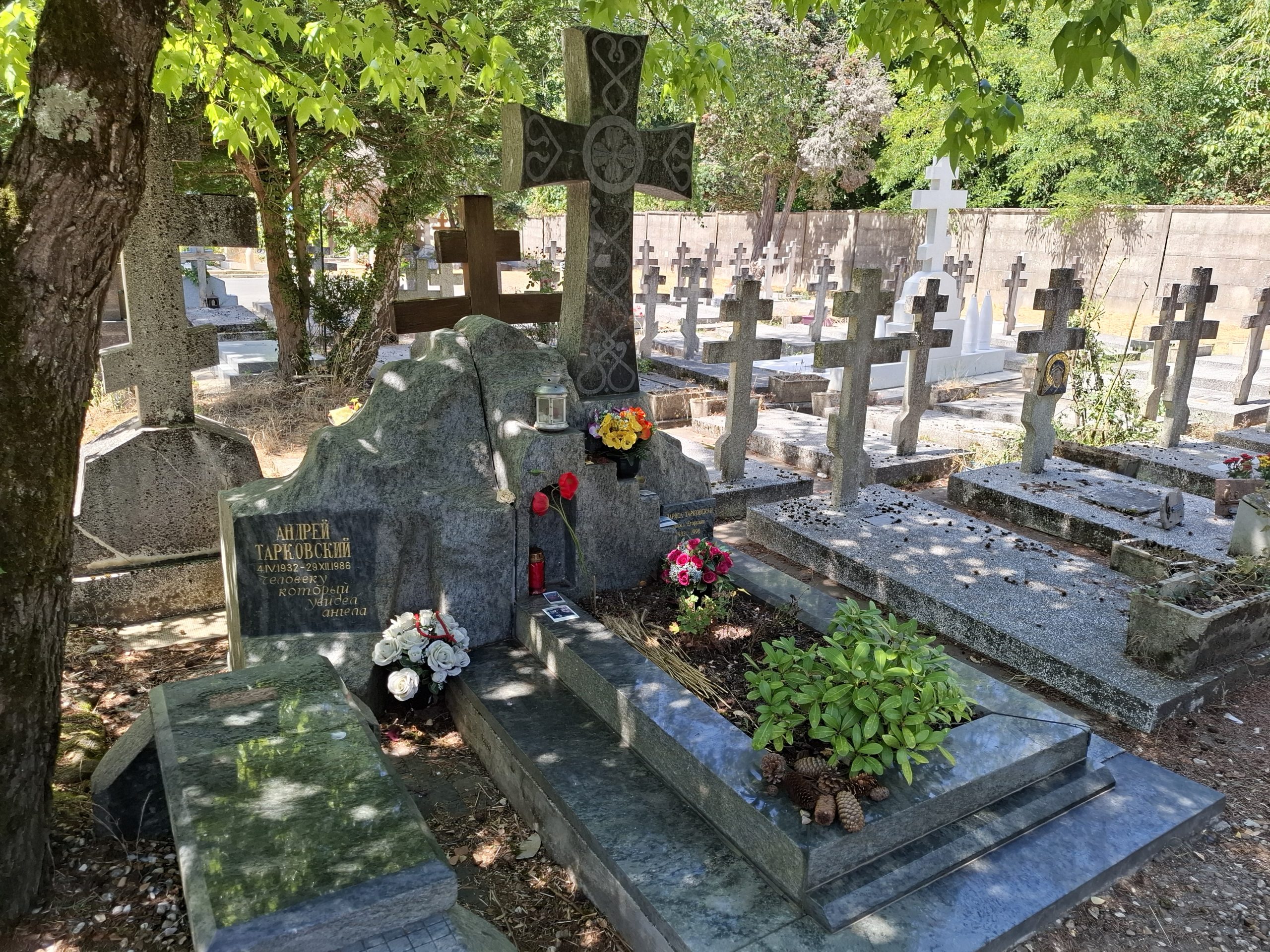
    Русское кладбище Sainte-Geneviève-des-Bois находится в пригороде, в 25 километрах от Парижа (от Аустерлицкого вокзала ехать на электричке RER), и оно производит ошеломляющее впечатление. Тут захоронен цвет русской эмиграции: от Бунина и Булгакова до Тарковского и Зинаиды Гиппиус. Могила Рудольфа Нуреева покрыта мозаичным восточным ковром – это работа итальянского архитектора, и смотрится она вызывающе роскошно, а над могилой Бунина стоит необычный крест с двумя перекладинами. Альберт Бенуа похоронен в некрополе под православной церковью Успения Богородицы. Отдельными зонами похоронены казаки и белые части.

    Важно: это не туристическое место, а место тихой памяти. Но именно здесь, глядя на покосившиеся кресты и имена, вы почувствуете, что такое «Русский Париж» на самом деле.

    Honorable Mentions

    Мой собственный маршрут охватил далеко не всё, но эти места я также советую к посещению:

    Интеллектуальные центры и гастрономия

    Библиотека Тургенева – старейшая русская библиотека за пределами России, основанная в 1875 году самим писателем. Она находится в 5-м округе и до сих пор хранит уникальные архивы и книги, которые не найти даже в московской «Ленинке».

    На rue Boissière расположен Русский дом науки и культуры. По сути, это центр современной диаспоры: там есть концертный зал, консерватория имени Скрябина, и, что важно, отличная атмосфера. Сюда стоит зайти, чтобы посмотреть афиши – вдруг попадёте на вечер романсов.

    И, конечно, куда же без еды? Ресторан «Дарю» (Darü) – легенда. Это не туристический «Пушкин-кафе» с завышенными ценами, а скромное место в районе Елисейских полей, где пахнет щами и где можно поговорить с официантами по-русски. Основан он был эмигрантами, и до сих пор держит марку.

    🏡 Дача Тургенева в Буживале

    В двадцати минутах электричкой от Парижа, в лесу Буживаль, стоит скромная дача Ивана Тургенева, которую он купил в 1874 году для своей возлюбленной Полины Виардо. Писатель жил здесь весной и осенью с 1875 года и до своей кончины в кабинете с балконом второго этажа 3 сентября 1883 года. Именно в этом кабинете были написаны его «Стихотворения в прозе», а в 1876 году завершен русский перевод «Легенды о святом Юлиане Странноприимце» Гюстава Флобера. Здесь собирались друзья И. С. Тургенева, среди которых были именитые французы и россияне: писатели Эмиль Золя, Альфонс Додэ, Братья Гонкур, Владимир Соллогуб и Михаил Салтыков-Щедрин, художник Василий Верещагин, композиторы Камиль Сен-Санс и Габриэль Форэ.

    В 1983 году, к столетию со дня смерти писателя, здесь открылся музей. Это единственный музей русского классика за пределами России. Внутри – письма, картины, гравюры, прижизненные издания. Сама усадьба внесена французскими властями в список памятников культуры.

    ⛪ Сергиевское подворье: Островок Сергия Радонежского

    Если собор Александра Невского – «парадный» русский храм, то Сергиевское подворье – это «домашняя», почти монастырская Россия.

    Первая служба здесь была совершена 22 сентября 1924 года. Храм преподобного Сергия Радонежского был открыт в 1925 году как подворье Свято-Троицкой Сергиевой лавры. При нём был создан Богословский институт, где преподавали выдающиеся русские философы и богословы – Сергий Булгаков, Николай Бердяев и другие.

    Вся служба на подворье велась строго по русскому монастырскому обычаю – этим оно резко отличалось от более «европеизированного» собора на улице Дарю. Сегодня это центр православной мысли и культуры, где проводятся богослужения на церковнославянском и работают библиотека с уникальными архивами. Место, где русская душа чувствует себя не в гостях, а дома.

    🗿 Musée Zadkine: Мастерская русского скульптора

    Среди уютных улочек Сен-Жермен-де-Пре скрывается небольшой особняк с садом – бывшая мастерская Осипа Цадкина, русского скульптора, который приехал в Париж в 1910 году и стал классиком мирового модернизма.

    Музей был открыт в 1982 году после того, как вдова Цадкина, Валентина Пракс, завещала этот дом и студию городу Парижу. Здесь выставлено около 300 работ – от монументальных скульптур до эскизов и гобеленов.

    Цадкин – фигура уникальная: его экспрессивная, иногда почти драматическая манера глубоко укоренена в традициях русского авангарда, но при этом он был неотъемлемой частью парижской школы. В этом музее можно увидеть, как «русский дух» переплавляется в универсальный язык мировой скульптуры. Это идеальное место для тех, кто хочет прикоснуться к искусству без толп туристов.

    Заключение

    Связи России и Франции складывалась веками. Пётр I, прорубая окно в Европу, ориентировался на Версаль. Екатерина II вела переписку с Вольтером и Дидро на их родном языке. Французский язык надолго стал языком дипломатии, культуры и светского общения петербургских гостиных и венских конгрессов.

    Но отношения двух стран никогда не были безоблачными. В 1812 году Наполеон взял Москву, а уже в 1814 году русские войска дошли до Парижа. Спустя полвека французы и англичане осаждали Севастополь в Крымскую войну. В Первую мировую мы сражались плечом к плечу, а русский экспедиционный корпус оставил свой след на полях Шампани. Во Второй мировой лётчики полка «Нормандия — Неман» делили небо с советскими асами, и их память увековечена под Парижем, в Москве, Иваново и Калининграде. Эти военные эпизоды — лишь вехи долгого и сложного диалога, где конфликт сменялся союзом, а союз — новым противостоянием.

    Судьба двух государств в Новое время удивительно схожа. Франция прошла через абсолютизм, революцию, империю и реставрацию. Россия — через самодержавие, революцию, тоталитаризм. Обе страны пережили травмы и взлёты, обе искали свой путь в XIX и XX веках. Пересечение исторических траекторий создало незримую нить, которая связывает сегодняшнего парижанина и москвича.

    Русская культура вплетена в ткань французской столицы так же плотно, как английские парки или итальянские оперы. Русский Париж – это ощущение, когда вы стоите у метро Crimée или бредёте по тихим аллеям Пасси и осознаёте, что эта страна стала домом для тех, кто потерял родину.

    И если вы приедете в Париж как исследователь этой истории, город заговорит с вами языком документов, писем и дневников. На фасадах вы увидите следы судеб, на кладбищах – людей, а в музеях – отголоски прошлого. У европейской культуры нет национальности, но есть душа. И в Париже она часто говорит по-русски.
  • 🏛 Kyustendil, Bulgaria

    🏛 Kyustendil, Bulgaria

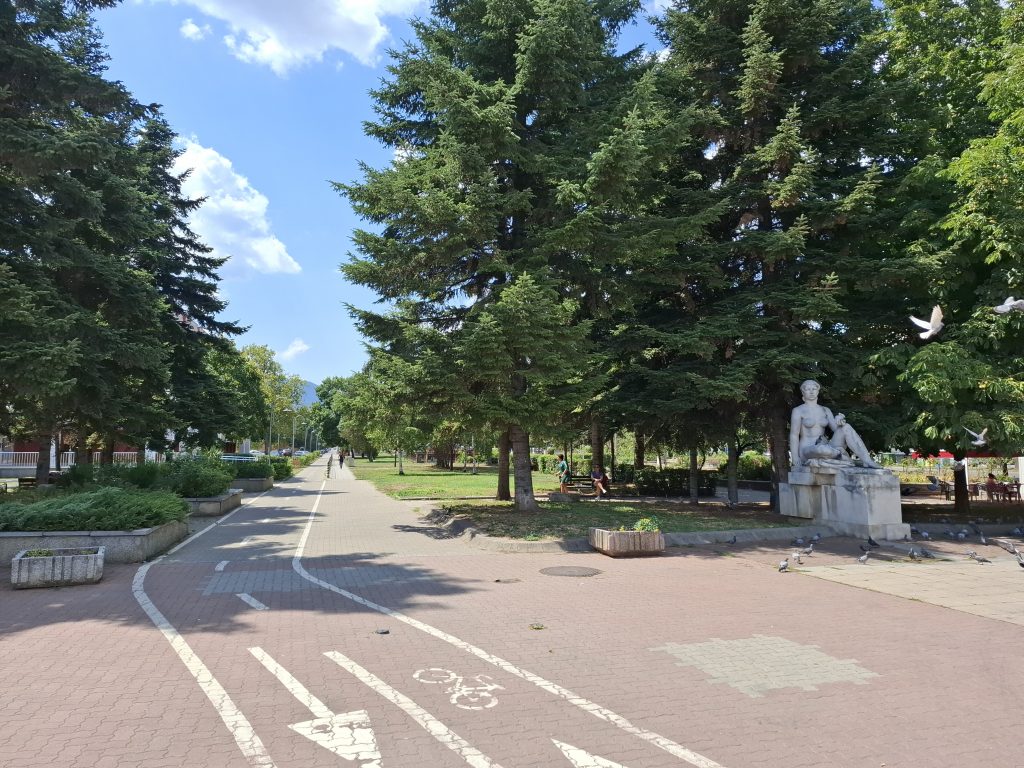
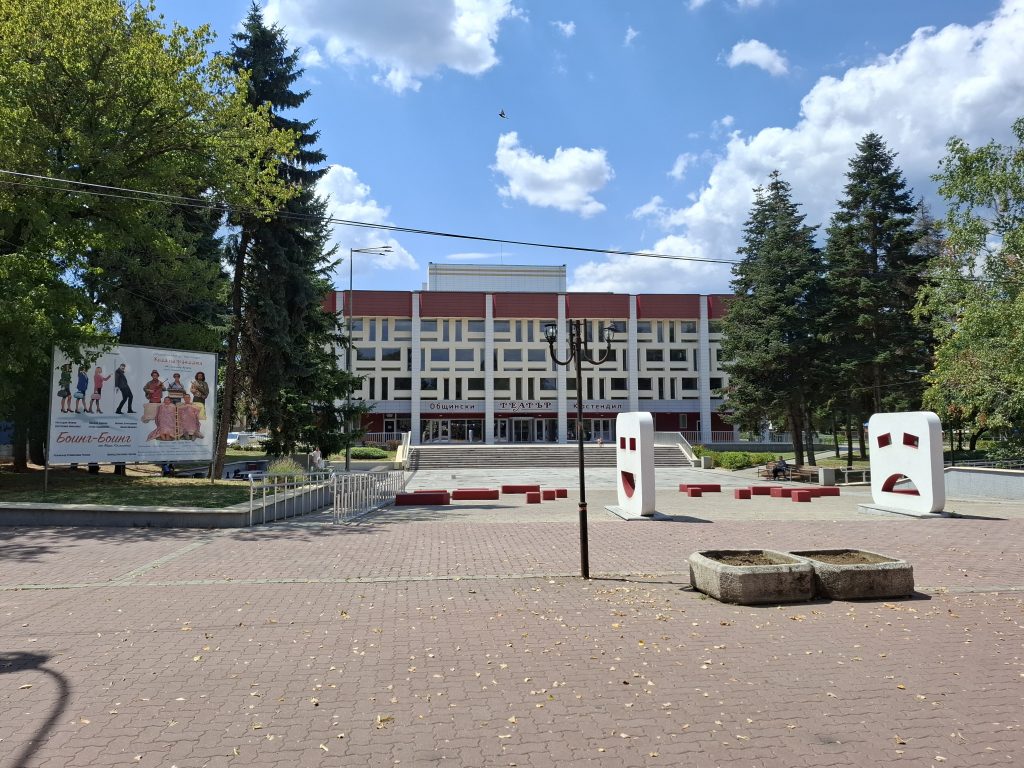
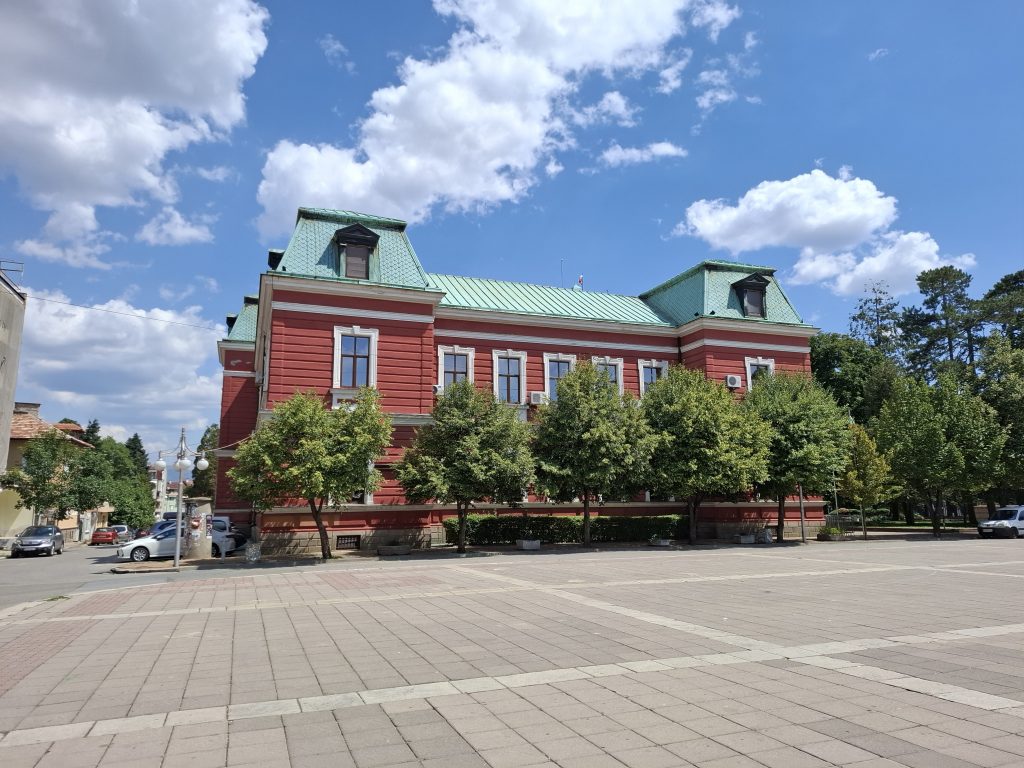
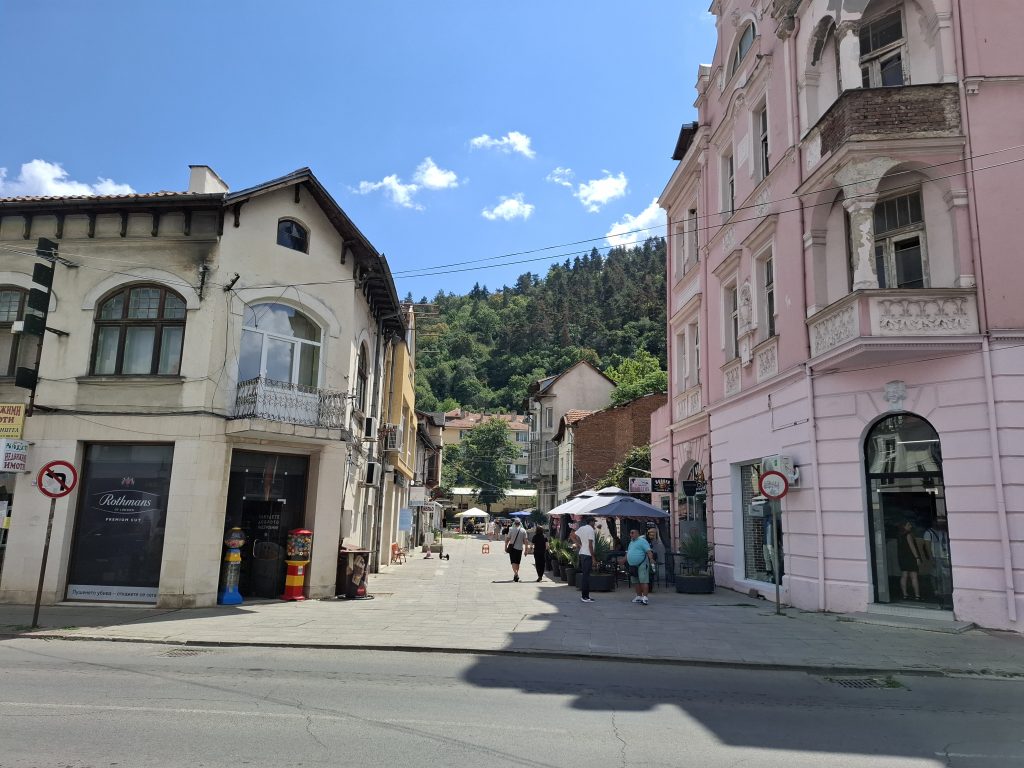
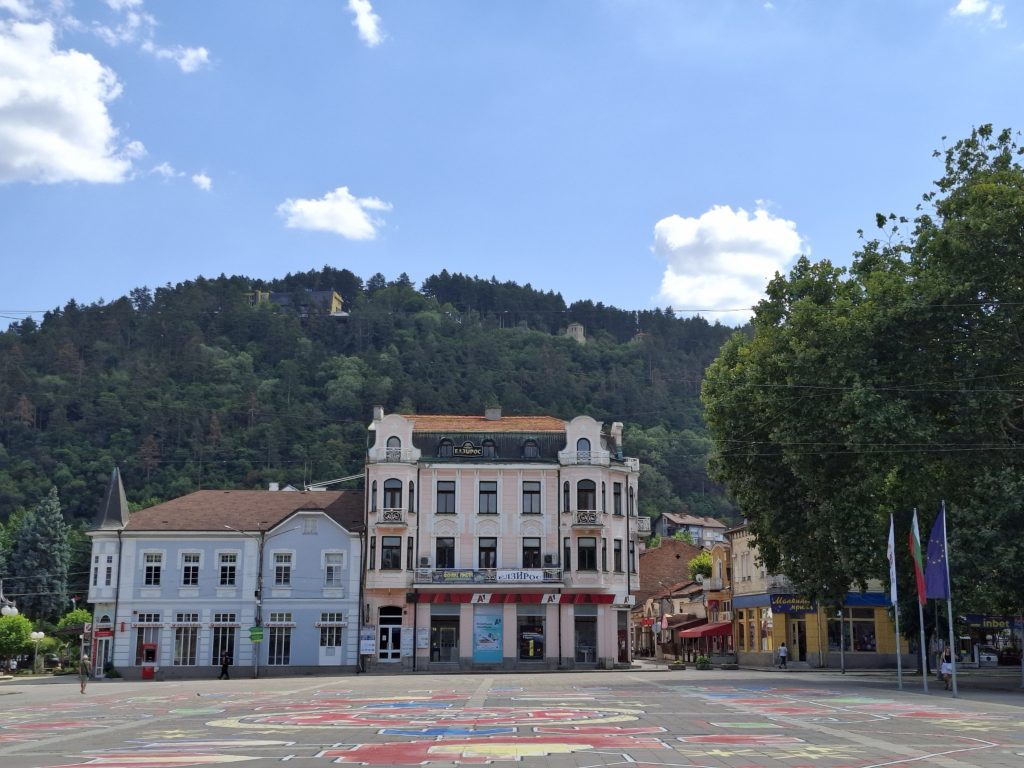
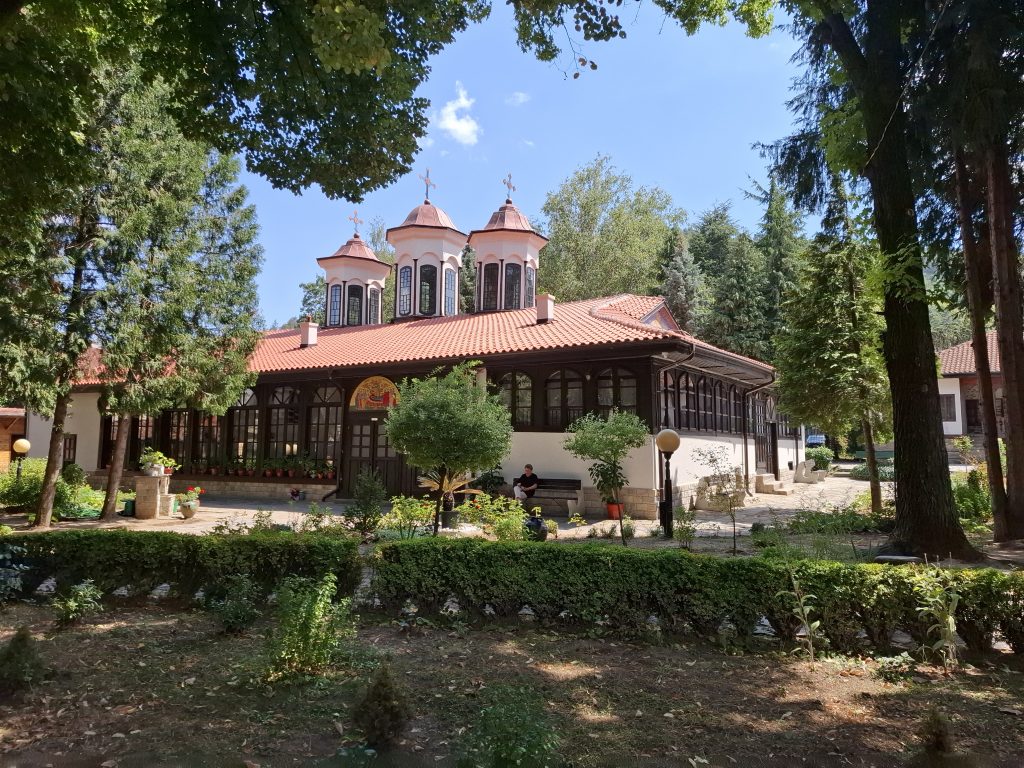
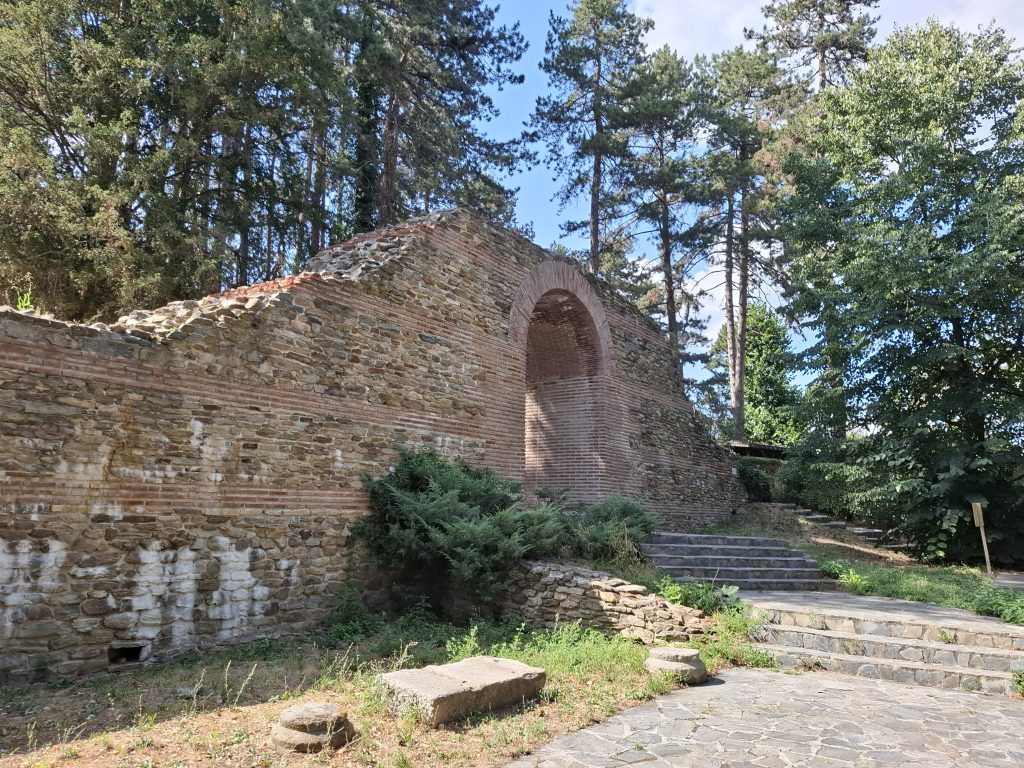
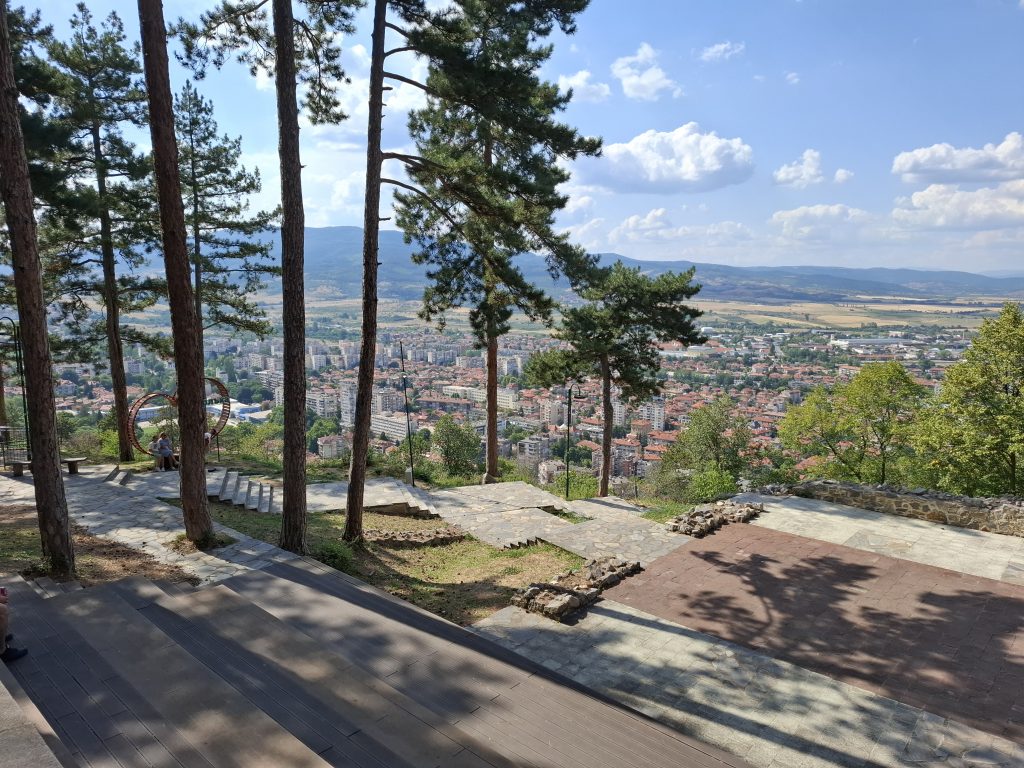
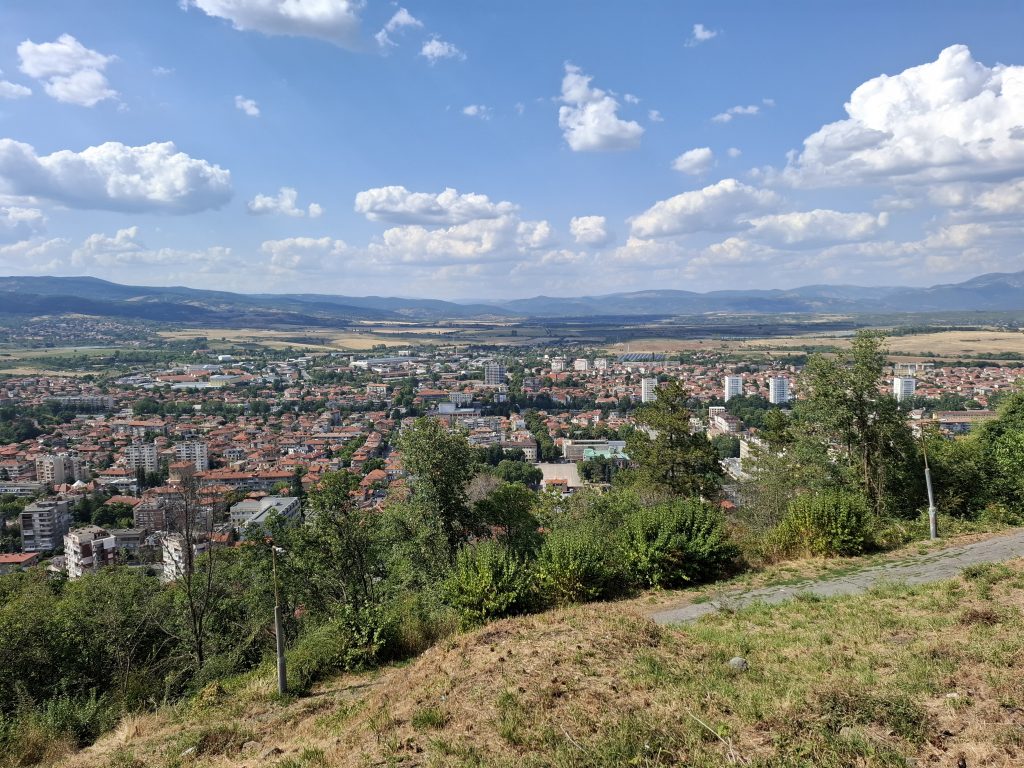
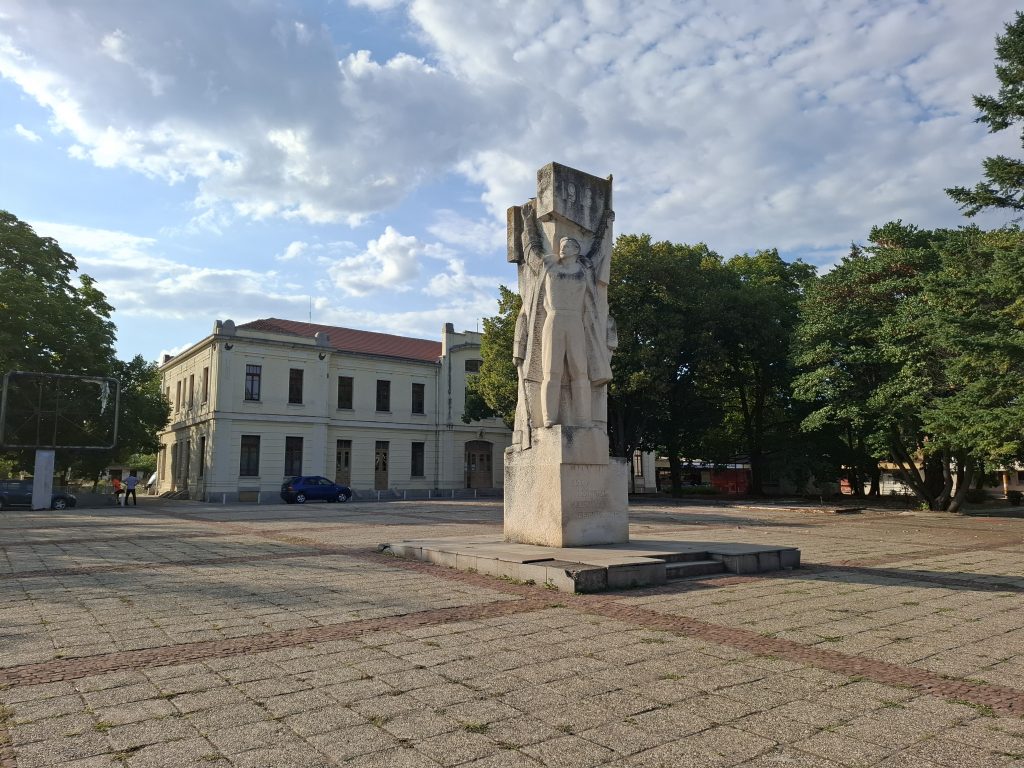
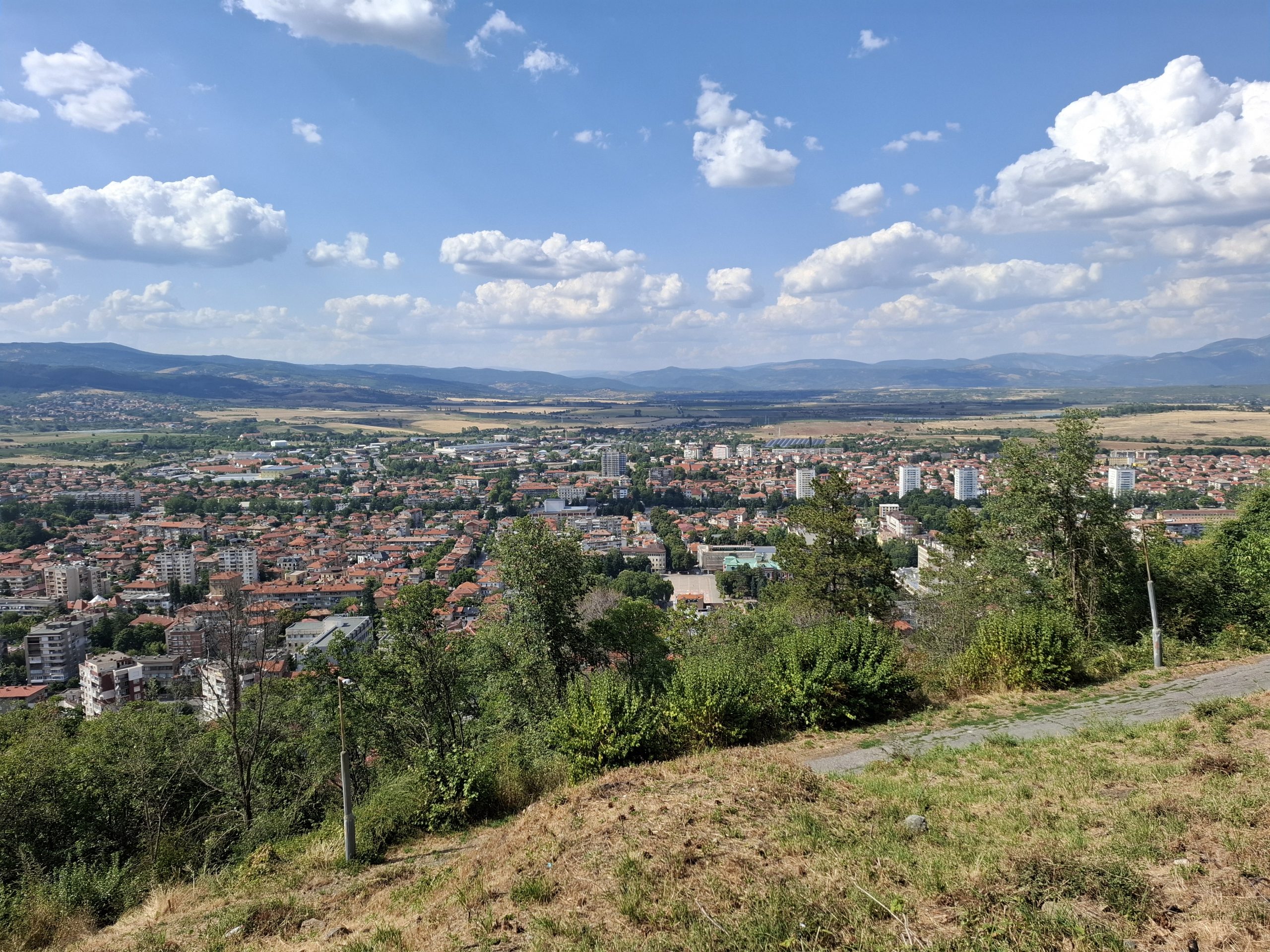
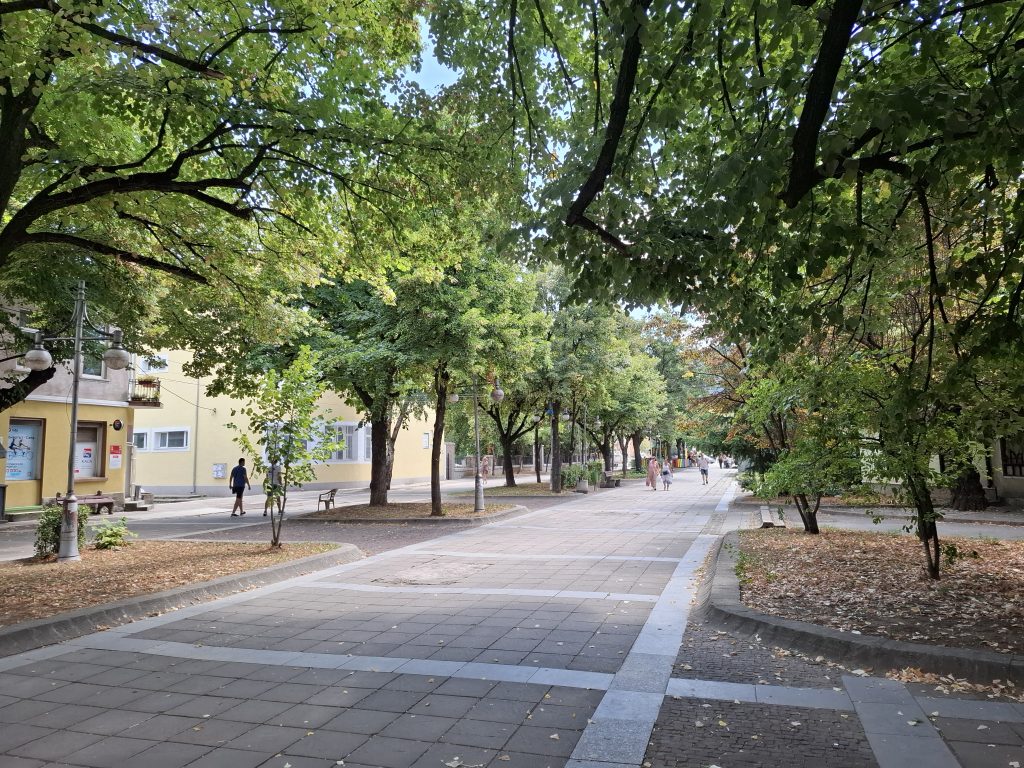
    At Kyustendil, you can find many attractions, from ancient Thracian settlements to Roman spas and medieval fortresses; this city has been a crossroads of civilisations. Don’t miss:

    • 🏺 Pautalia Roman Baths (2nd century CE)
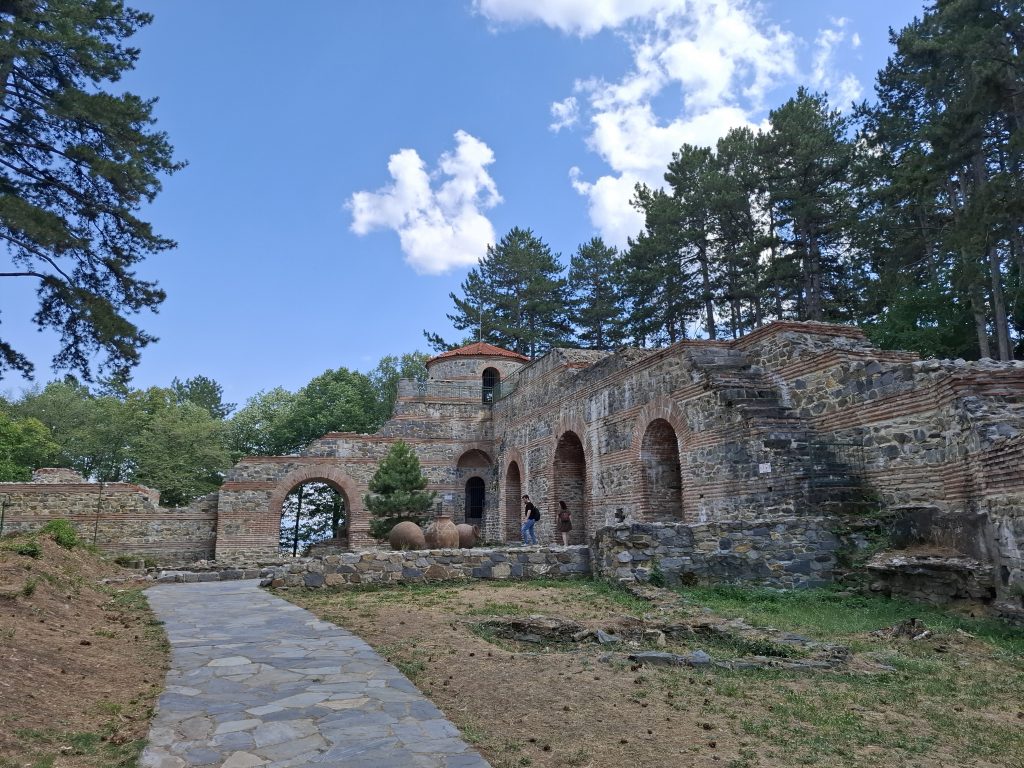
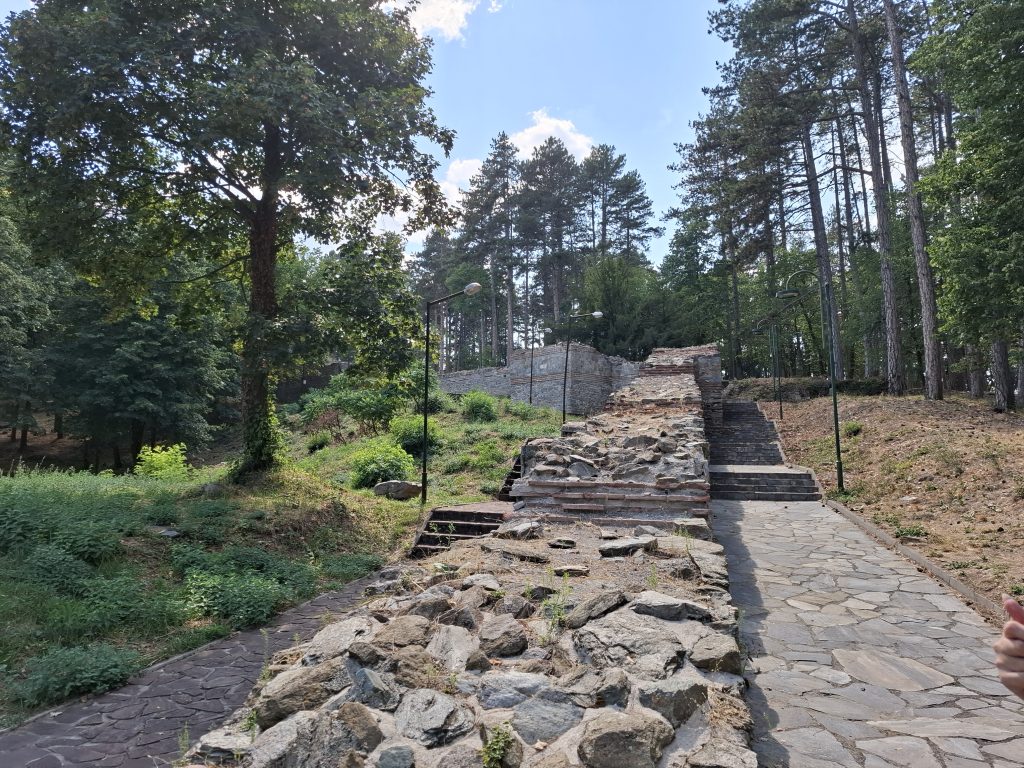
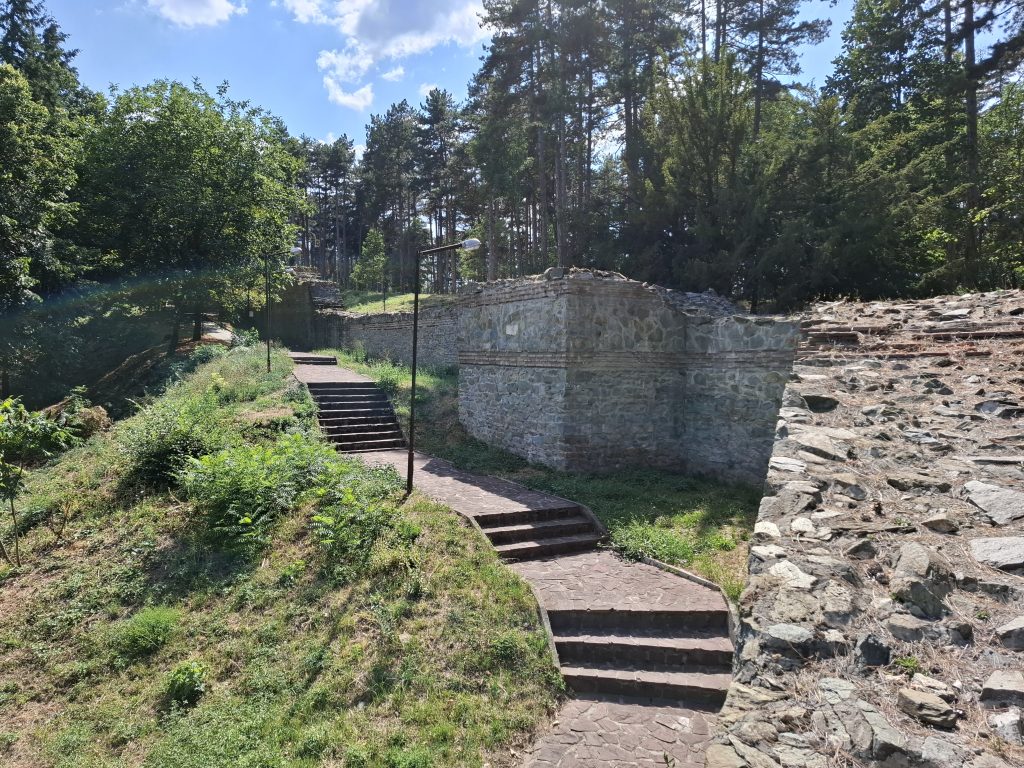
    • 🏰 Hisarlaka Fortress (Roman & medieval ruins)
    • 🖼 Vladimir Dimitrov Art Gallery
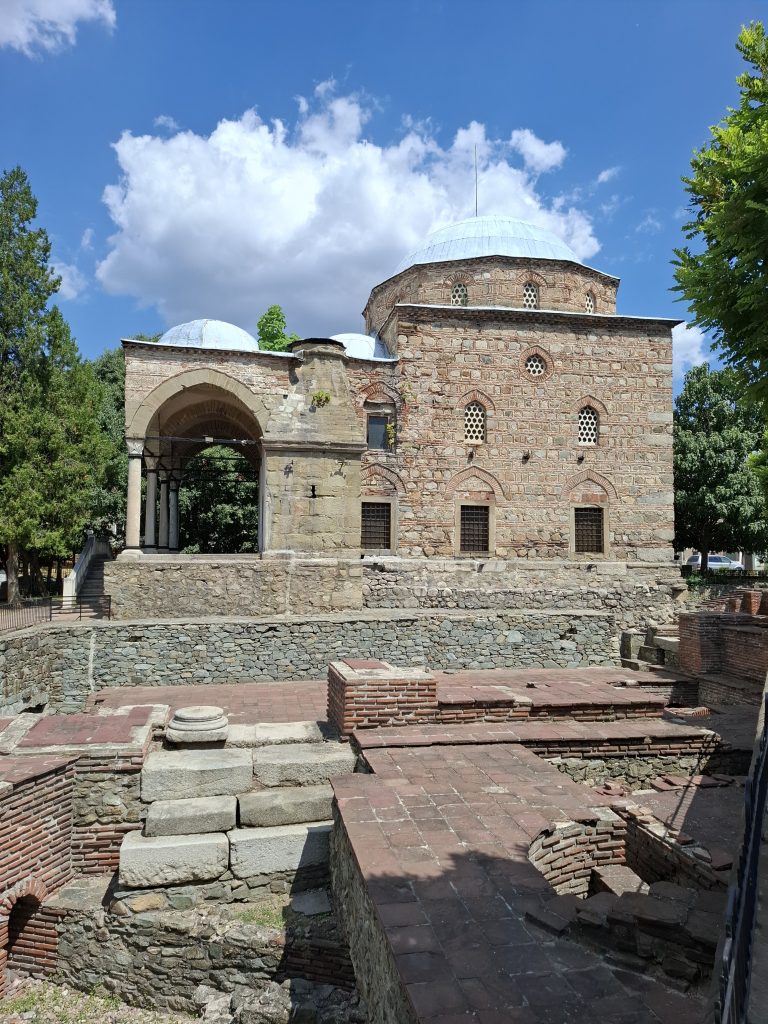
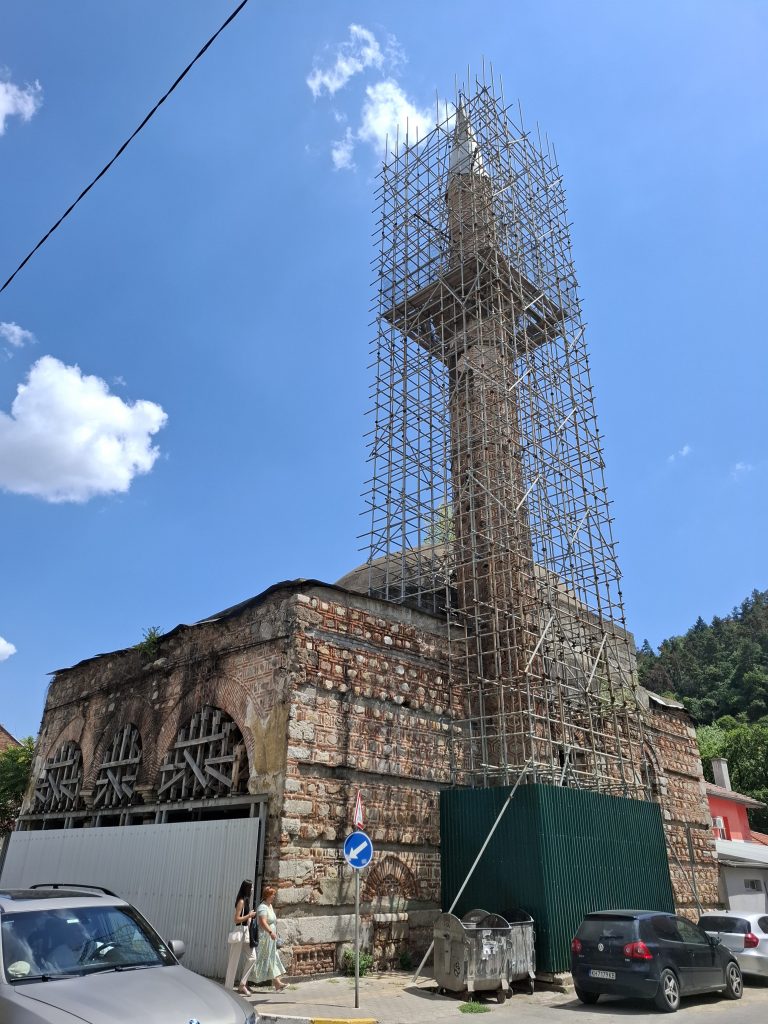
    • 🕌 Ottoman-era mosques like Ahmed Bey & Fatih Mehmet
    • 🌳 Mineral springs & scenic orchards

    Kyustendil’s history dates back over 8,000 years, with evidence of Thracian settlements as early as the 5th-4th centuries BC. The Thracians, attracted by the area’s mineral springs, established a settlement known for its asclepion, a shrine dedicated to Asclepius, the god of medicine. This was the second-largest such shrine in the Balkans, after Epidaurus.

    Under Roman rule, the city was known as Pautalia (later Ulpia Pautalia under Emperor Trajan) and became an important administrative and spa centre in the province of Thrace. The Romans built extensive thermal baths (2nd–3rd centuries AD), whose ruins remain today.

    During the Middle Ages, the city was renamed Velbazhd and became a key strategic and religious centre under the Byzantine and Bulgarian Empires. It was the seat of the Dejanović noble family and briefly served as an independent principality under Constantine Dragash, whose legacy includes being the grandfather of the last Roman emperor, Constantine XI, and the great-great-grandfather of Ivan the Terrible of Russia.

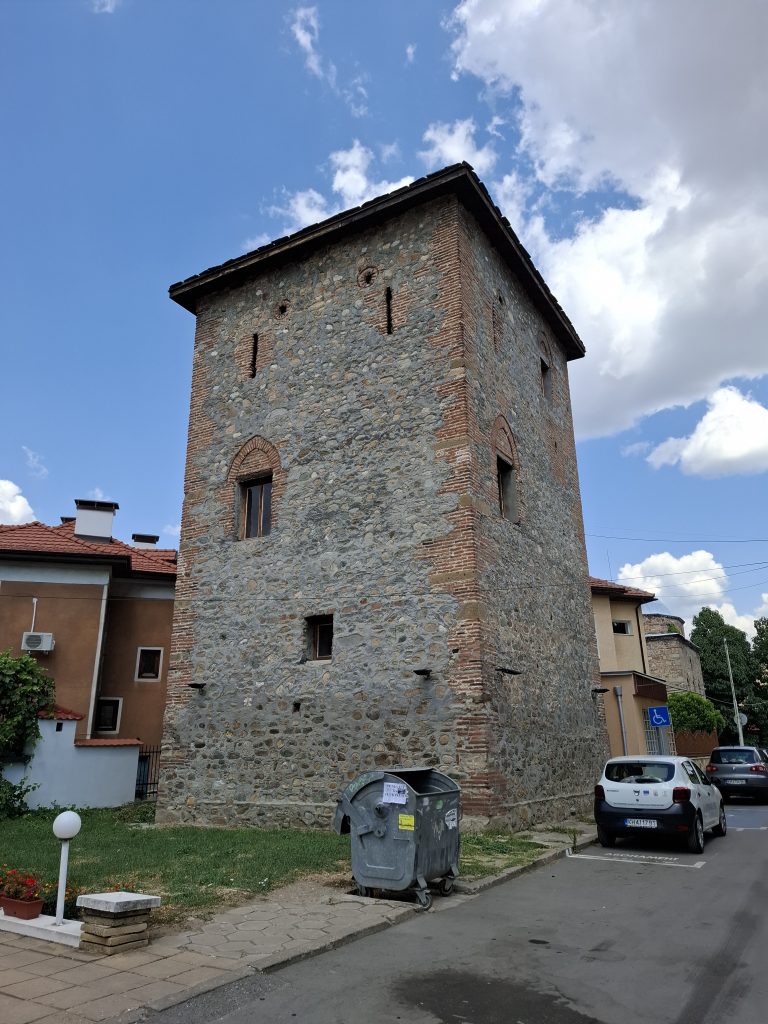
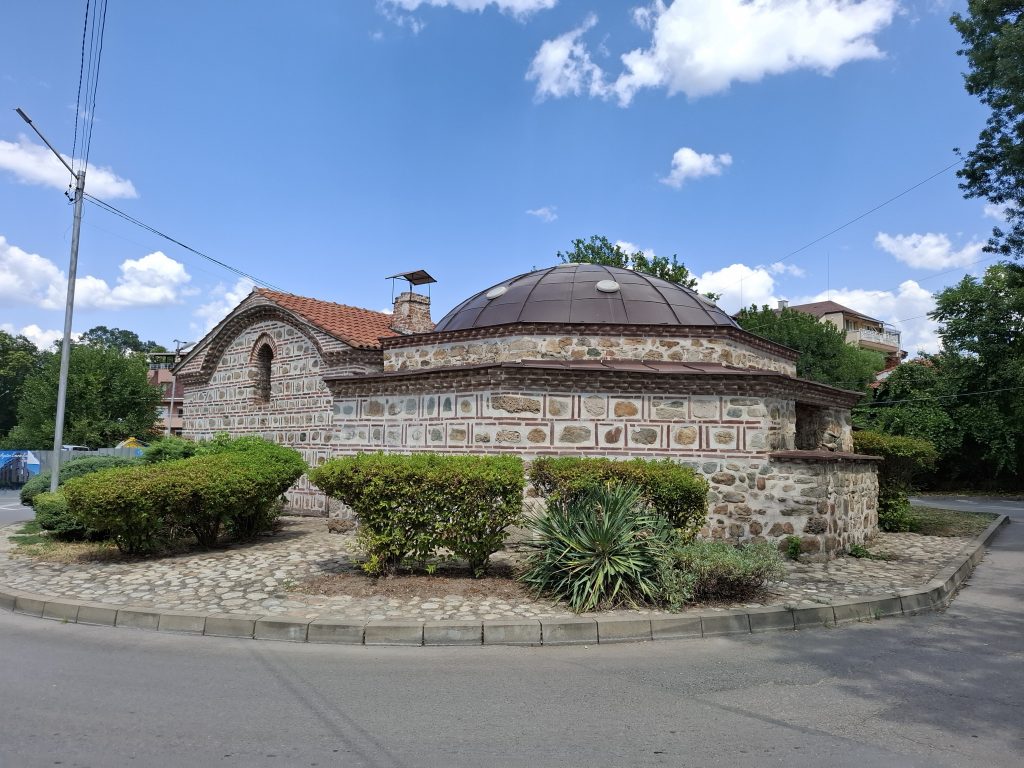
    The Ottomans conquered Kyustendil in the late 14th century, and it became a military and administrative capital of Rumelia. The city featured four gates leading to major regions like Niš and Istanbul. Ottoman-era landmarks include the Ahmed Bey Mosque (15th century) and the Fatih Mehmed Mosque (16th century), though many of the original 17 mosques did not survive. The Ottomans also built hammams, such as the Dervish Bath (1566) and Chifte Bath*(1489), blending Roman and Ottoman spa traditions.

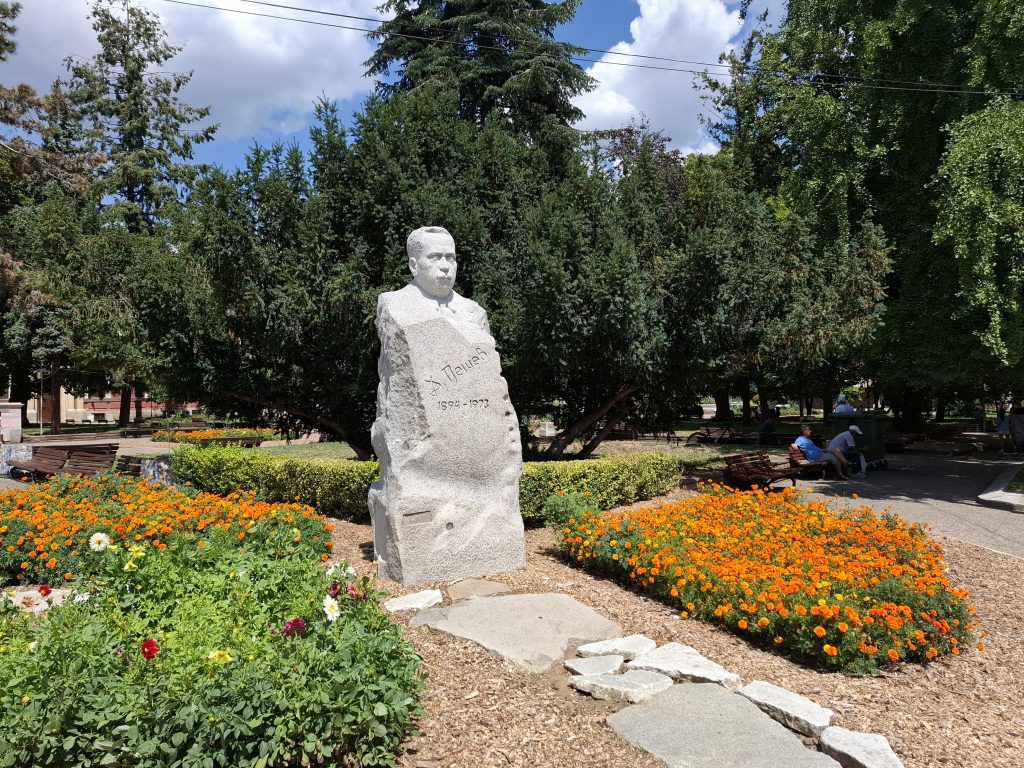
    Kyustendil served as Bulgaria’s military capital during World War I. Notably, Adolf Hitler was treated here for injuries in 1916–1917 while serving on the Macedonian front. The city also played a role in World War II: Dimitar Peshev, a local politician, helped save Bulgarian Jews from deportation, a story documented in the House Museum of Dimitar Peshev.

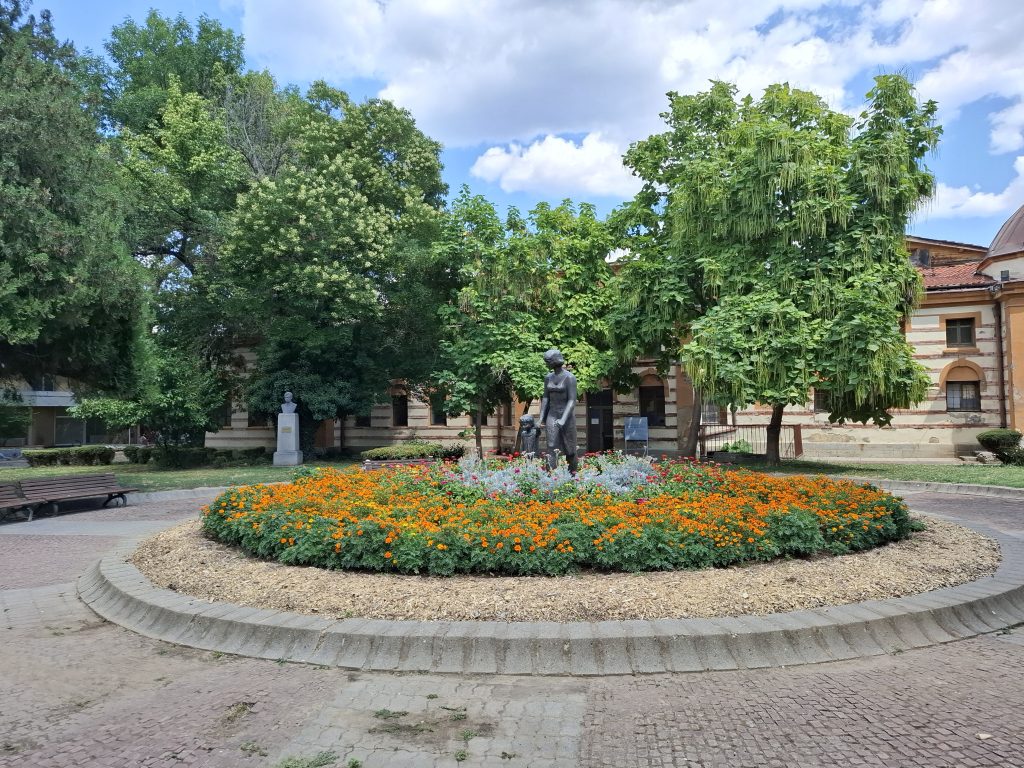
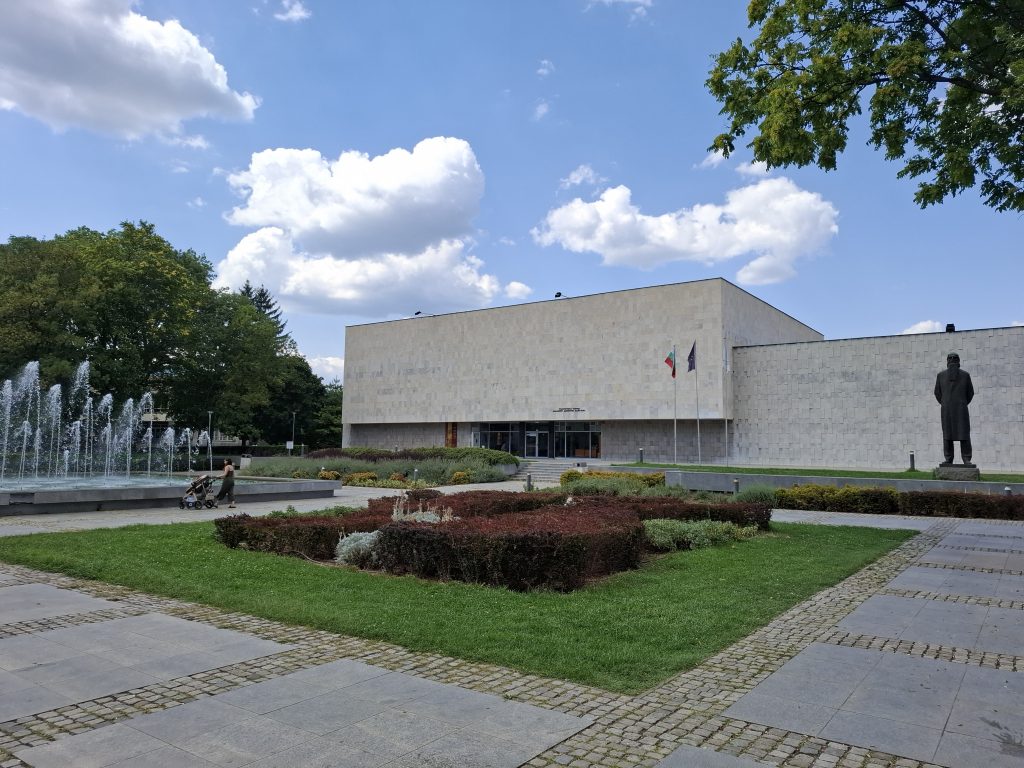
    Kyustendil’s mineral springs have been central to its identity for centuries, attracting visitors from ancient times to today. The city is also known as “Bulgaria’s orchard” due to its extensive fruit production. Cultural sites include the Vladimir Dimitrov-Maystora Art Gallery, dedicated to a renowned Bulgarian artist, and the Pinzurska House Museum, showcasing National Revival-era architecture.

    Perfect blend of history, culture, and nature!

  • 🏛 Sun Yat-Sen Mausoleum, Nanjing: a pilgrimage site for modern China.

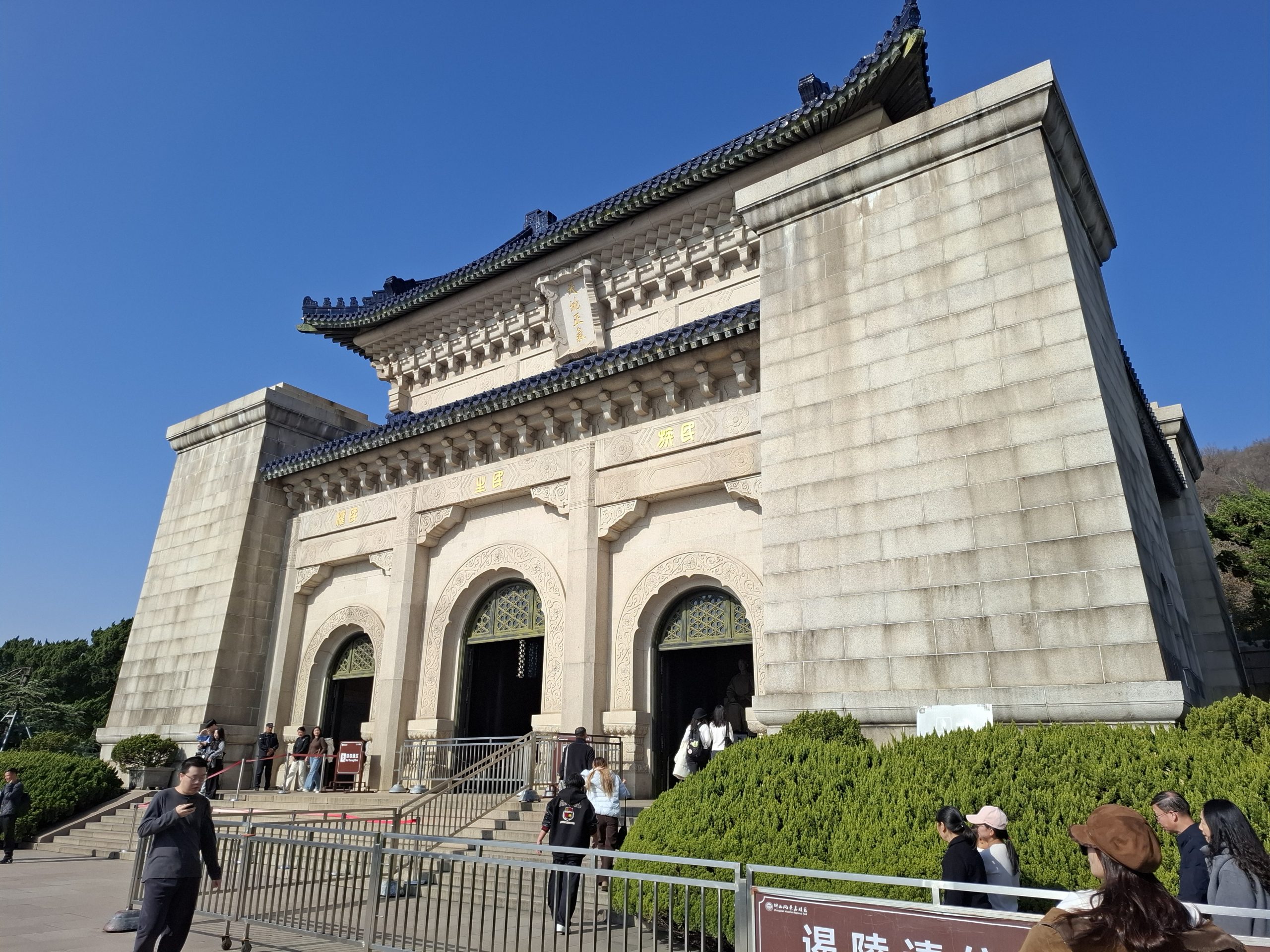
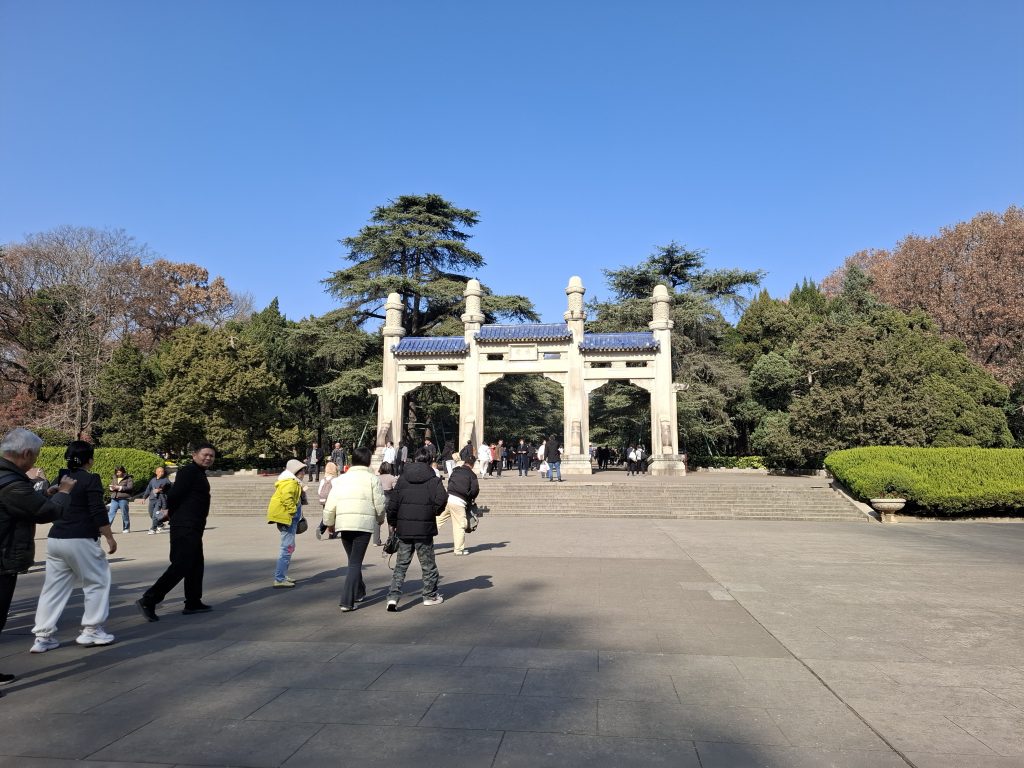
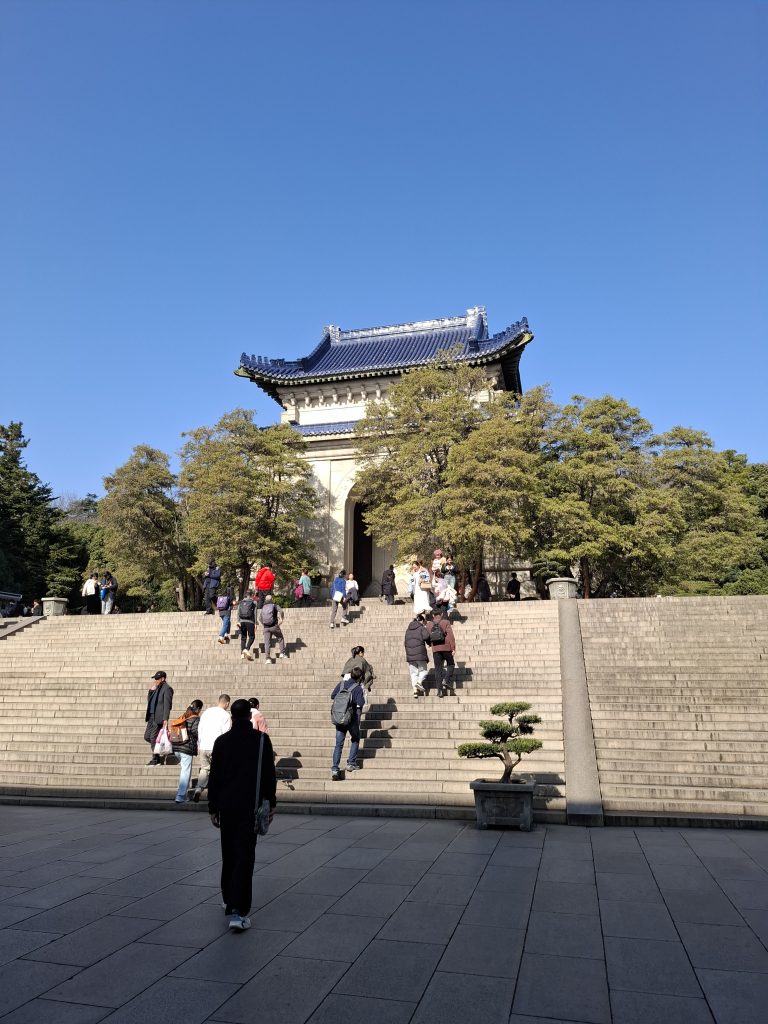
    🏛 Sun Yat-Sen Mausoleum, Nanjing: a pilgrimage site for modern China.

    📜 Dr. Sun Yat-Sen (1866–1925)

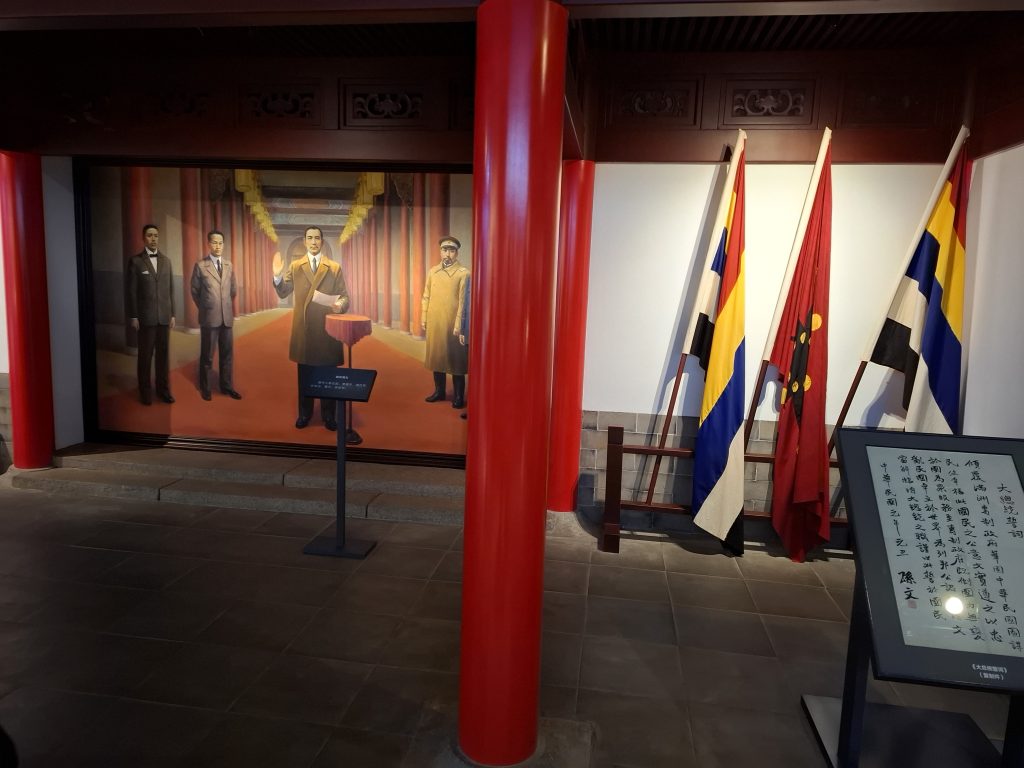
    The Father of Modern China Dr. Sun Yat-Sen was a revolutionary leader, physician, and political philosopher who played a pivotal role in overthrowing the Qing Dynasty, ending over 2,000 years of imperial dynasties. He served as the first provisional president of the Republic of China (1912) and founded the Kuomintang (Nationalist Party). His Three Principles of the People (Nationalism, Democracy, Livelihood) became the guiding ideology for China’s modernization. Though his vision was fractured by warlords and conflict, he remains a unifying figure revered across the strait.

    ⛰ The Mausoleum

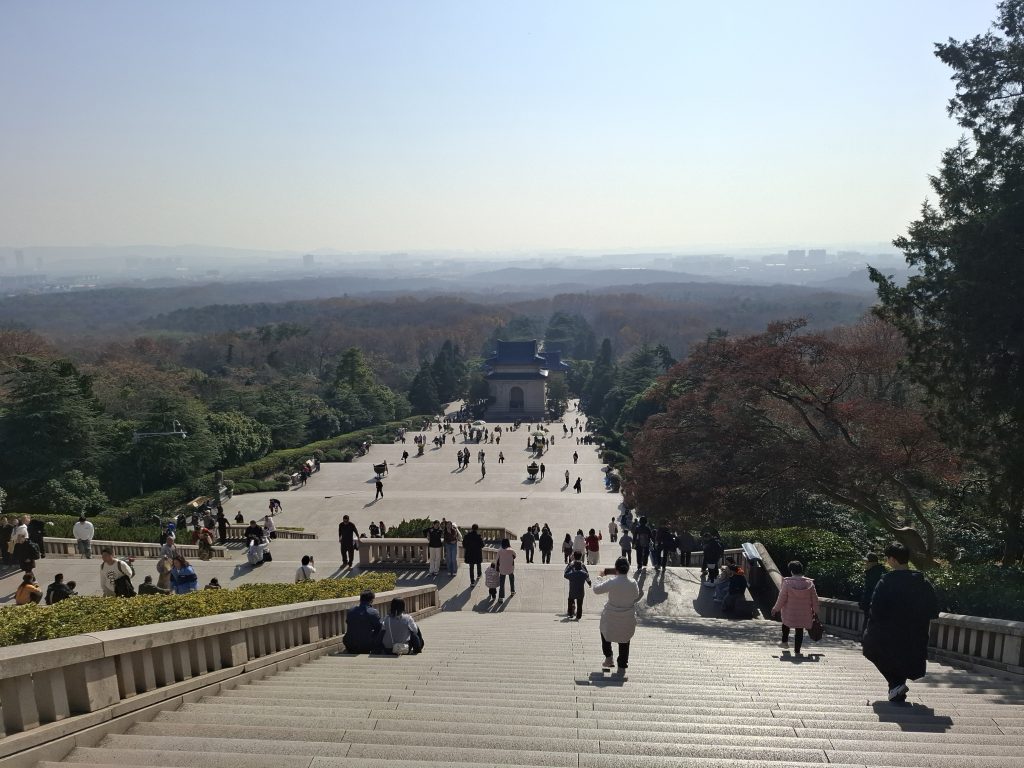
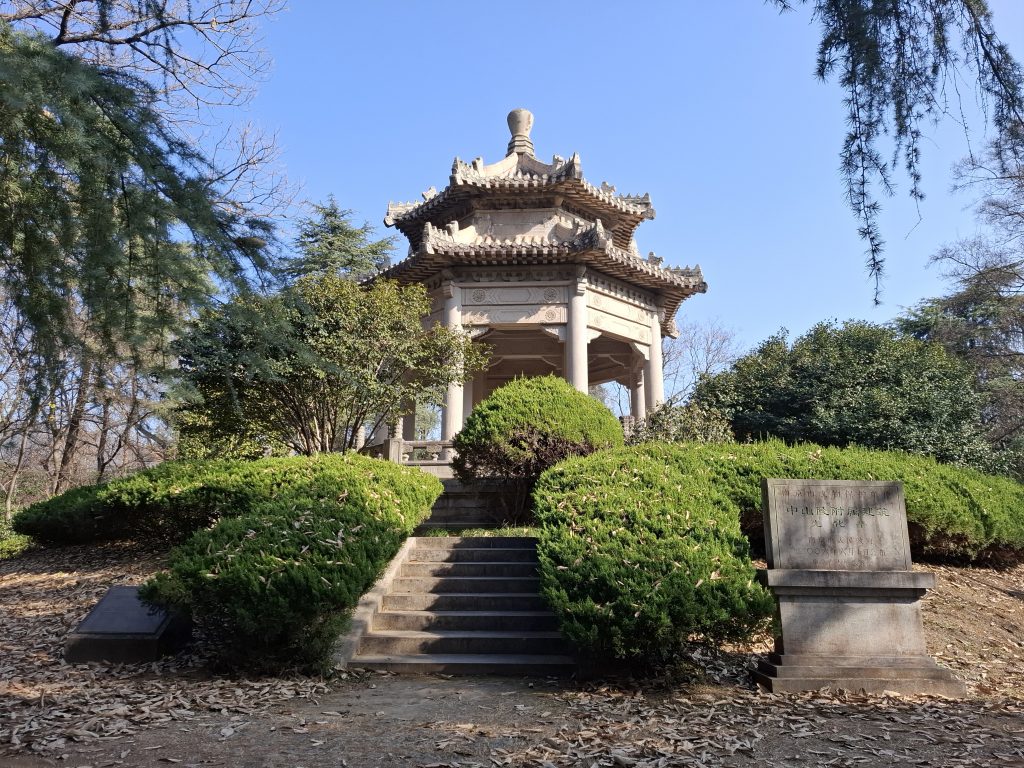
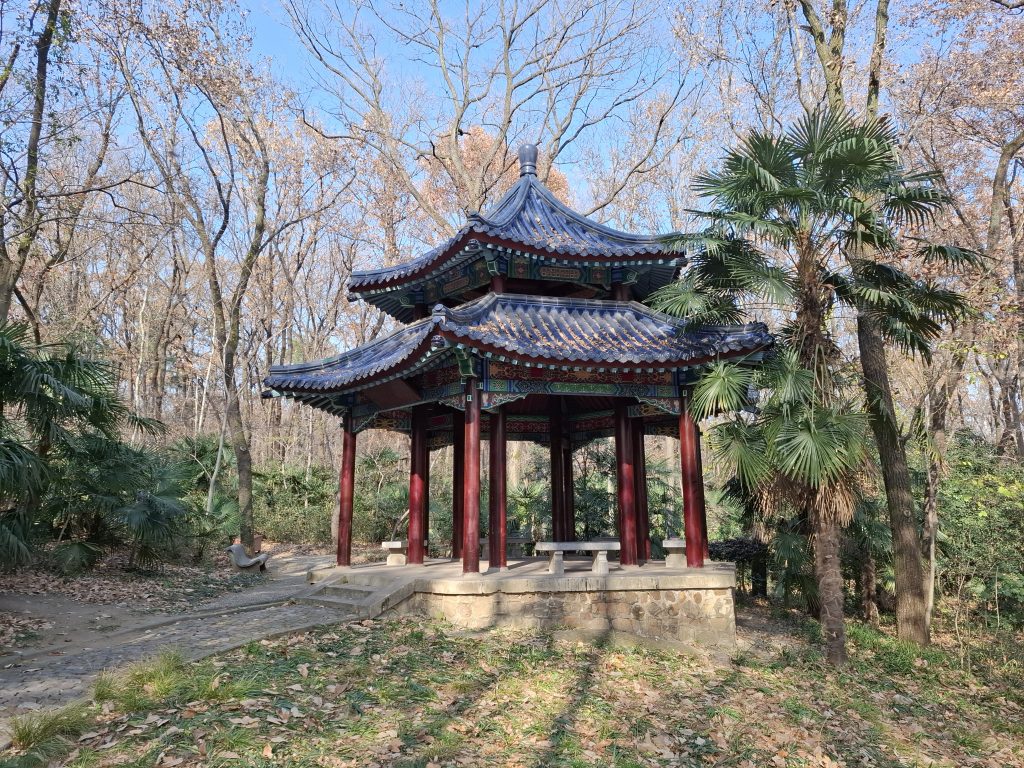
    • Location: Nanjing’s Zhongshan Mountain (also called Purple Mountain), a vast 31-square-kilometer national park and a premier cultural destination, celebrated for its dense concentration of over 200 historical sites spanning 1,700 years. Its core attractions include two monumental mausoleums, ancient Linggu Tempe, Purple Mountain Observatory, picturesque Meiling Palace, and Plum Blossom Hill, which that hosts a famous international festival each spring .
    • Built: 1926–1929.
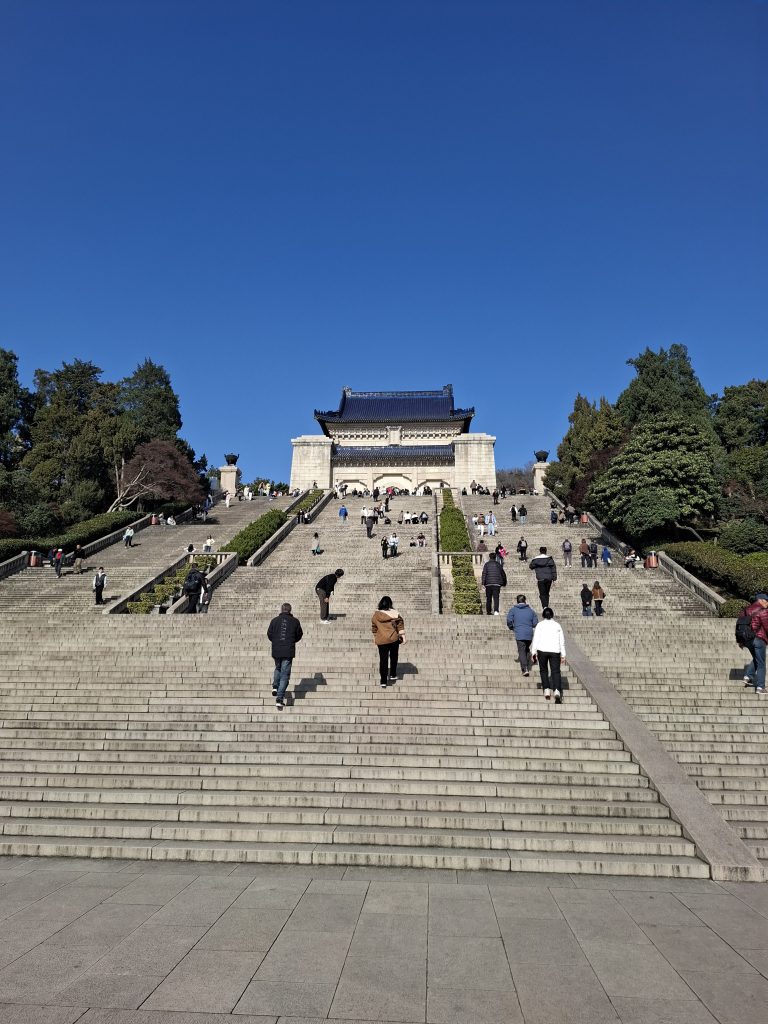
    • Layout: A monumental complex along a central axis, symbolizing awakening and Sun’s call to the nation.
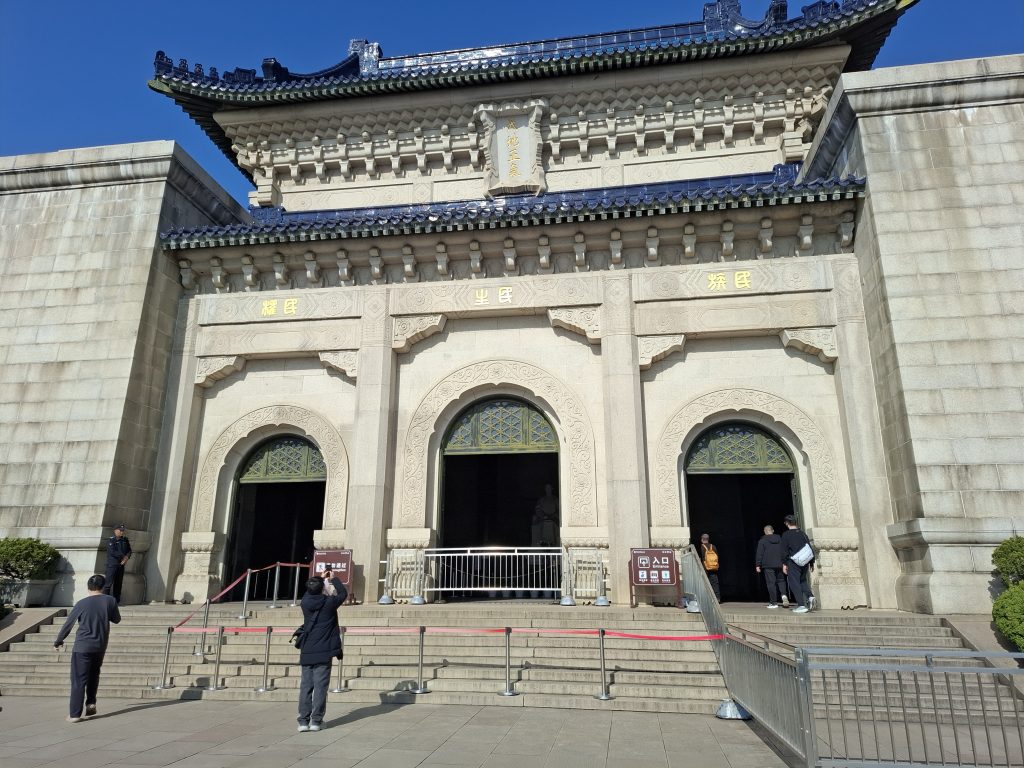
    • Size: Covers 80,000 sqm. The 392-step staircase leads to the majestic vault, where Sun’s sarcophagus lies.
    • Significance: A masterpiece of modern Chinese architecture blending traditional forms with western architecture and democratic symbolism. It represents Sun’s enduring legacy and Nanjing’s historical role as the republic’s capital.

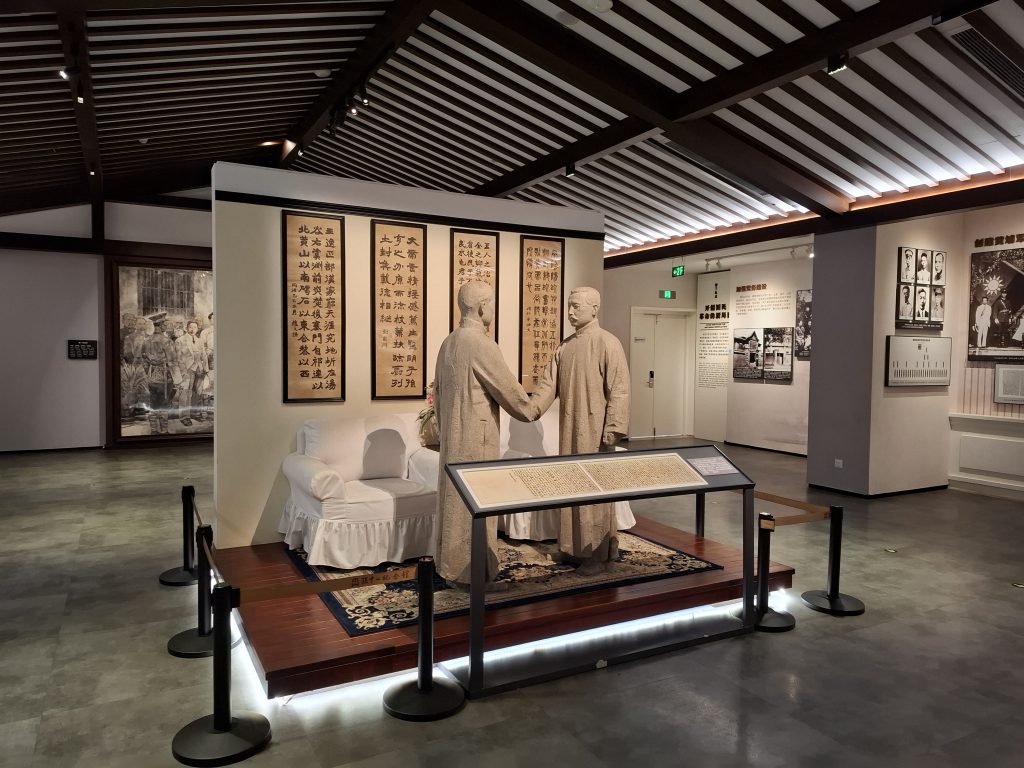
    The mausoleum is a symbol of China’s transition from empire to republic. It’s a site of national memory, where both official commemorations and quiet public reflection take place. For many, it embodies the unfinished quest for unity, strength, and people’s welfare that Sun championed.

  • 🇨🇳 Hangzhou: the Lake Capital of China 🏮

    🇨🇳 Hangzhou: the Lake Capital of China 🏮

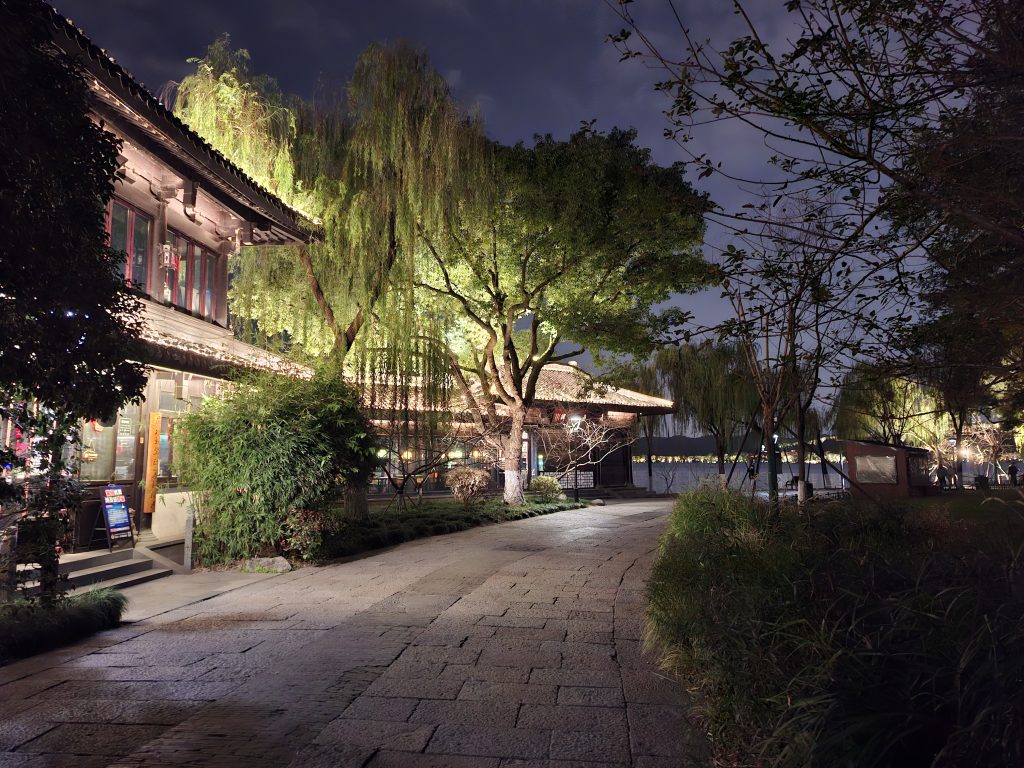
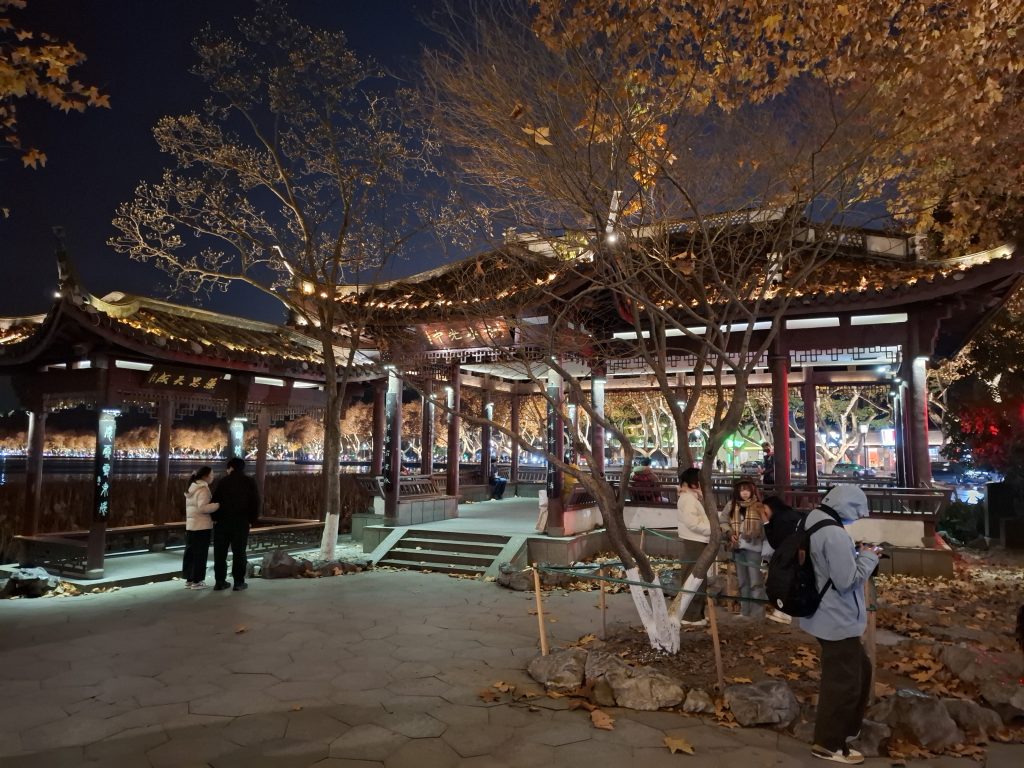
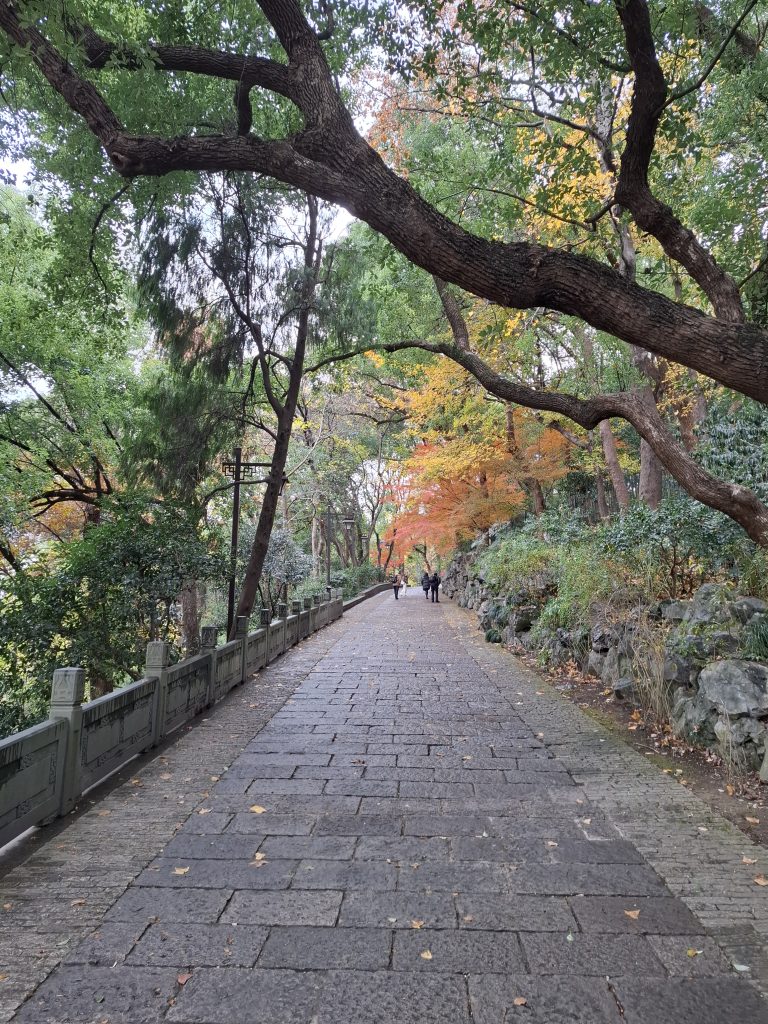
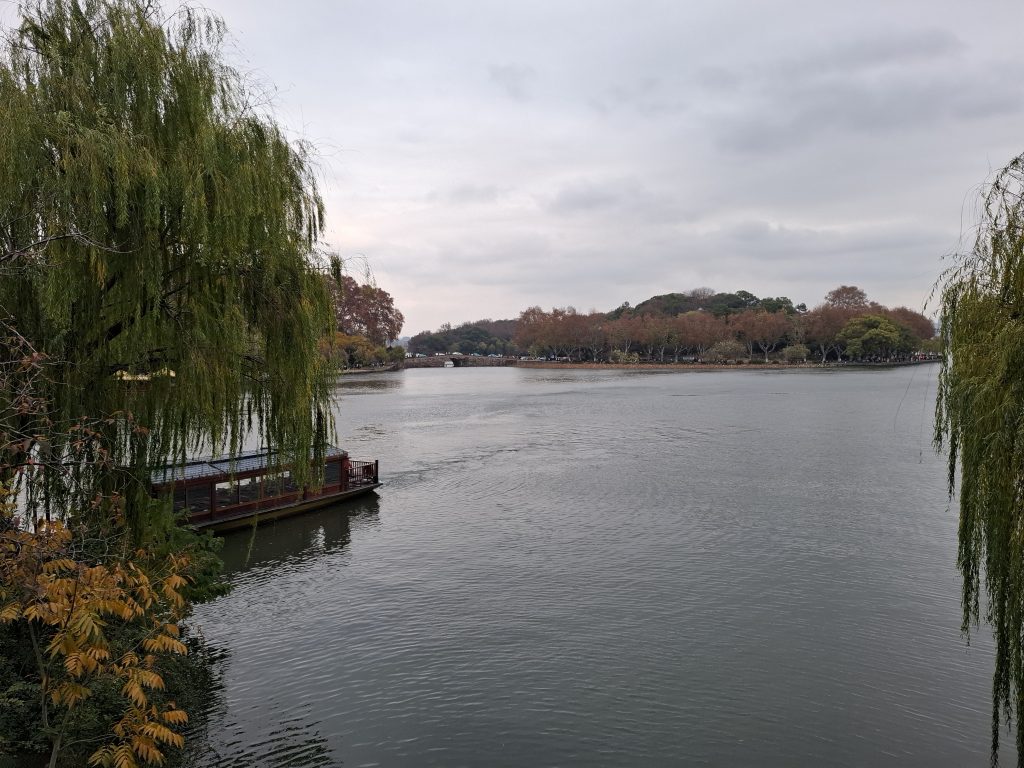
    Hangzhou is a relatively unknown destination for a foreign tourist in China. However, it only makes the city better. Forget what you know about modern metropolises. The Southern Song Dynasty (南宋) had its capital in Lin’an (临安), present-day Hangzhou, from 1129 AD until the dynasty’s fall in 1279 AD, a period of 150 years. Dubbed “Heaven on Earth”, it’s a city where tranquil West Lake reflects pagodas, ancient temples nestle in misty hills, and a vibrant history is woven into every street.

    West Lake

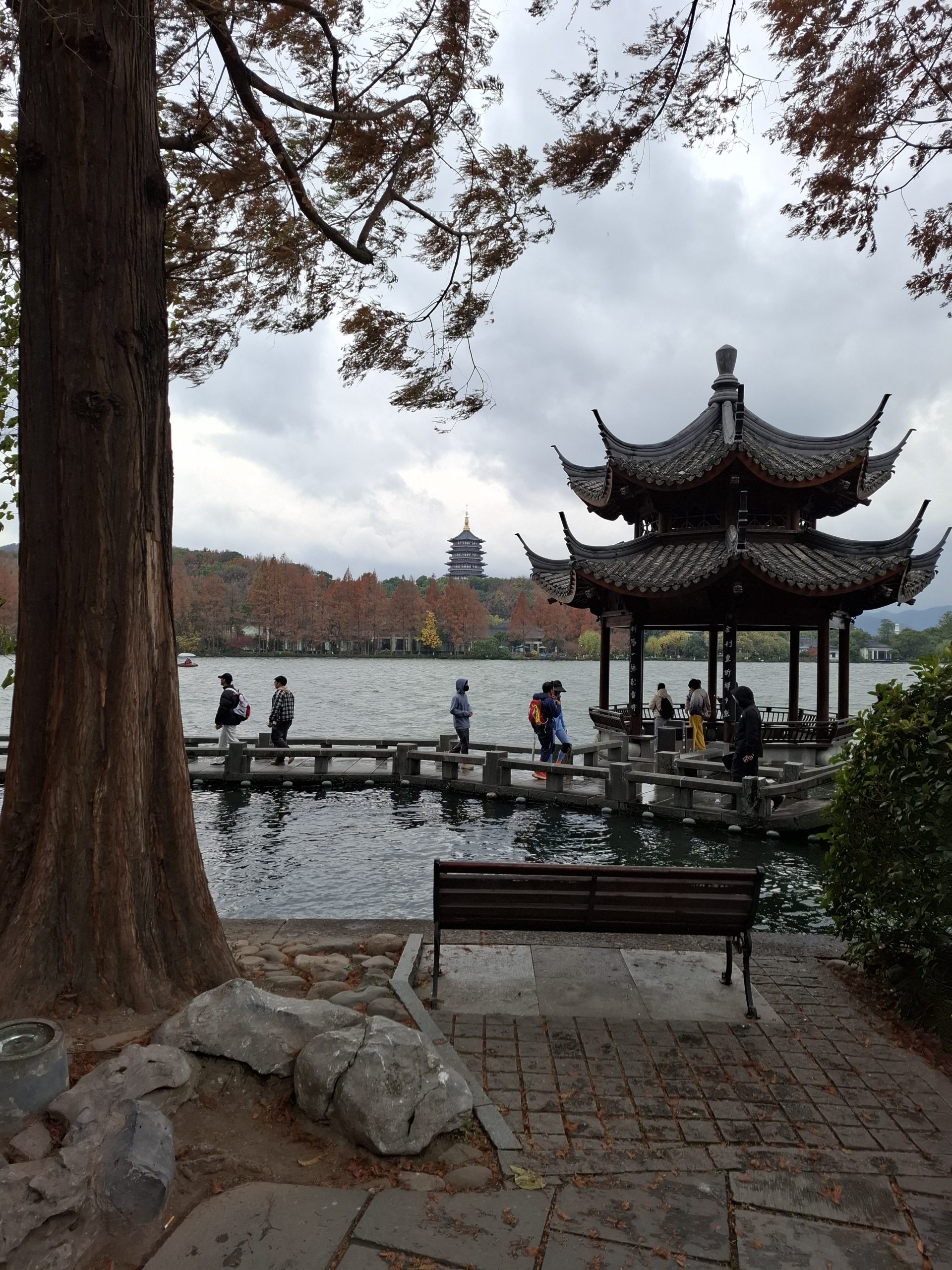
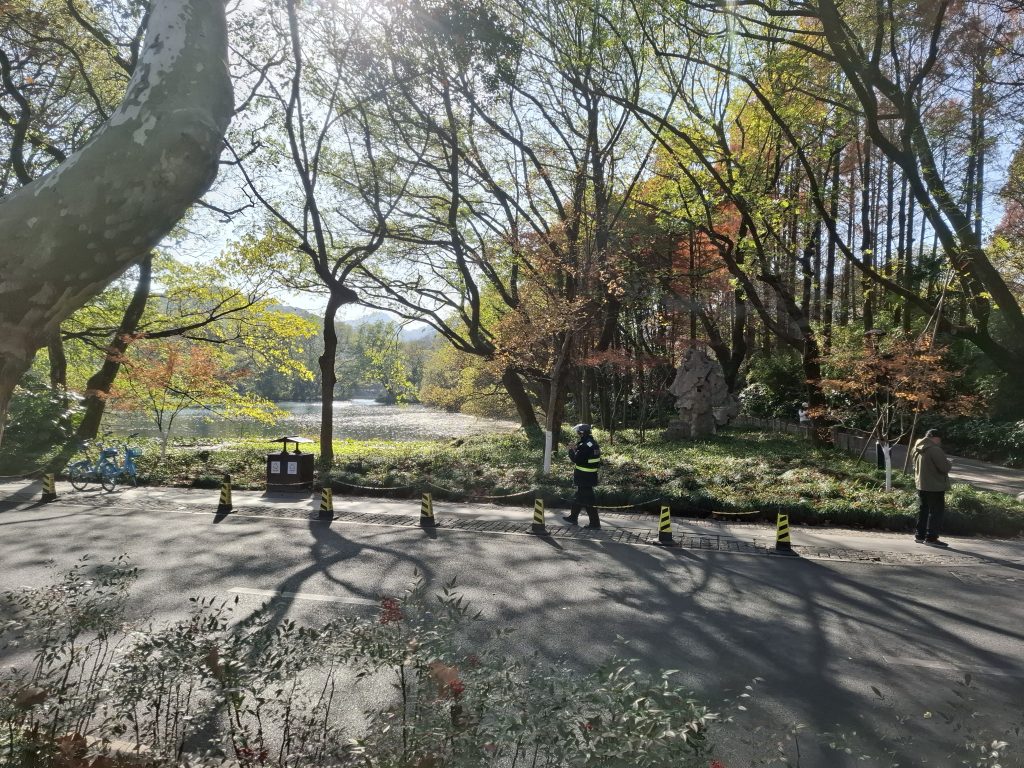
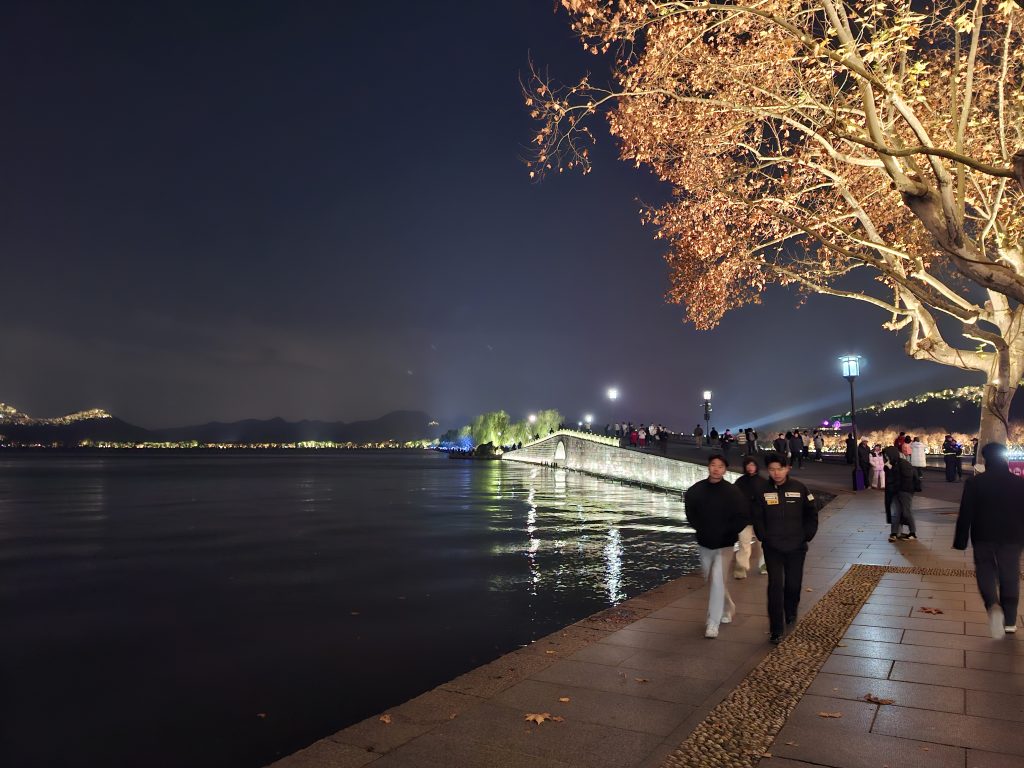
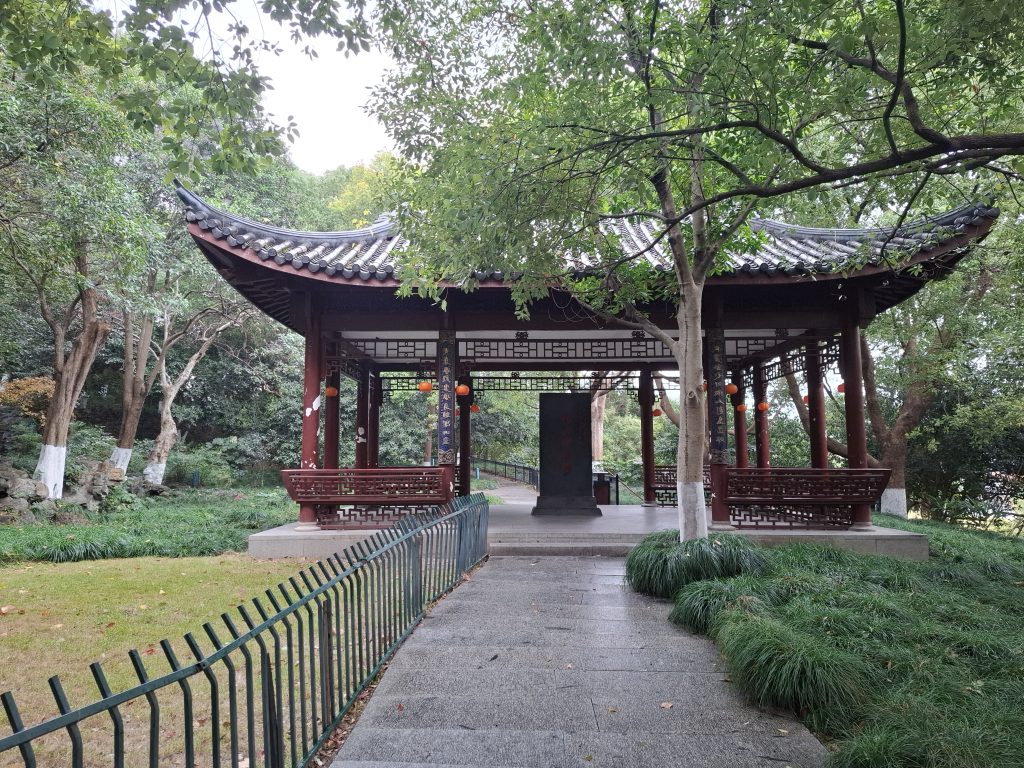
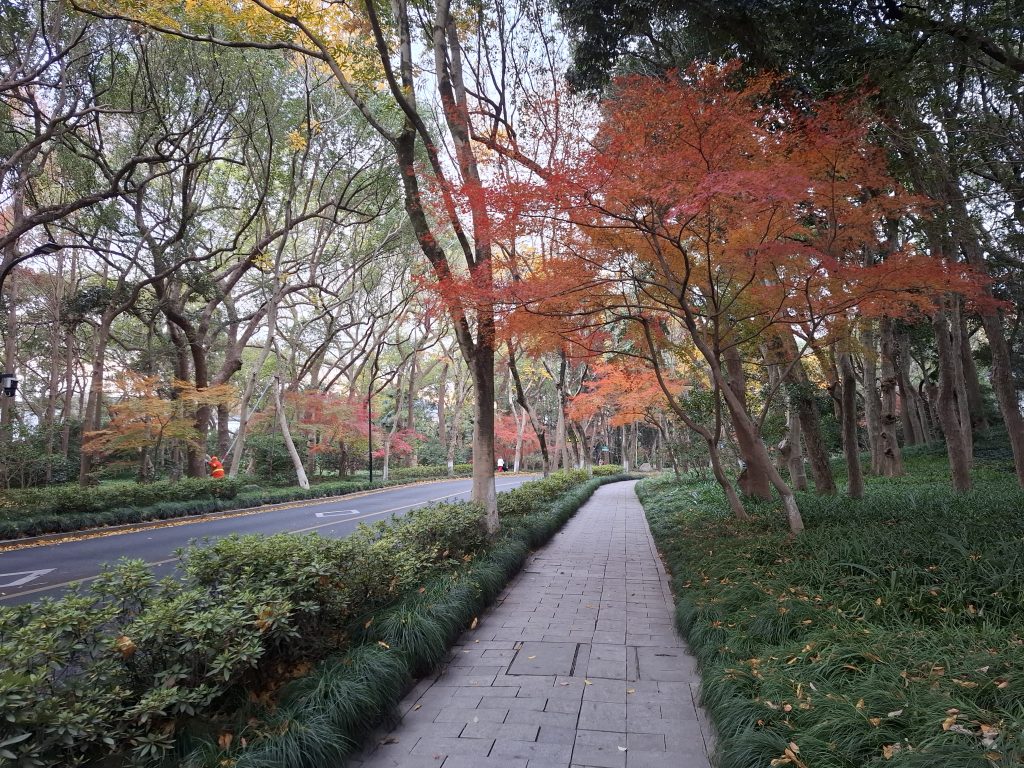
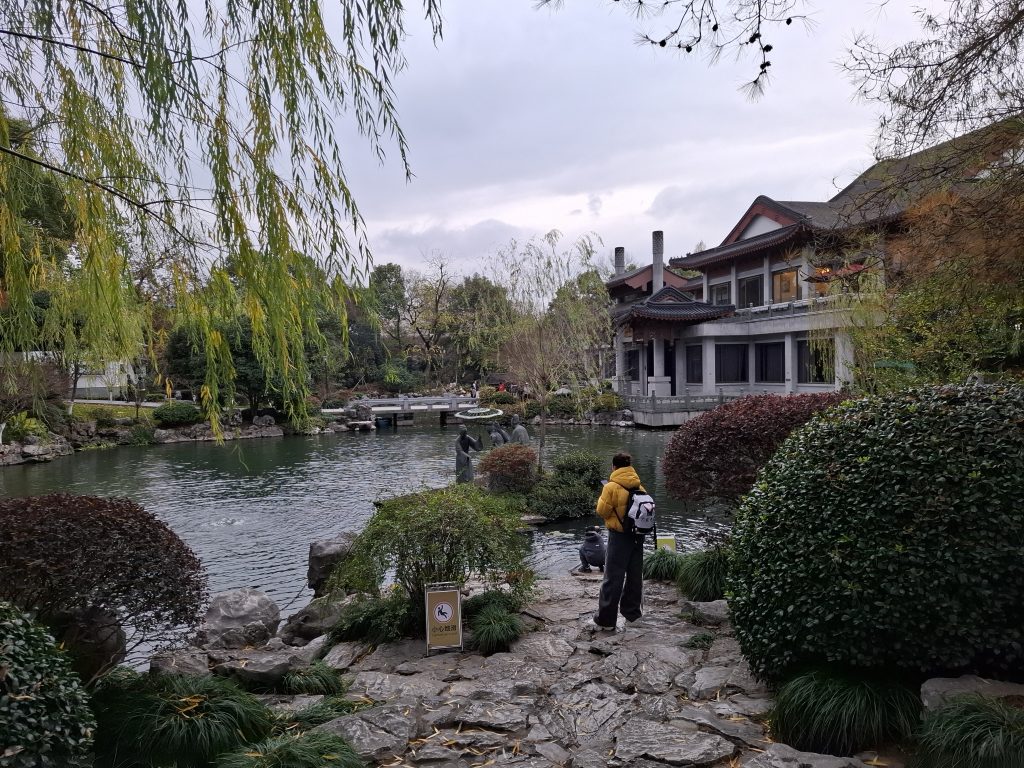
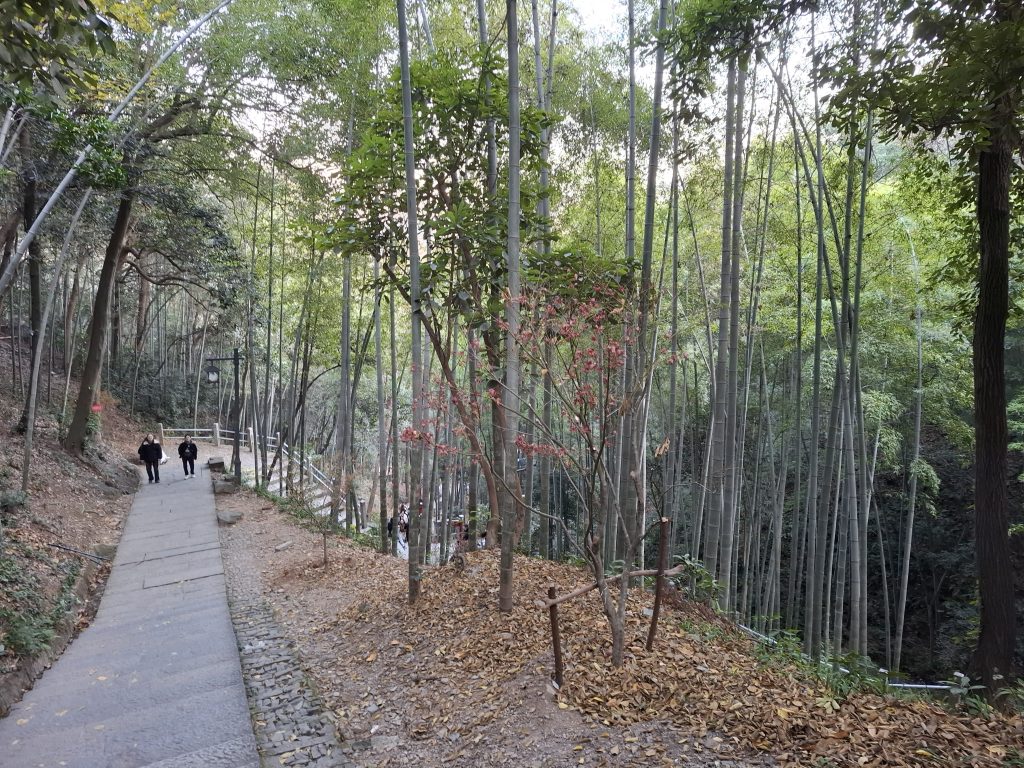
    The city’s poetic heart, inspiration for artists for over a millennium. A walk around the lake will easily take more than 10 kilometers. That is, with shortcuts such as Yunqi Bamboo Path (云栖竹径), a human-made road that cuts the lake in half.

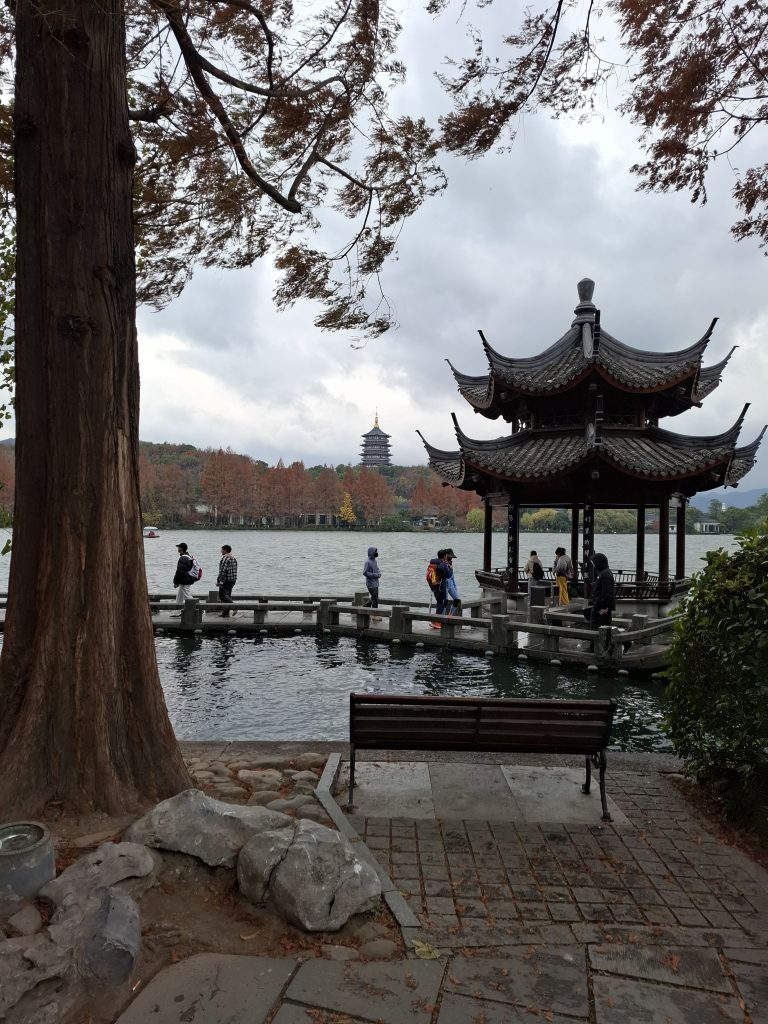
    Designated a UNESCO World Heritage site in 2011, West Lake is celebrated as a “classic example” of the Chinese philosophy of harmony between humans and nature. For over a thousand years, its beauty, crafted by both natural evolution and human care, has been the muse for poets, painters, and emperors.

    West Lake began as a shallow bay over 2,000 years ago. Its iconic landscape is the result of centuries of thoughtful human cultivation. The lake’s enduring appeal is perfectly captured by the Song Dynasty poet Su Shi: “The West Lake is like a lovely lady, whether modestly or lavishly dressed, she is always a sight to behold.”

    To navigate around the lake and the wider scenic area, follow the “Ten Scenic Views” that offer stunning perspectives through the seasons. Key spots include:

    • Three Pools Mirroring the Moon (三潭印月). It offers a view of the iconic stone pagodas that appear on the 1 RMB note.
    • Su Causeway (苏堤) & Bai Causeway (白堤) are serene walkways lined with willow and peach trees, perfect for a lakeside stroll.
    • Broken Bridge (断桥) is famous for its winter “Melting Snow” scene and its connection to the classic Legend of the White Snake.

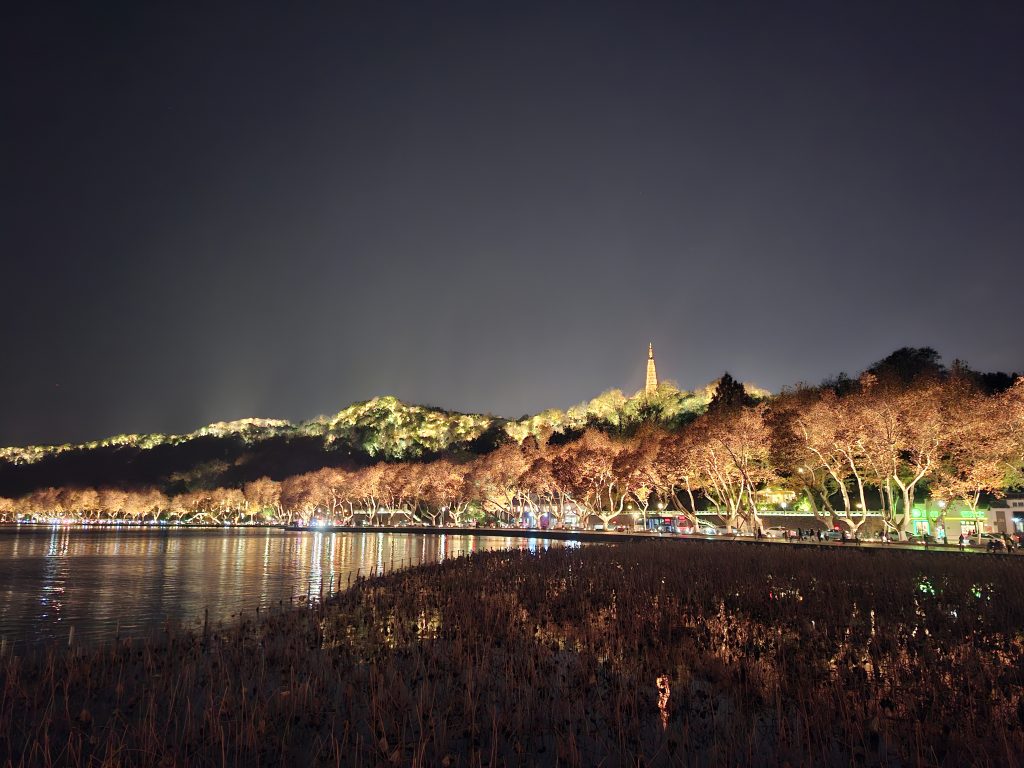
    Most of the histocal attractions of Hangzhou are located in the nearby vicinity of the lake: for example, ancient temples like Lingyin Temple, the Yue Fei Temple (Tomb of General Yue Fei), and the ancient Leifeng Pagoda.

    City God Pavillion and Wushan Hill

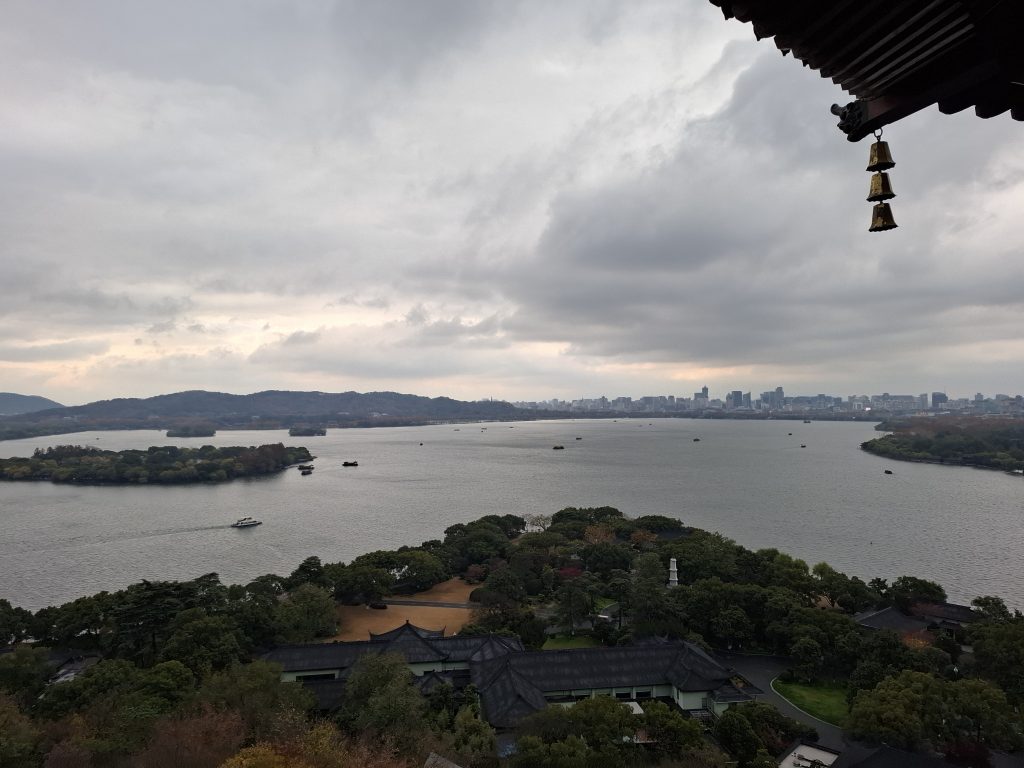
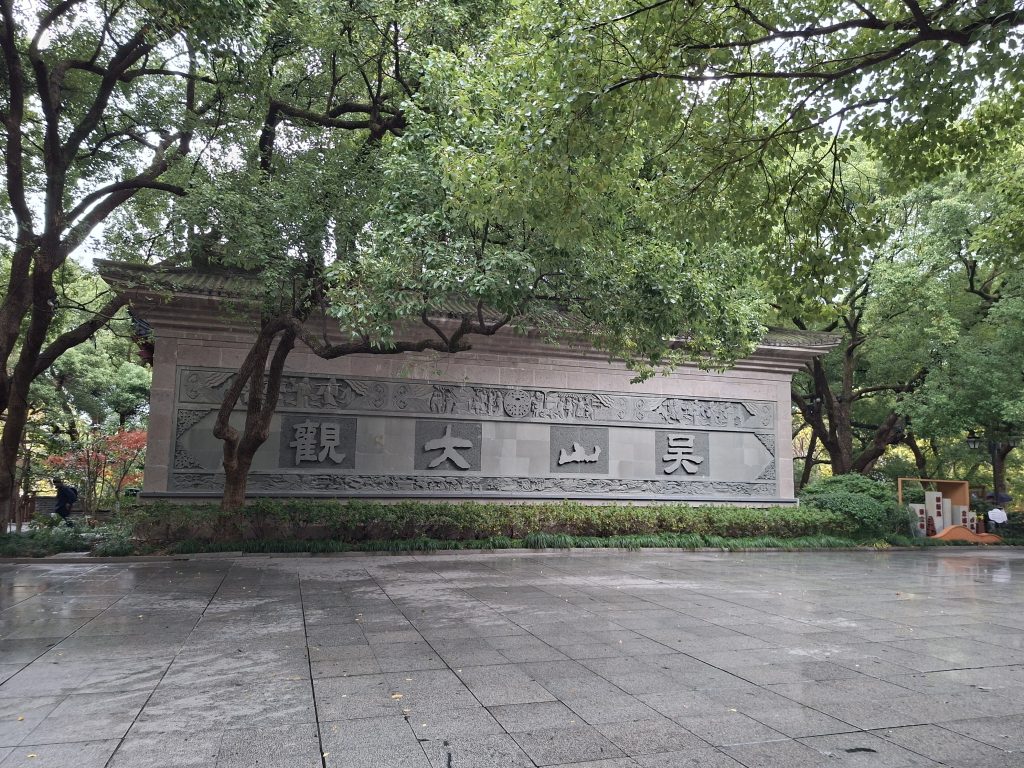
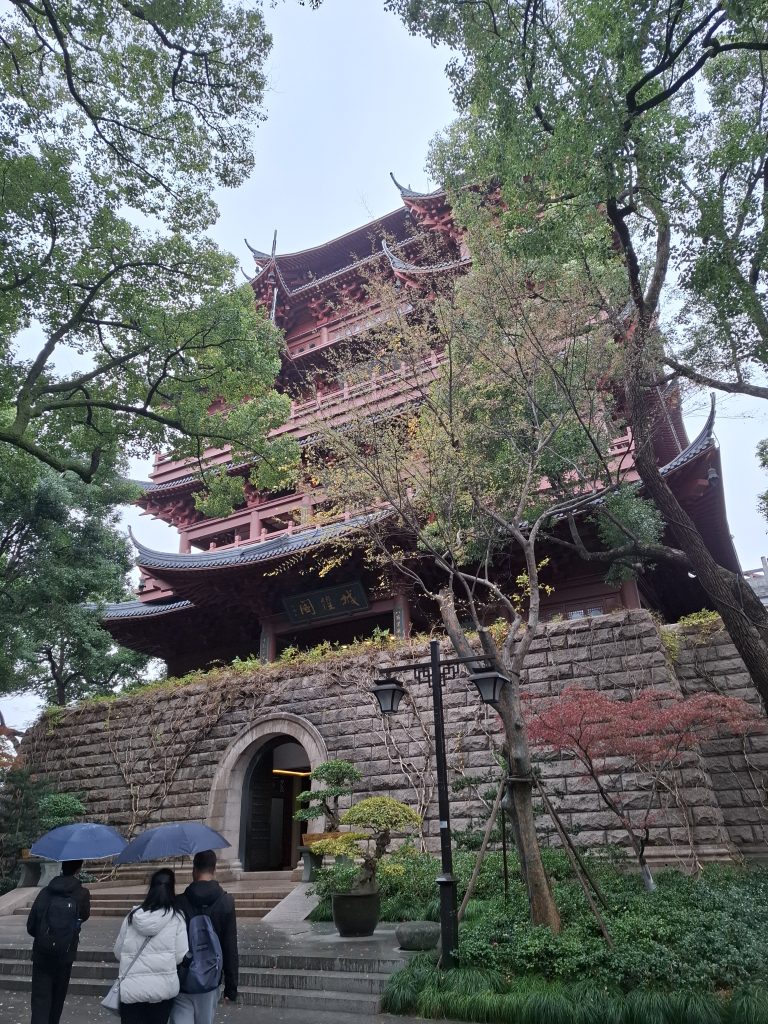
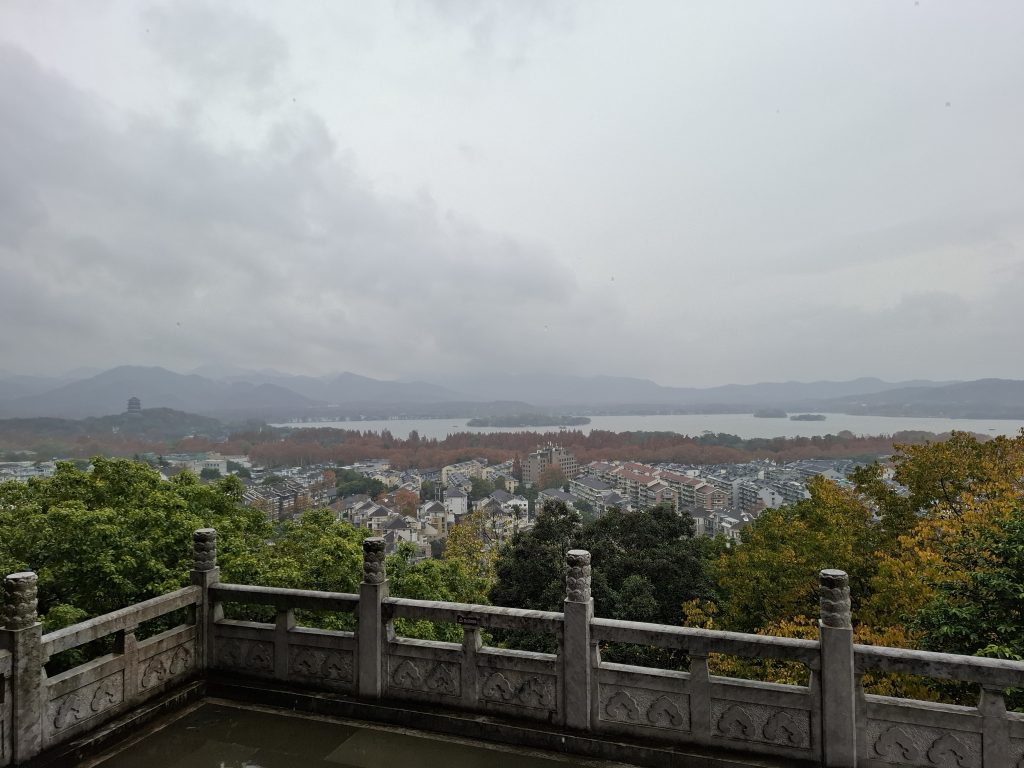
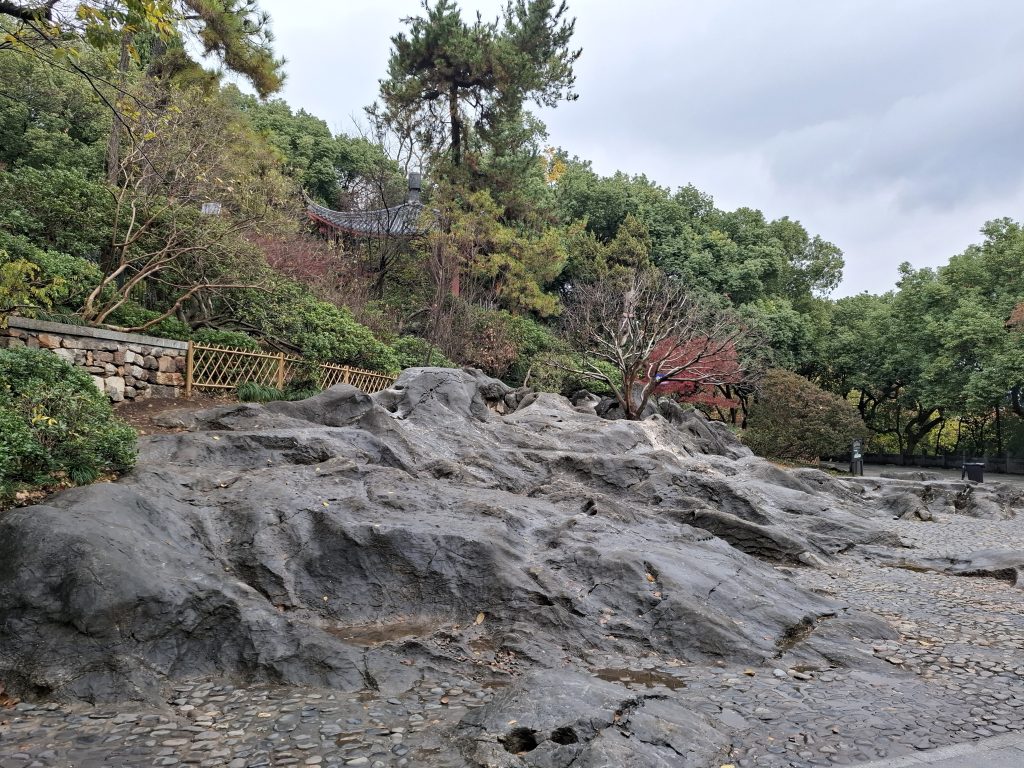
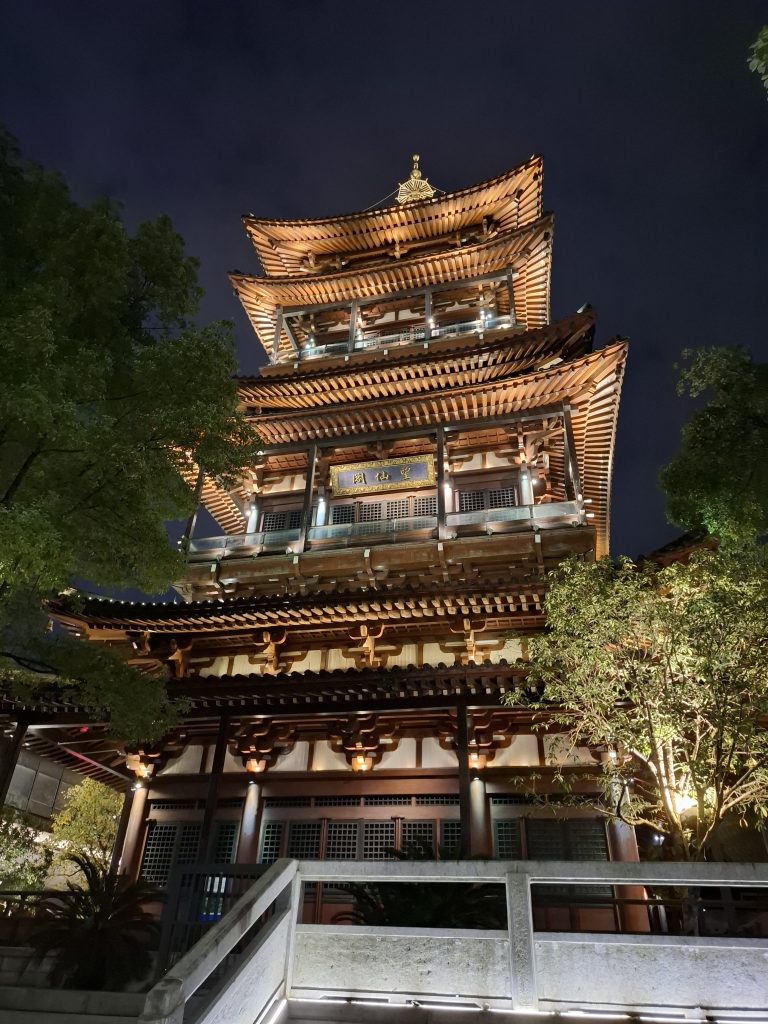
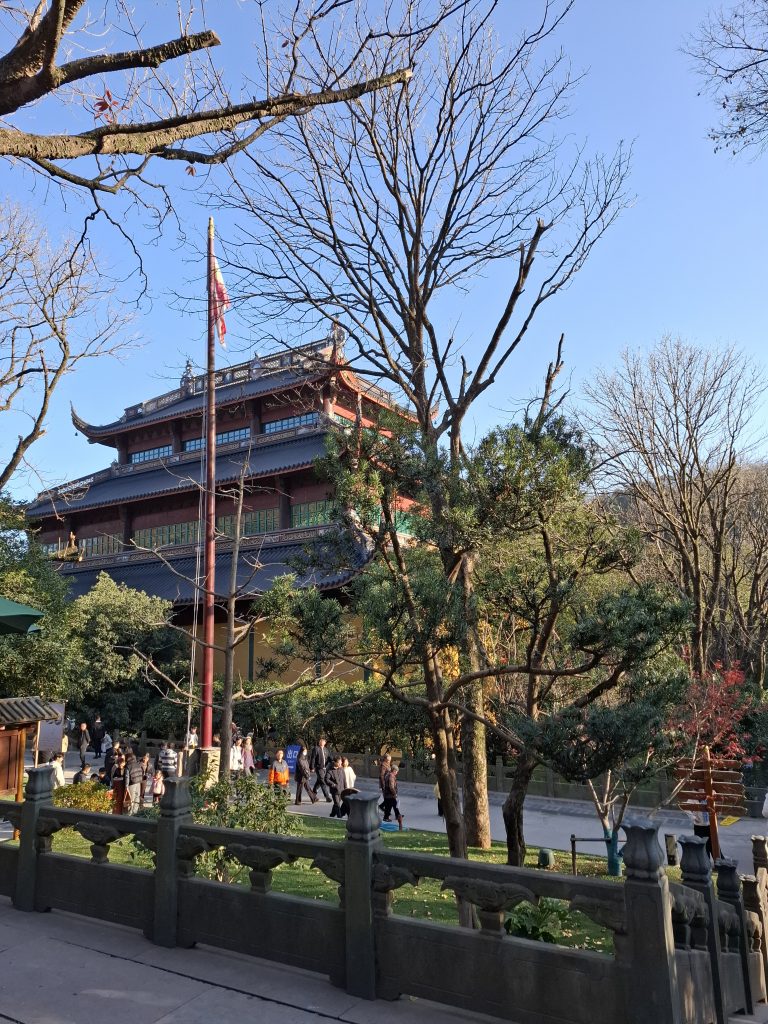
    City God Pavillion (also known as Chenghuangge, or the Wushan Scenic Area – Town God Pavilion Scenic Area) is a key cultural and viewing destination in Hangzhou located on the hill by the lake. Its main draw is the panoramic view of West Lake, the city, the Qiantang River, and surrounding mountains from the top of Wushan Hill (吴山).

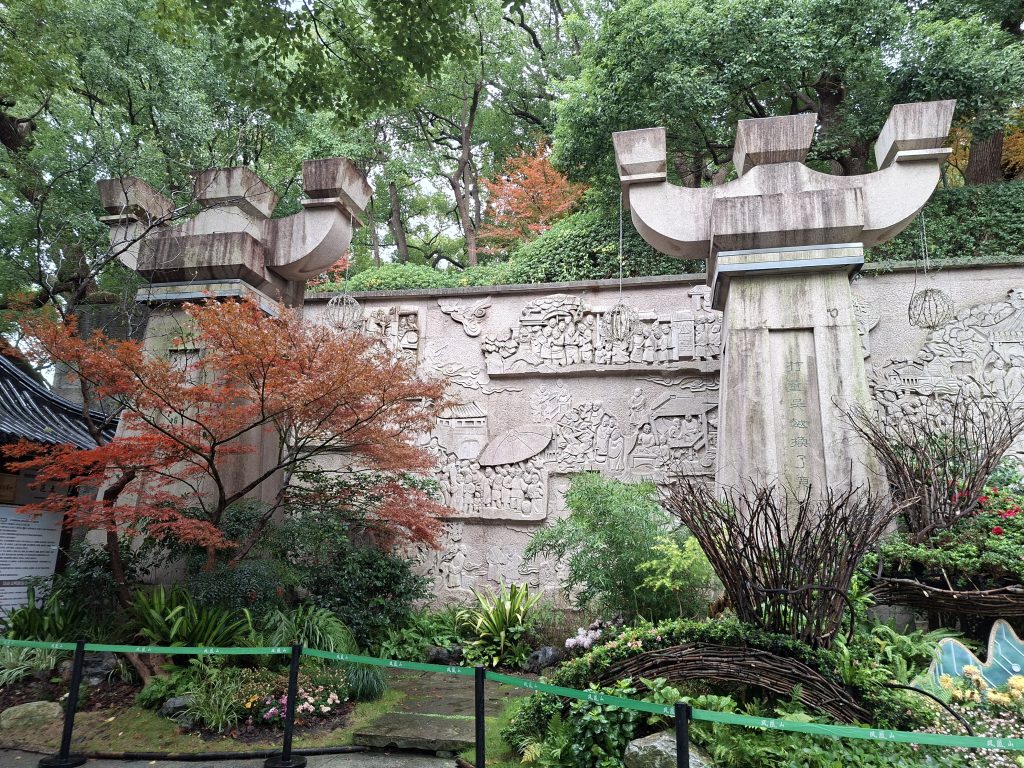
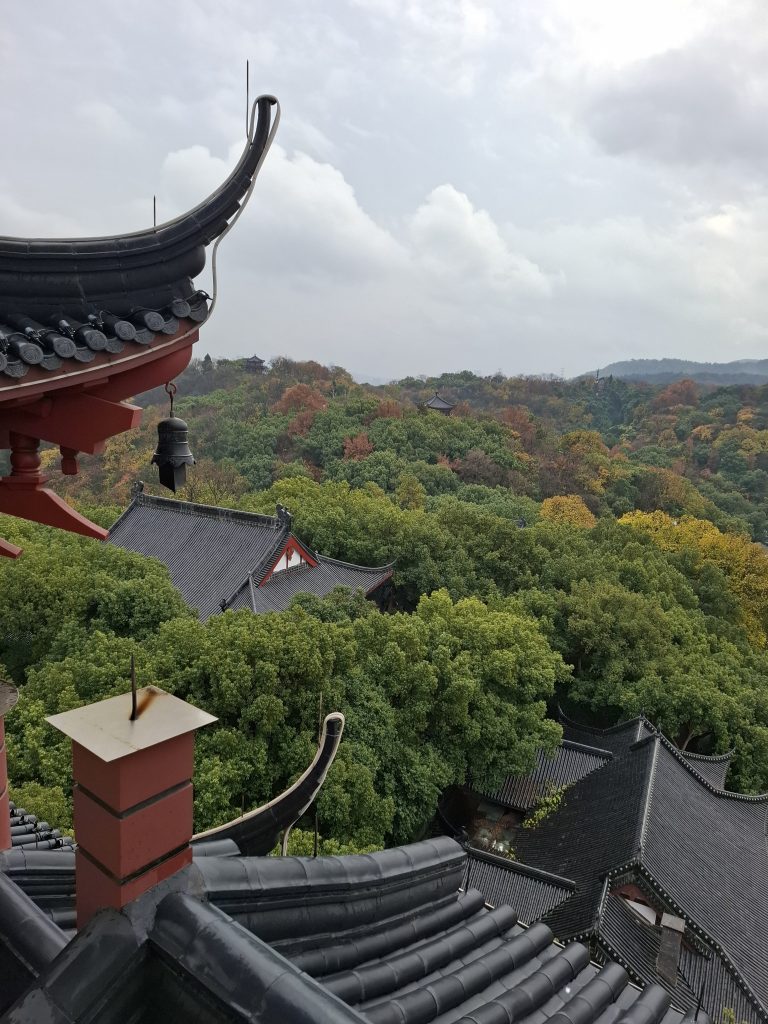
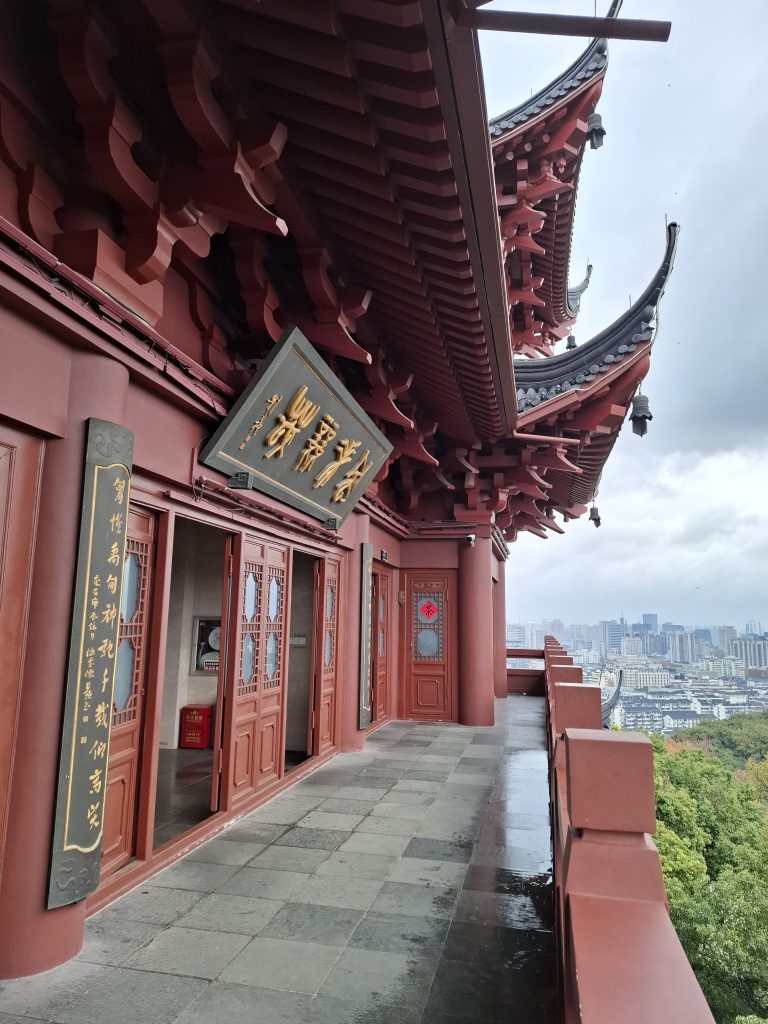
    Chenghuang Pavilion (城隍阁) located on top of the hill, is a 7-story (41.6m tall) pagoda-style pavilion. The current Chenghuang Pavilion was built on the historic site of the old City God Temple, continuing its cultural legacy. It blends Song and Yuan dynasty styles and houses cultural exhibits like the “Southern Song Dynasty Hangzhou Customs” mural.

    The hill also features City God Temple (城隍庙), which is a a historic Daoist temple complex with origins in the Southern Song Dynasty.

    To visit the Wushan Hill, travel to the Wushan Square metro station, start with the Hefang Street, Drum Tower, and Southern Song Imperial Street and walk up the hill after that.

    Hefang Street, Drum Tower, and Southern Song Imperial Street

    Hefang Street, Drum Tower, and Southern Song Imperial Street form the historic core of Hangzhou’s old city.

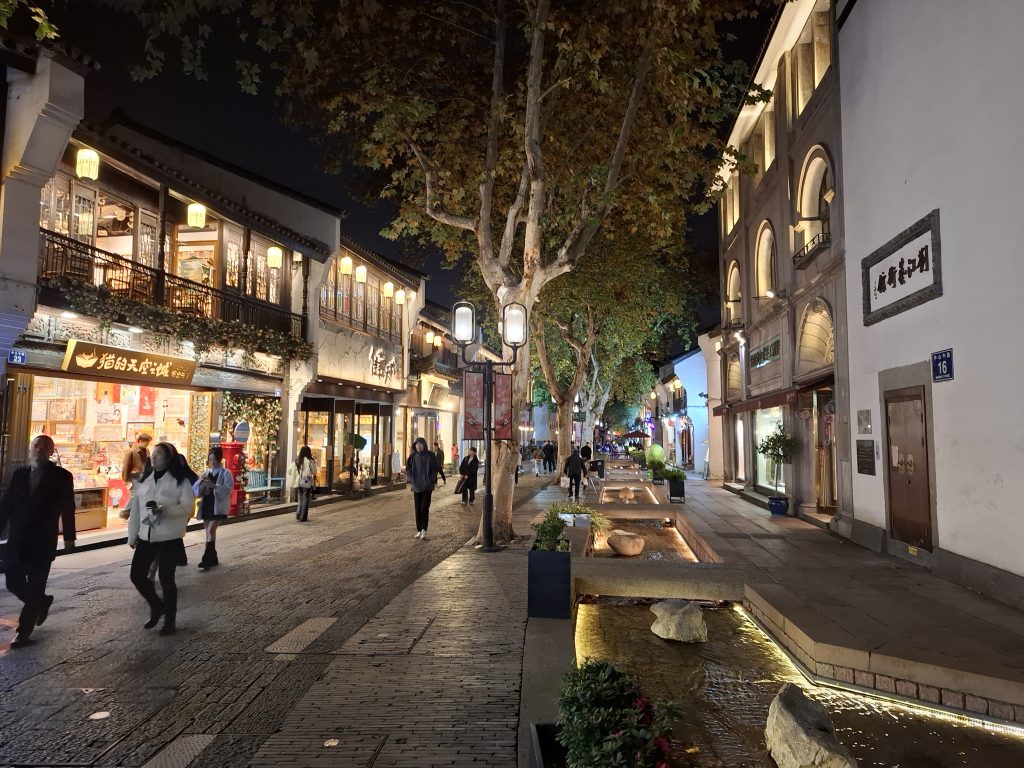
    Southern Song Imperial Street is a historic 4185-meter central axis of the Southern Song Capital, transformed into a “museum street” with water features and underground ruins displays.

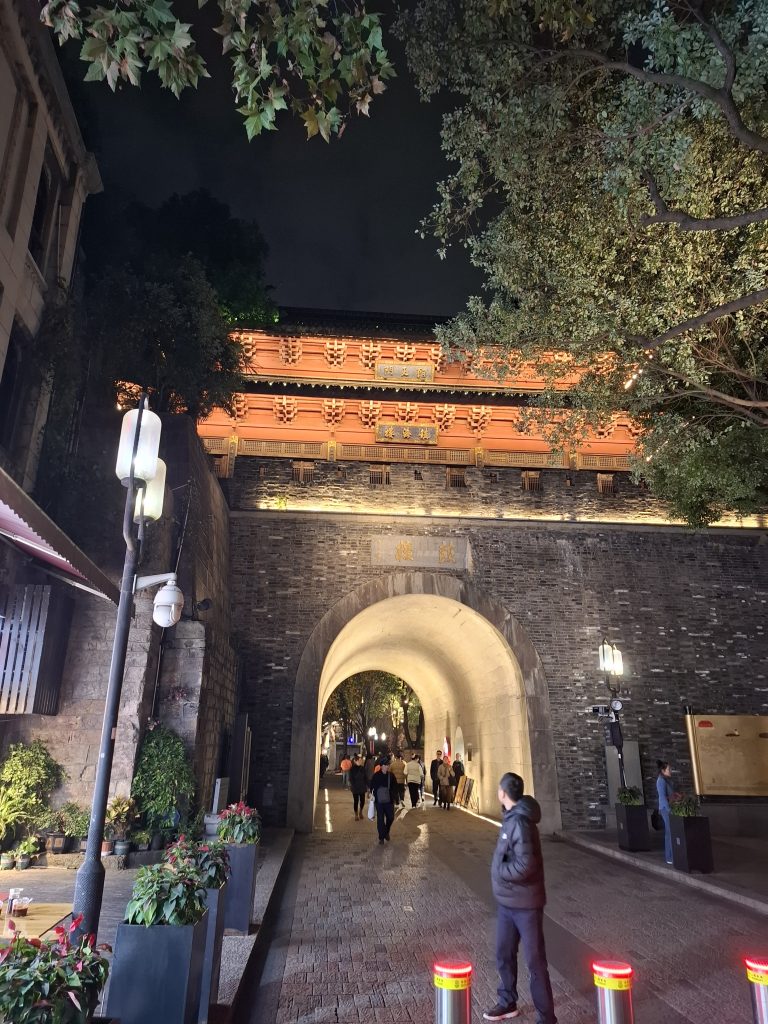
    Drum Tower is a historical gate tower and city landmark, rebuilt in 2002 on a 1,000-year-old site. It once marked the divide between the imperial city and the public market.

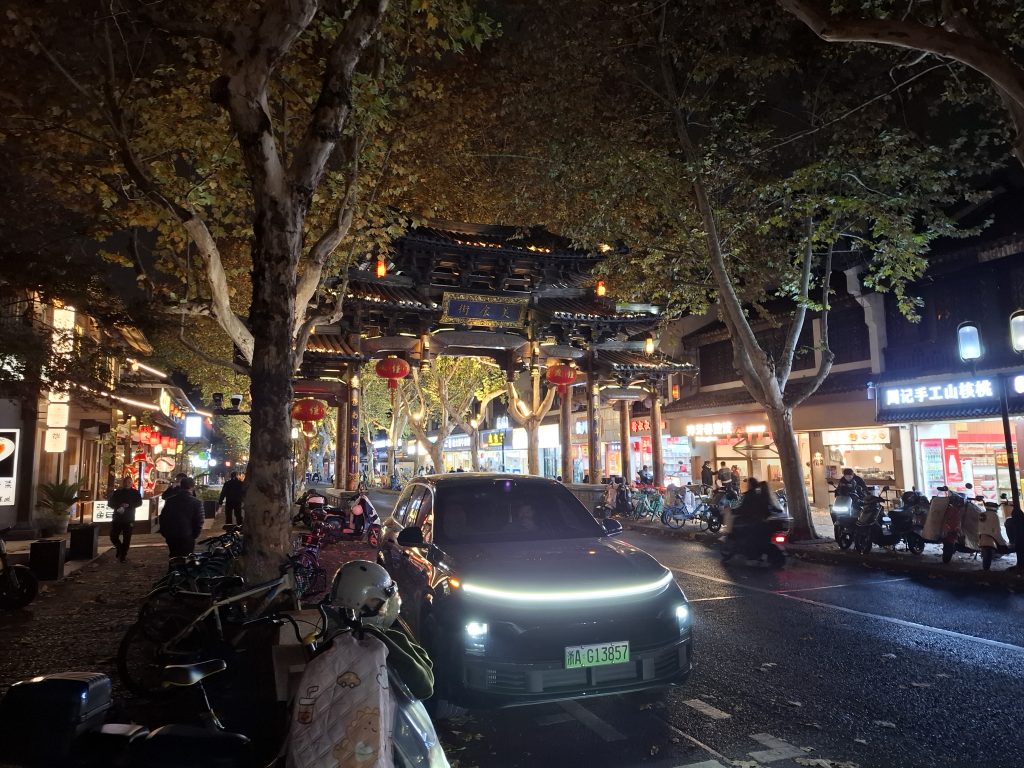
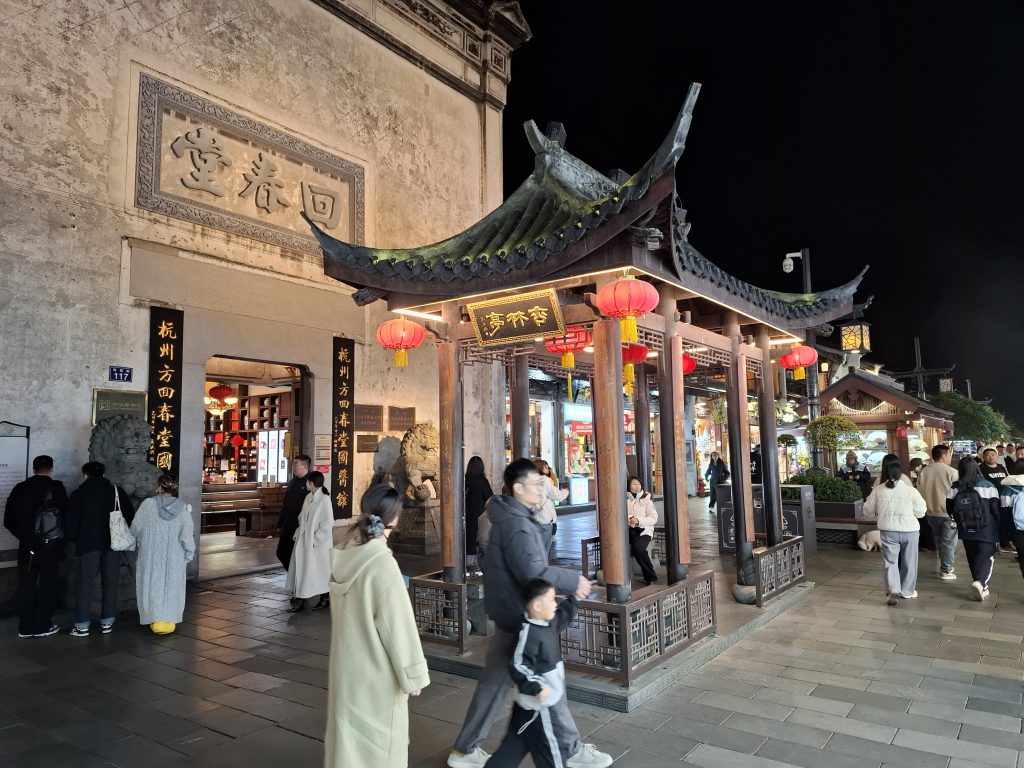
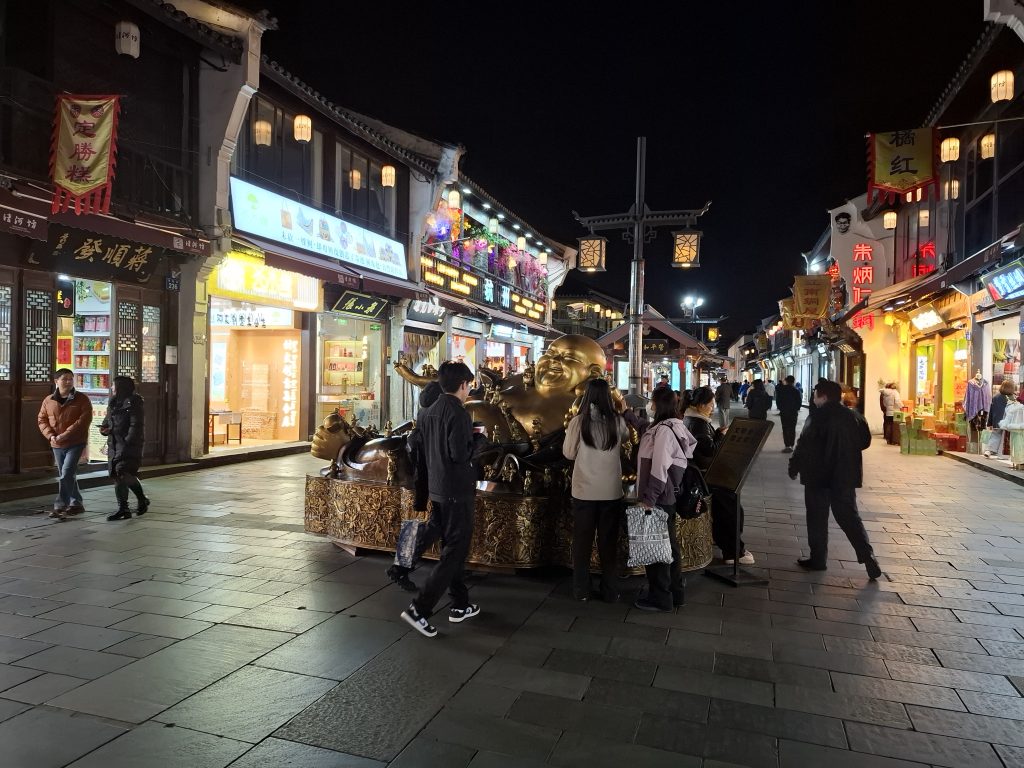
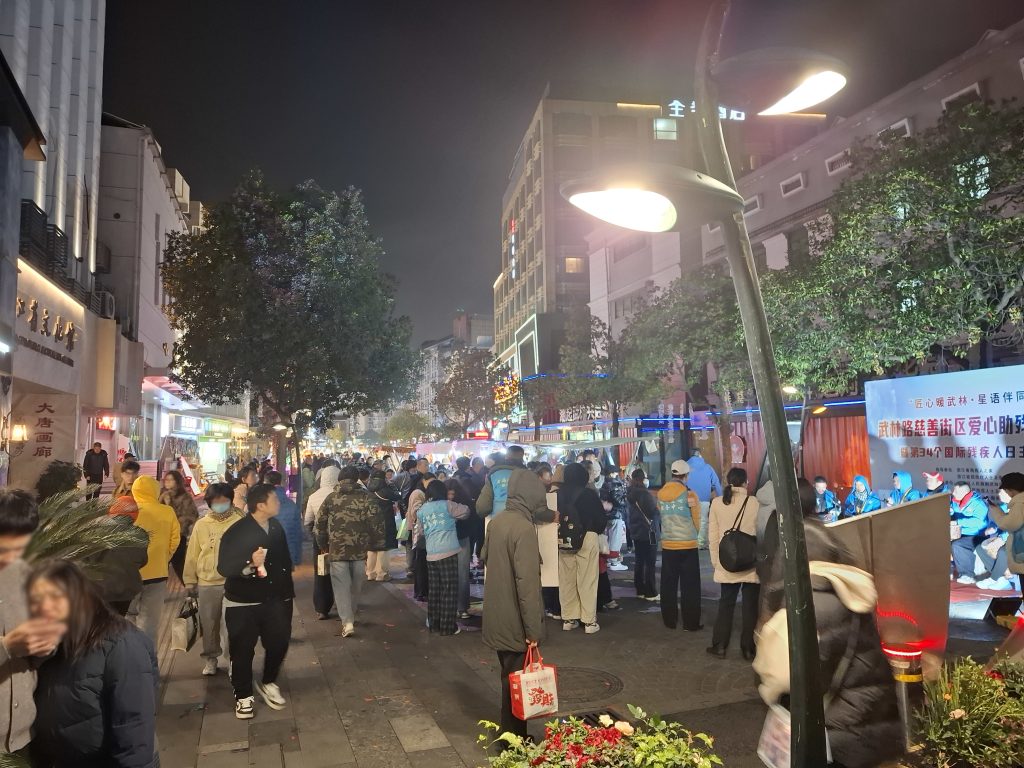
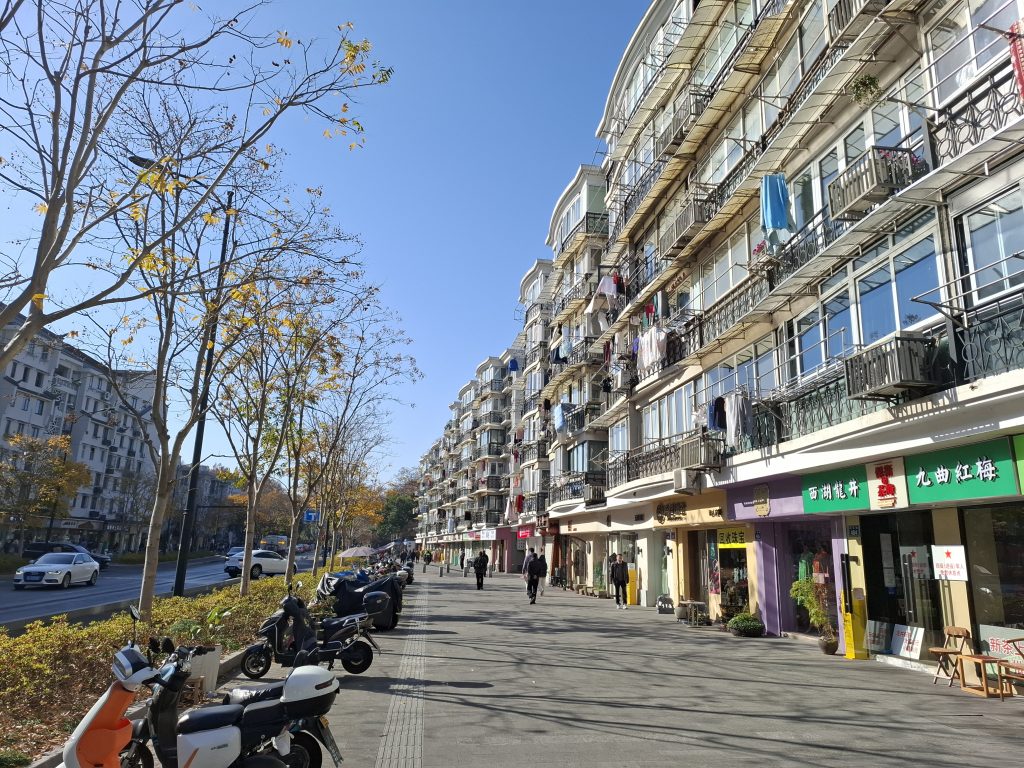
    Hefang Street is a lively pedestrian street with origins in the Southern Song era, lined with century-old shops and food stalls. Now it’s bustling with commerce and food.

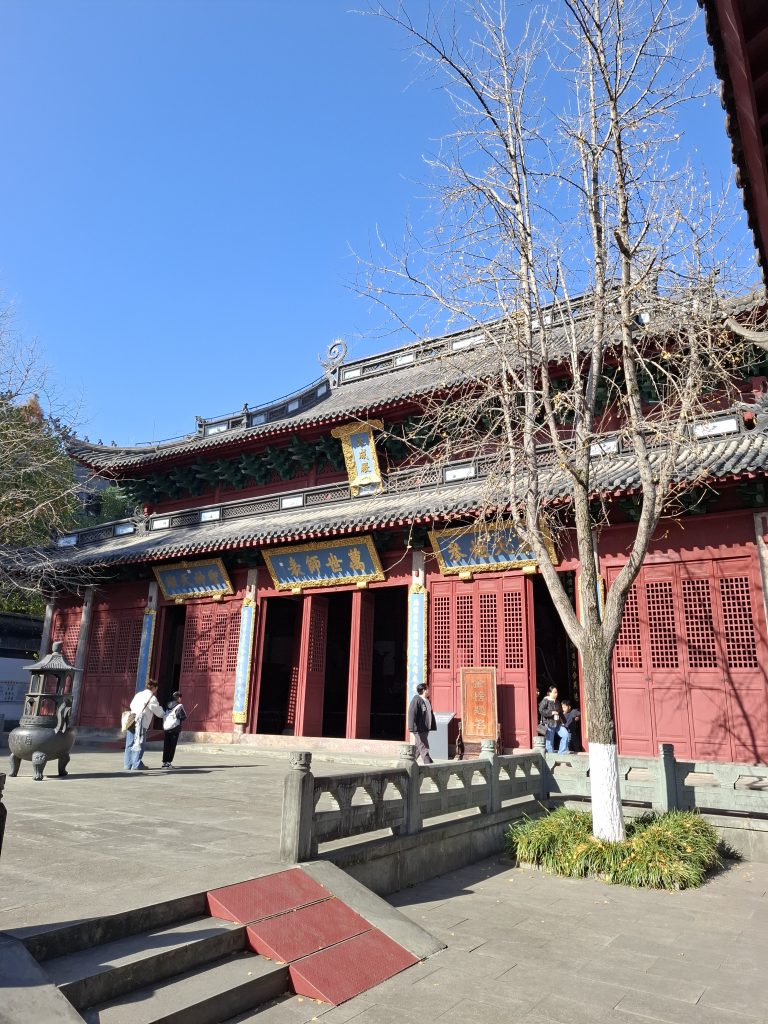
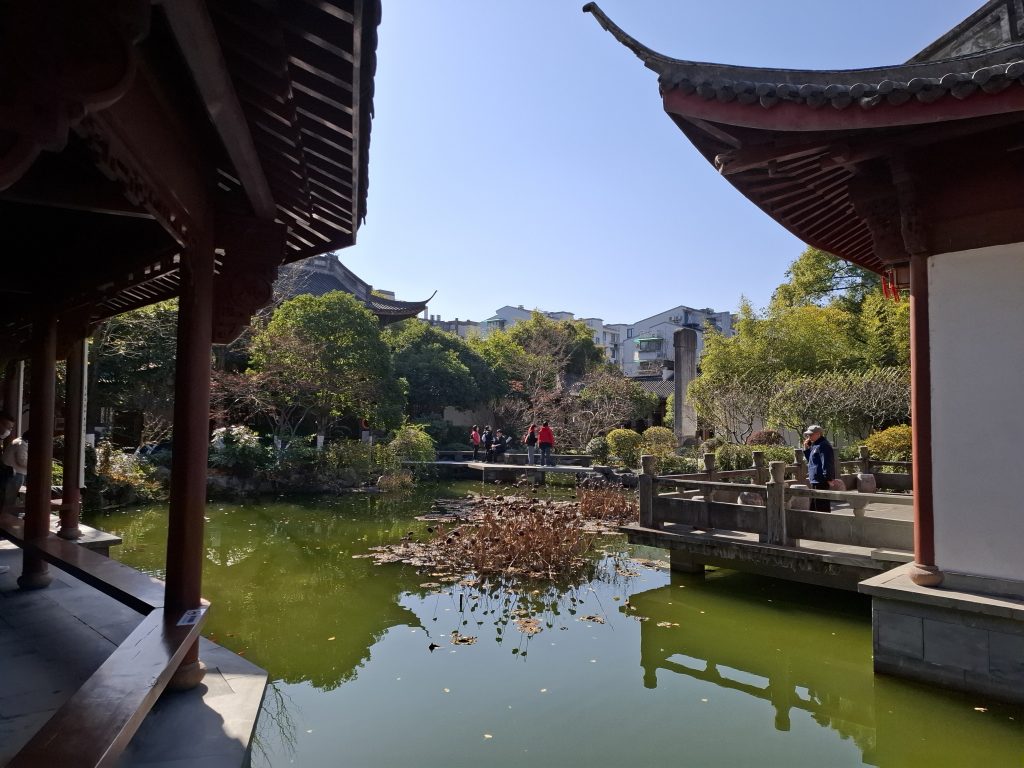
    Hangzhou Confucian Temple

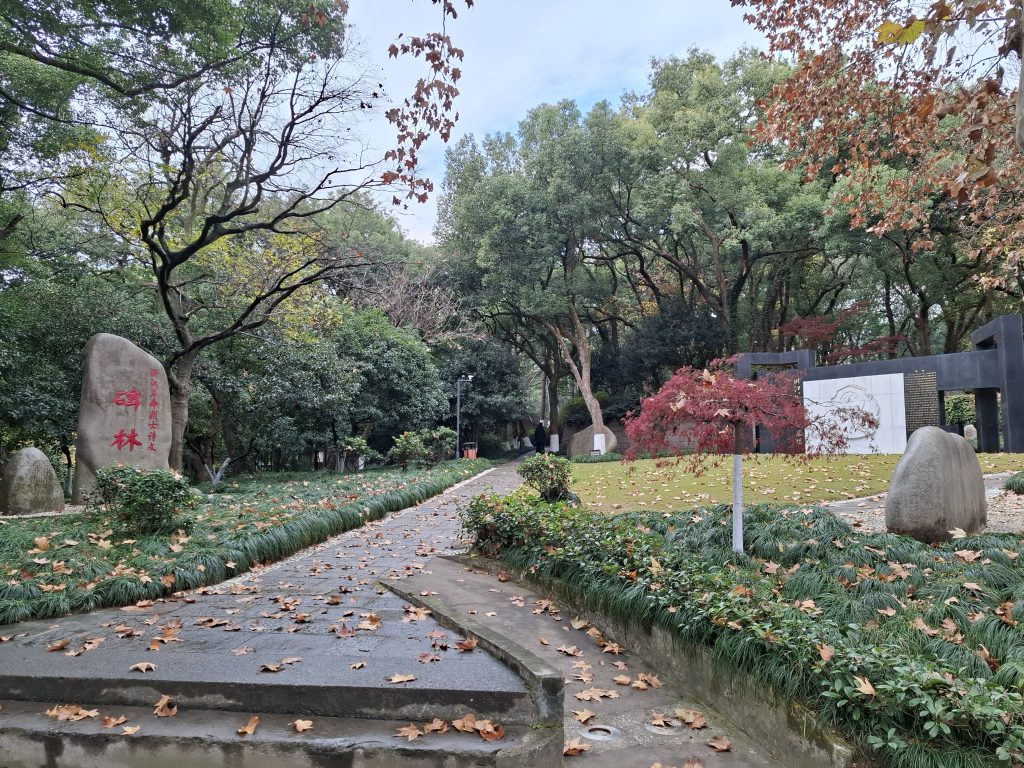
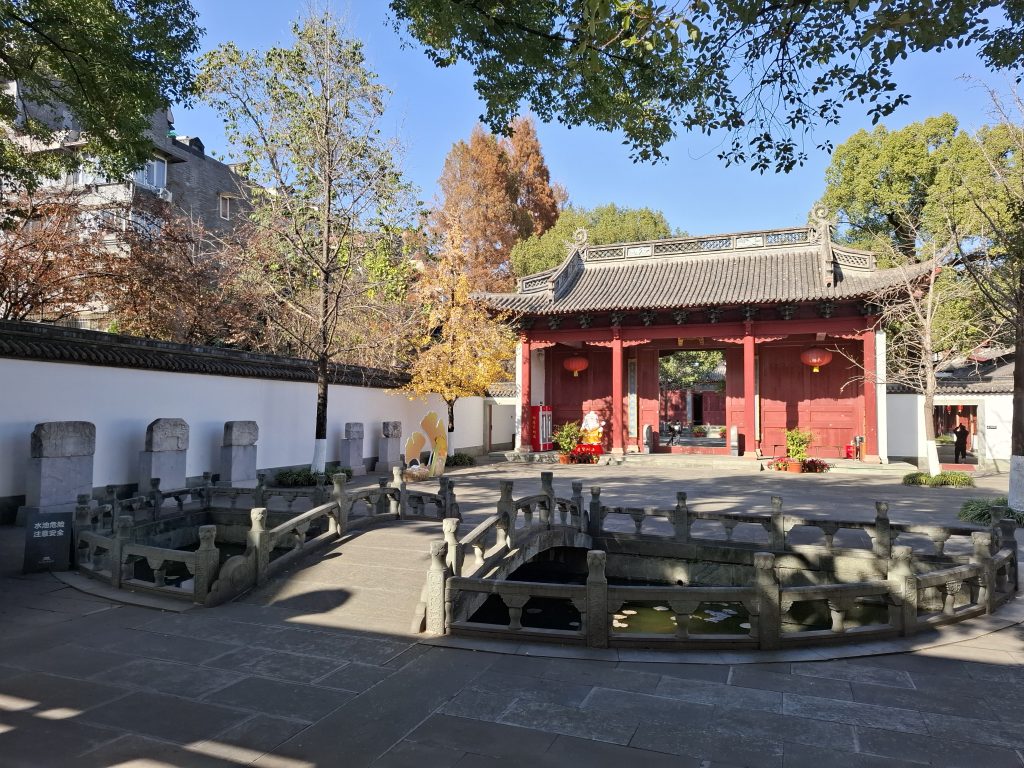
    By the same metro station, you can find the Hangzhou Confucian Temple (杭州孔庙), locally called the “Stele Forest” (碑林, Beilin) due to its impressive collection of over 500 ancient stone steles, is located. This temple is a major historical and cultural site, with its origins tracing back to the Southern Song Dynasty (1127–1279). originally established as the Lin’an Prefecture Academy (临安府学) in 1131.

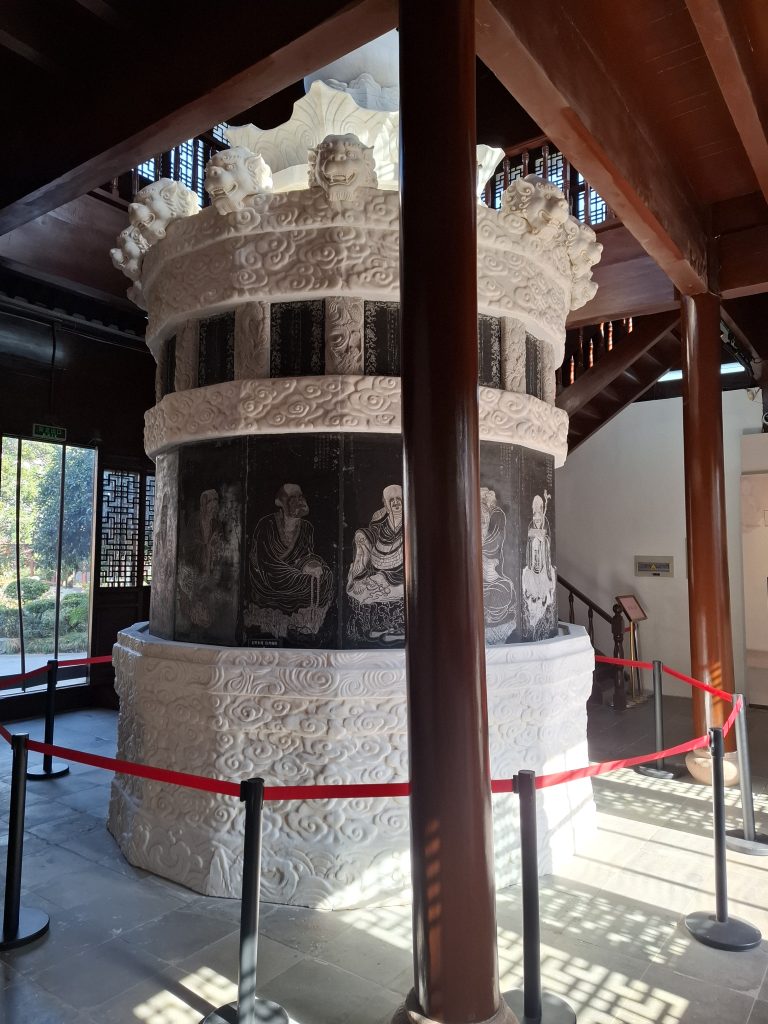
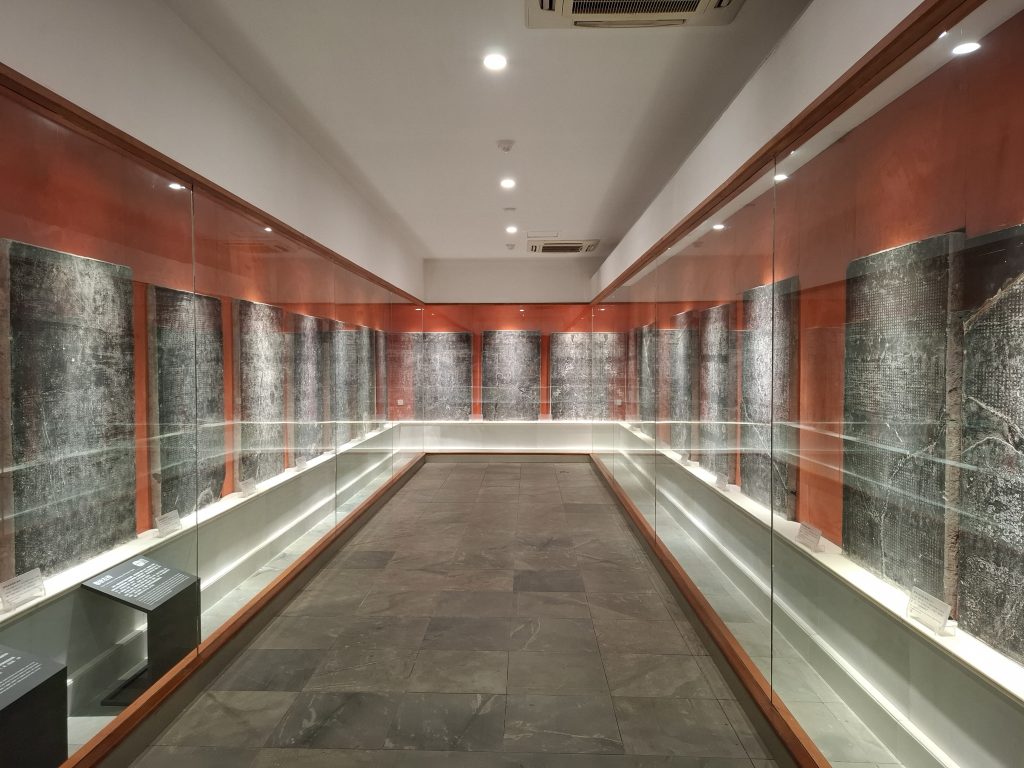
    The temple’s Stele collection is its main highlight, featuring steles spanning from the Tang Dynasty (618-907) to the Qing Dynasty (1644-1911) , including 85 Imperial Steles from the Southern Song, personally inscribed by Emperor Gaozong (Zhao Gou), the founding emperor of the Southern Song Dynasty. This is the only preserved collection of its kind written by an emperor.

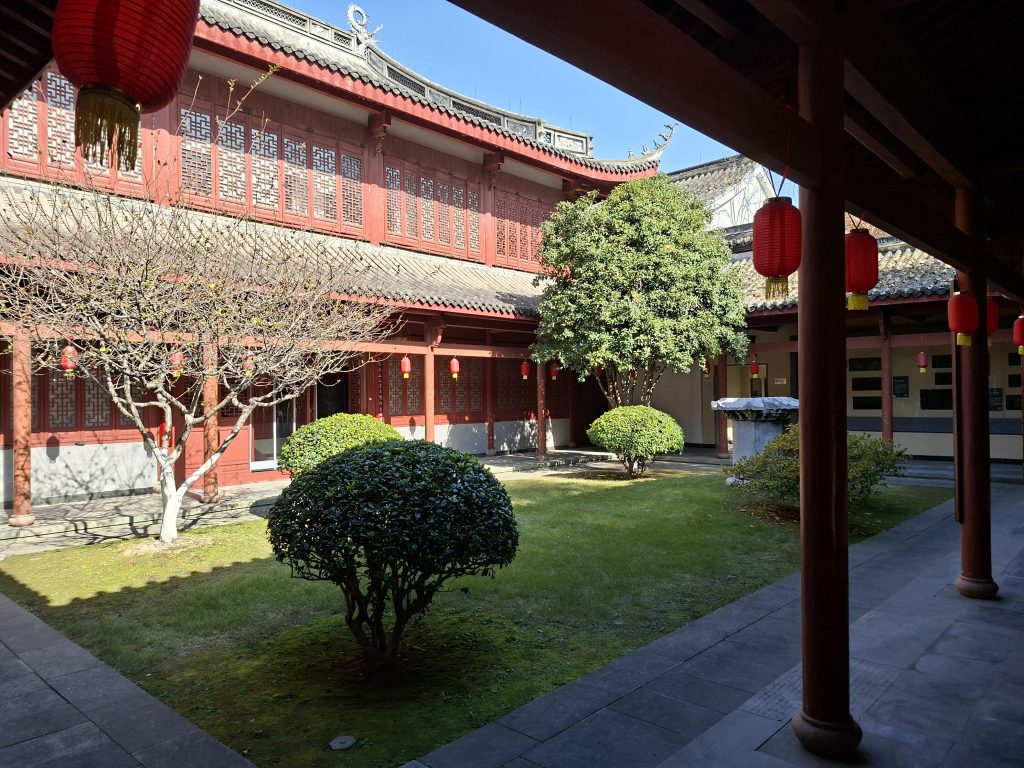
    The temple is divided into three main areas you can explore. West Area (Confucius Temple) has the main Dacheng Hall (大成殿), featuring well-preserved Qing Dynasty architecture and paintings. Central Area is the Stele Forest with long stele corridors (over 300 meters) housing the collection of over 500 steles. East Area is Jiangnan Garden, a classical Chinese garden with pavilions like the Stone Classics Pavilion, offering a tranquil space.

    🏯 Leifeng Pagoda

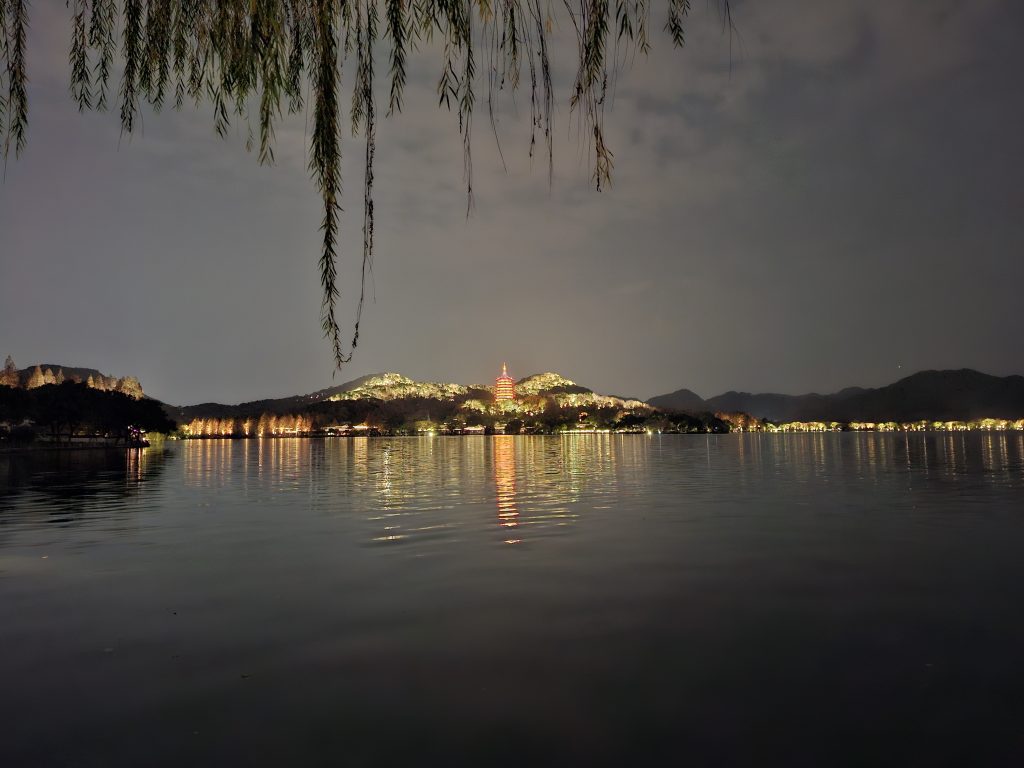
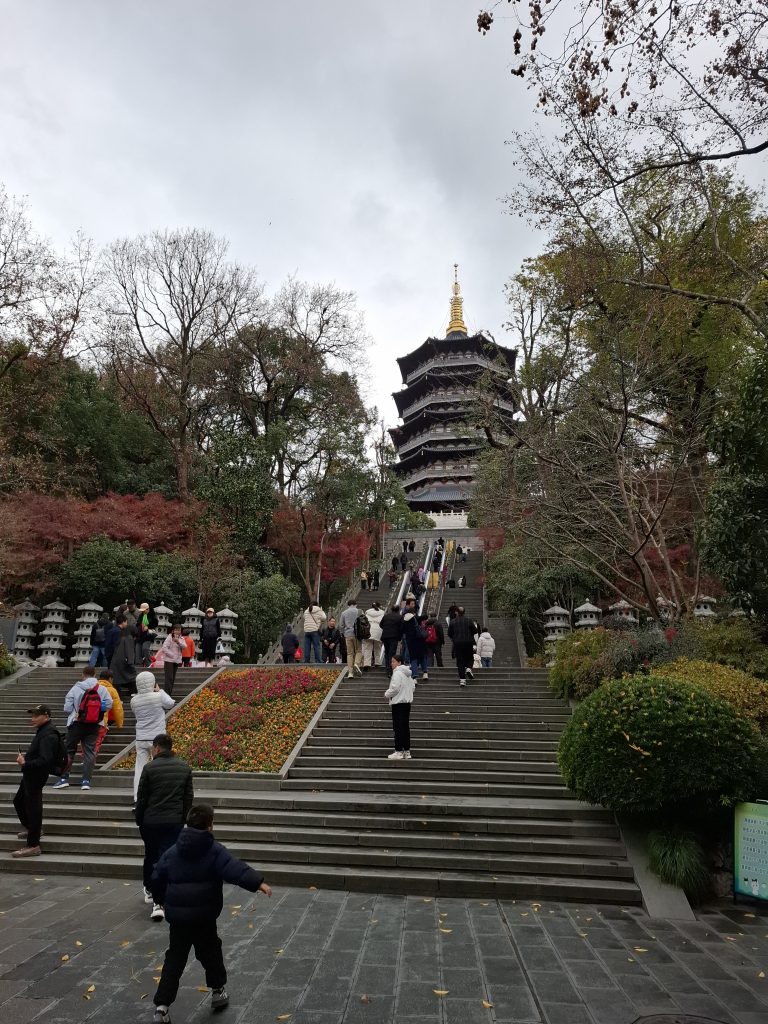
    Today’s Leifeng Pagoda is a 71.6-meter-tall 21st-century tower built directly over the ruins of the ancient one. The original pagoda had a long and tumultuous history. It was built by the King of the Wuyue Kingdom to celebrate the birth of a son in 977 AD. It was damaged by war in the 12th century and severely burned by pirates in the Ming Dynasty (16th century), which destroyed its wooden components. Due to structural weakening from theft and weathering, the pagoda finally collapsed on September 25, 1924. After major archaeological excavations from 2000-2001, the current pagoda was rebuilt and opened in October 2002.

    The pagoda’s fame stems from two powerful cultural elements:

    The Legend of the White Snake. According to the legend, the monk Fahai imprisoned the snake spirit Bai Suzhen (Lady White) underneath Leifeng Pagoda to separate her from her mortal husband. This tale is a core part of the visitor experience embodied through decor.

    “Leifeng Pagoda in Evening Glow” (雷峰夕照) is one of the Ten Scenic Views of West Lake. The sight of the pagoda bathed in the golden light of sunset is iconic. For the best view of this scene, visitors often go to the nearby Long Bridge.

    Lingyin Temple and Feilai Peak

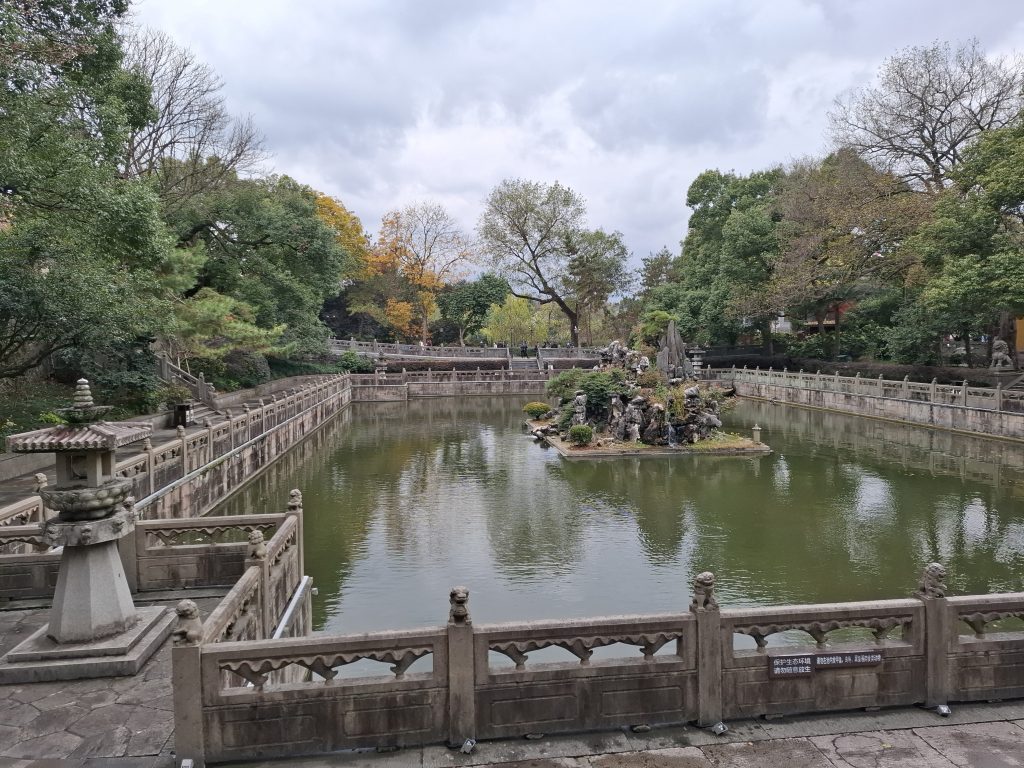
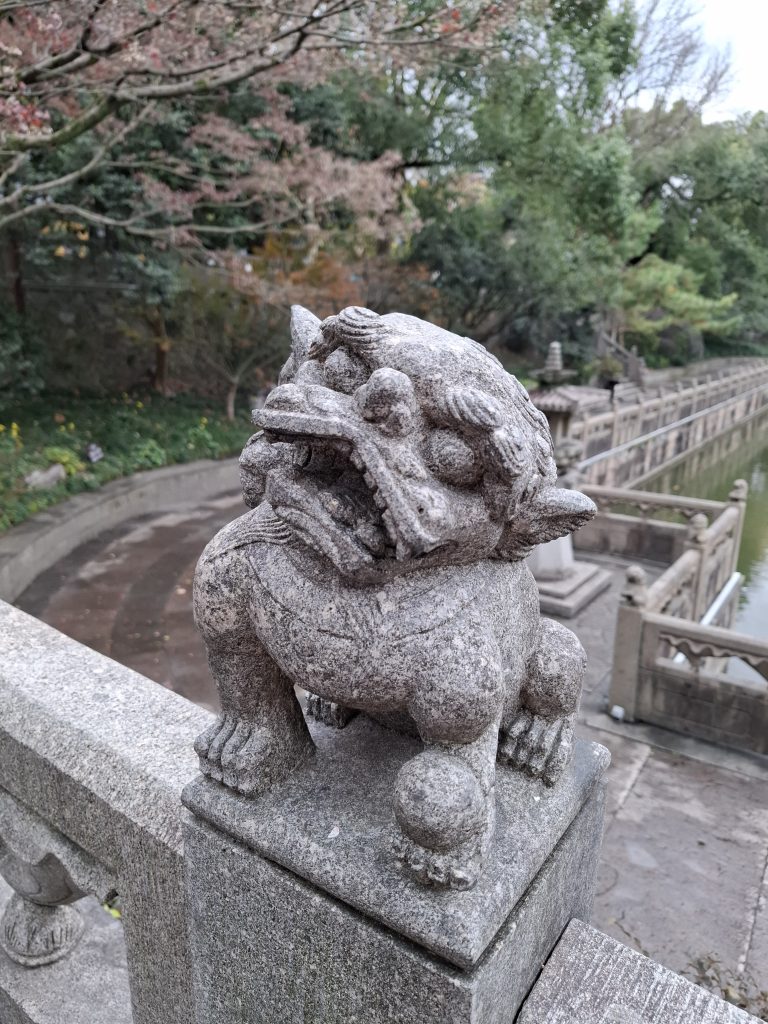
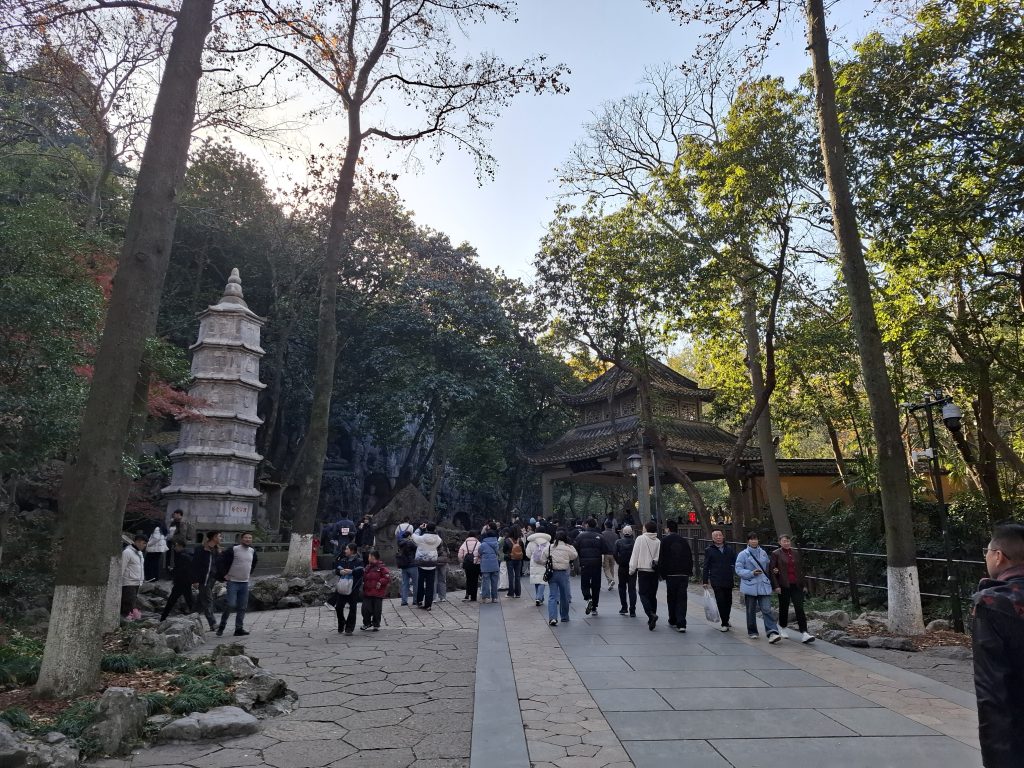
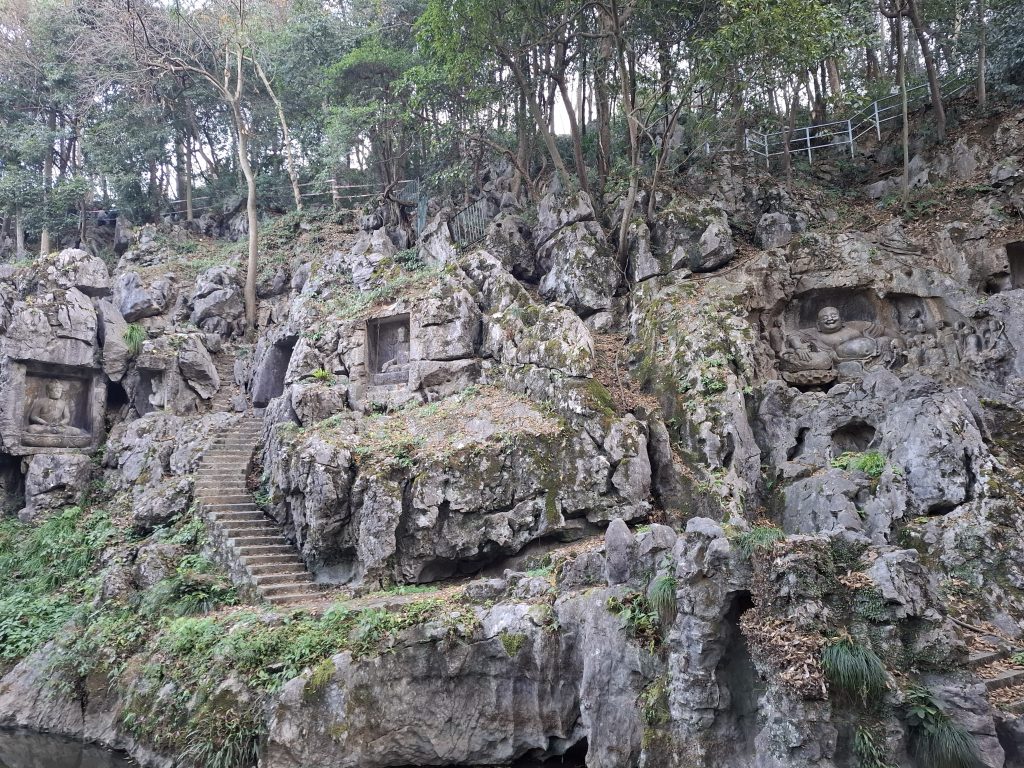
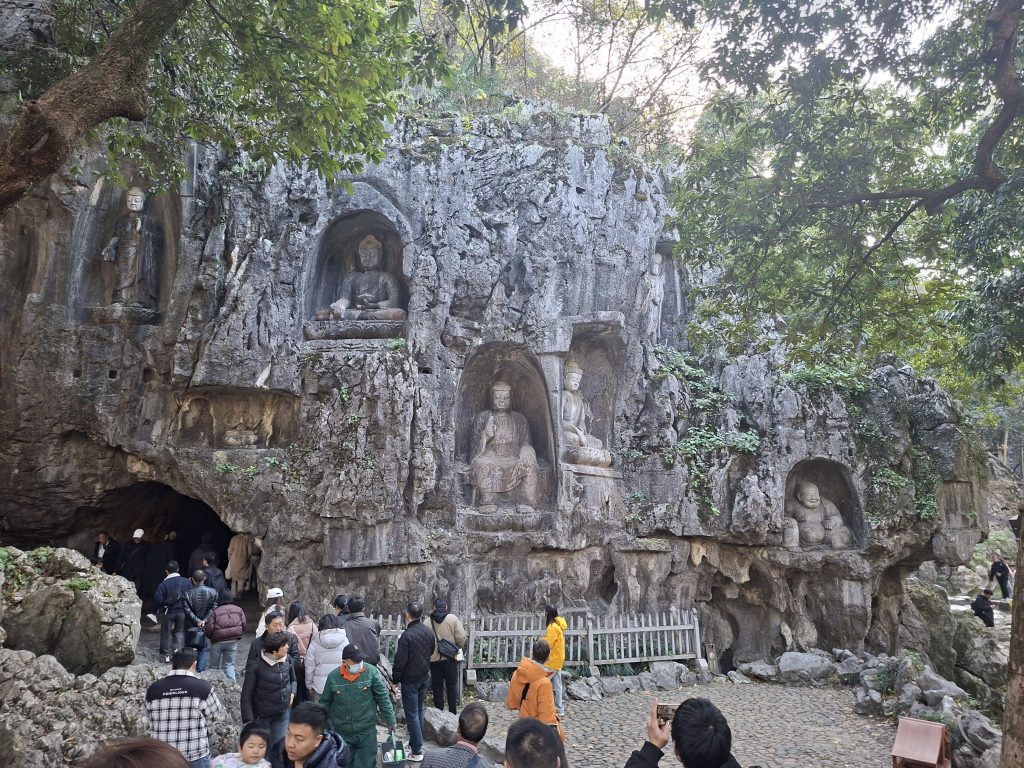
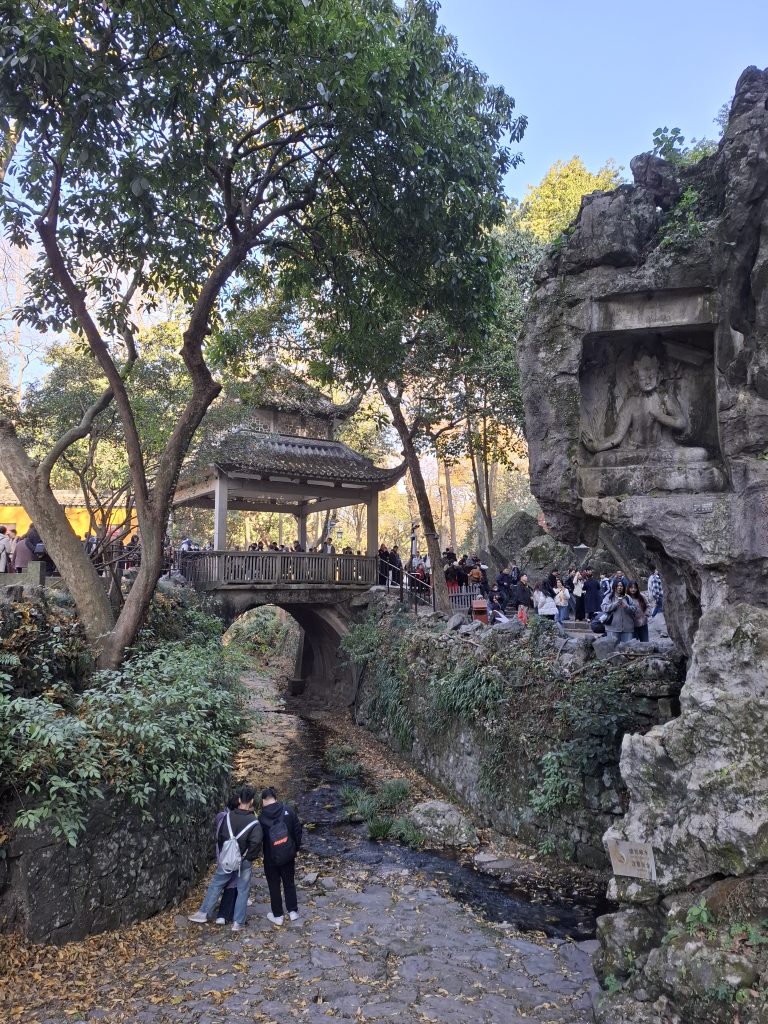
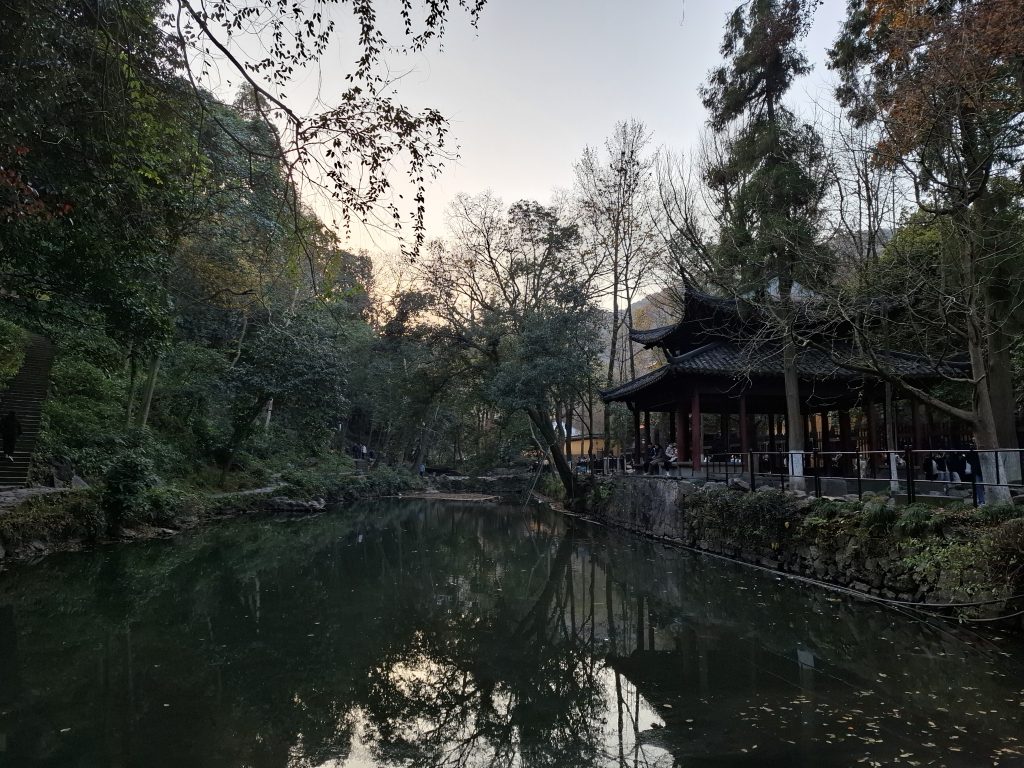
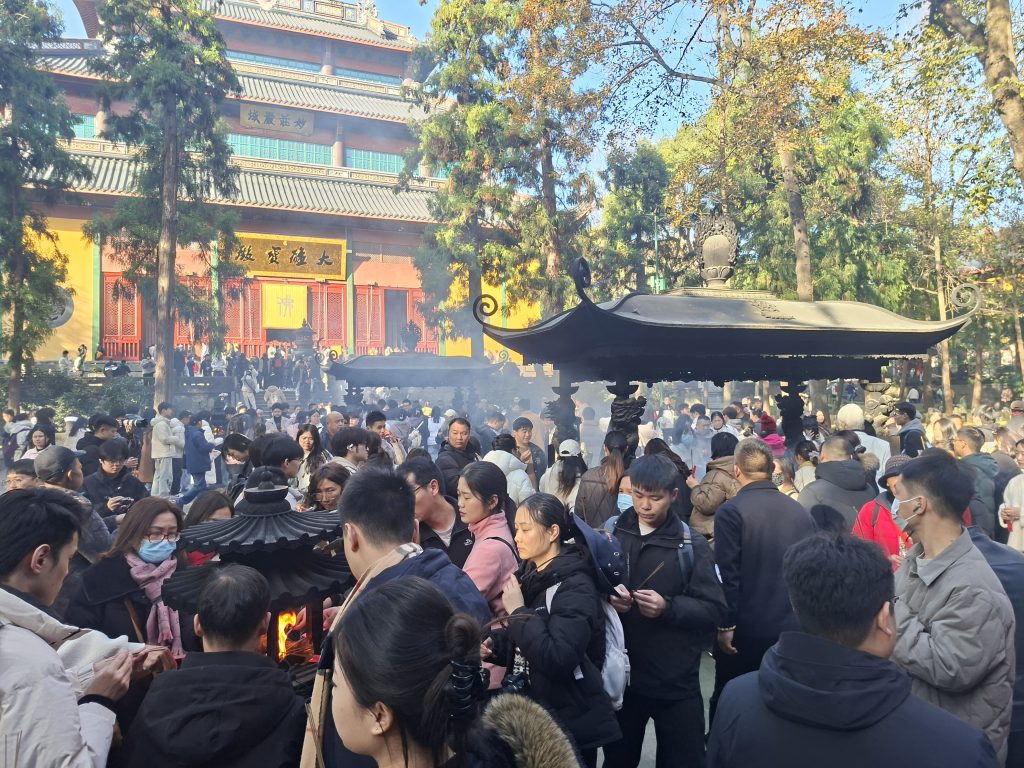
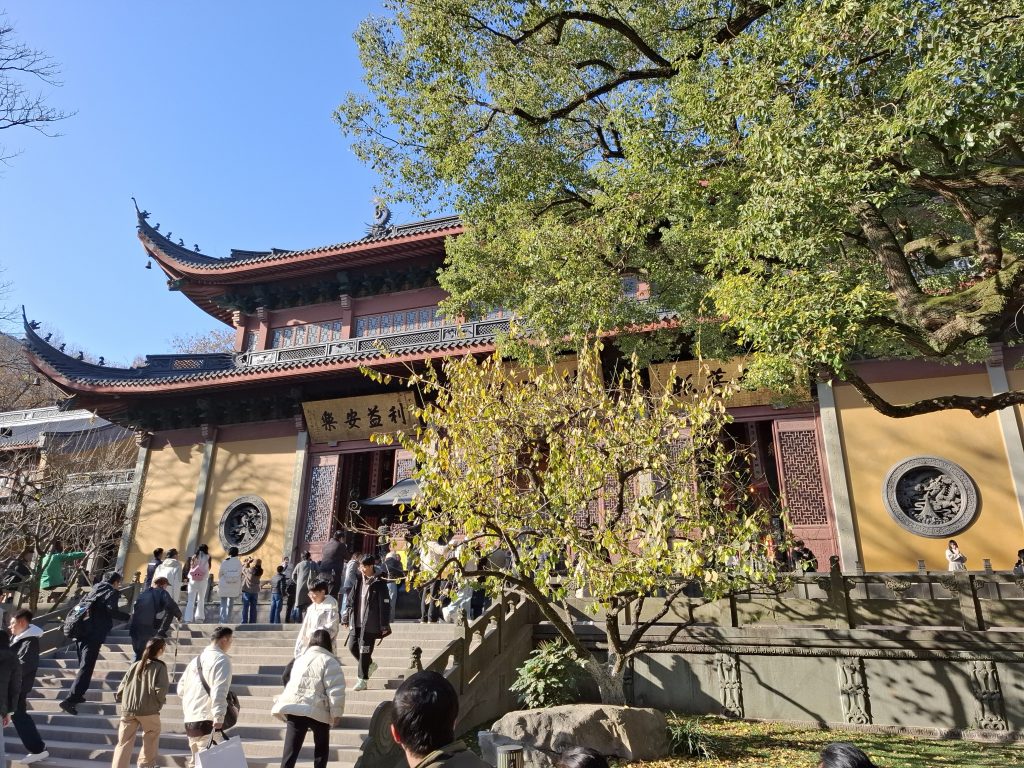
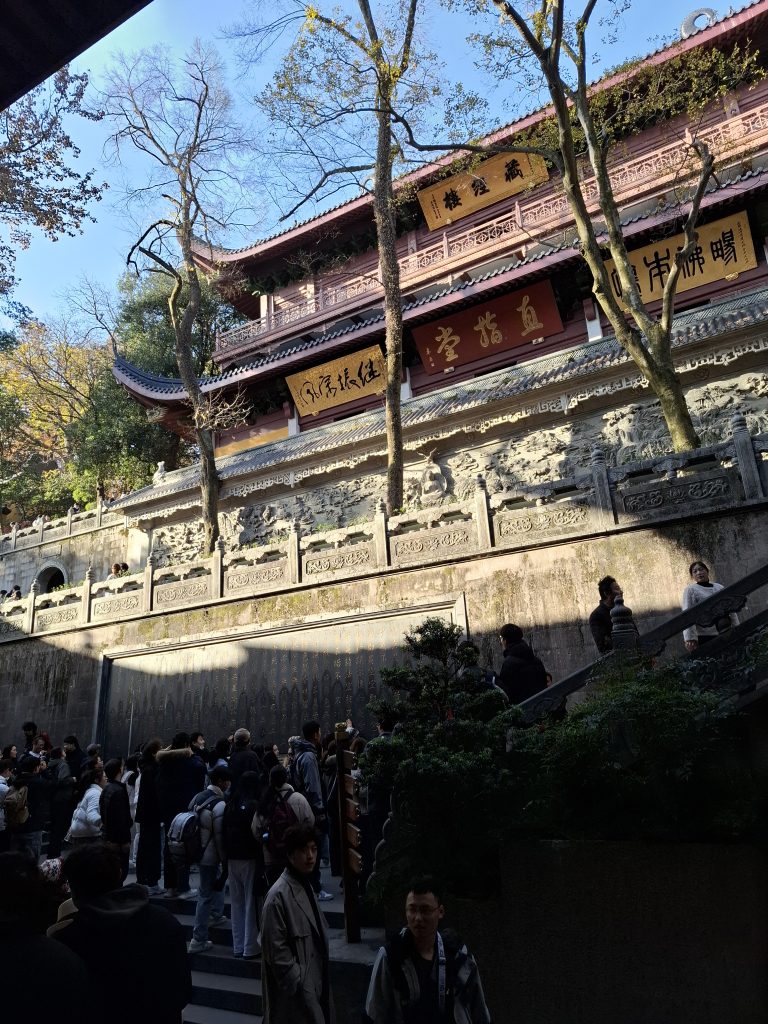
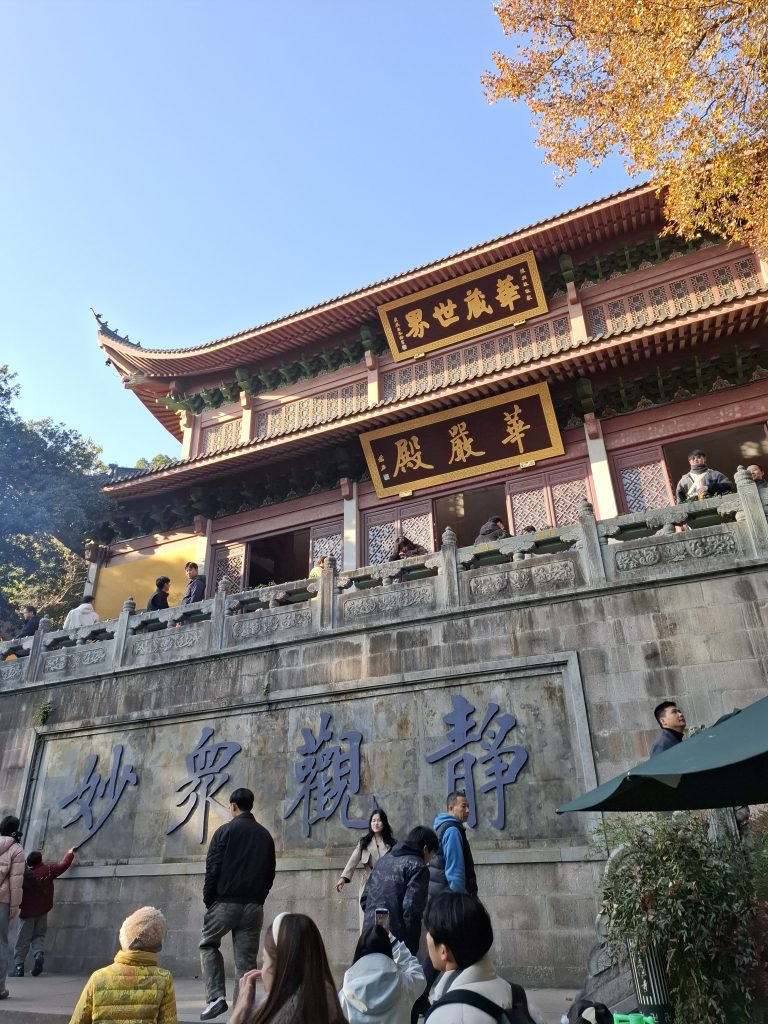
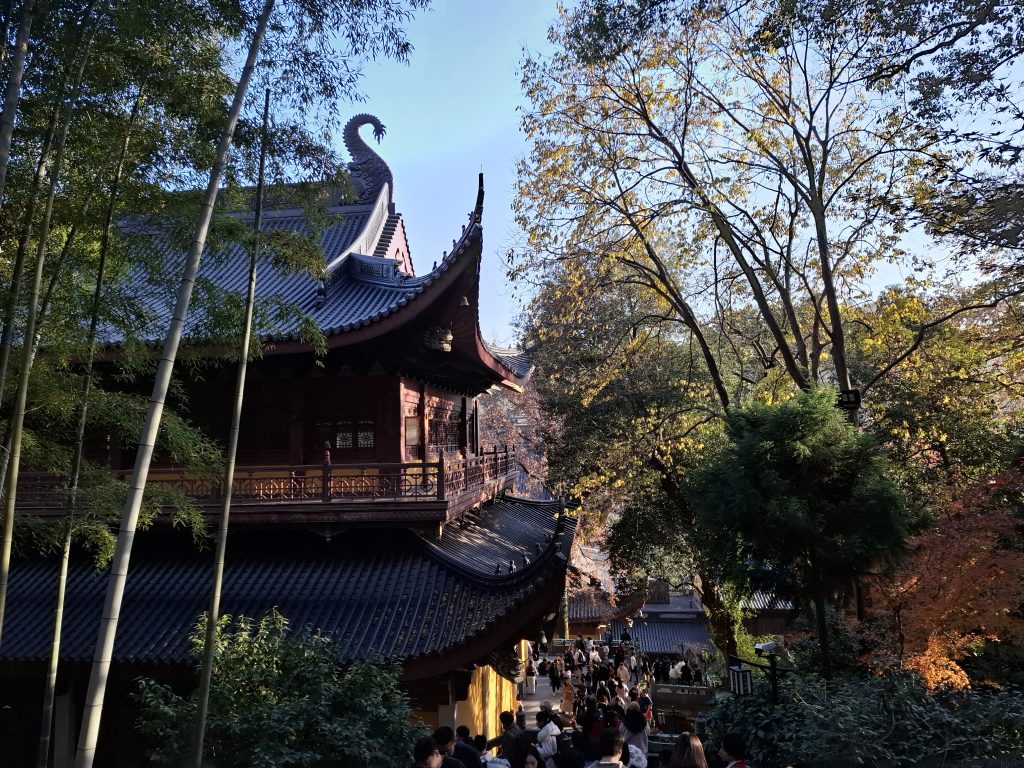
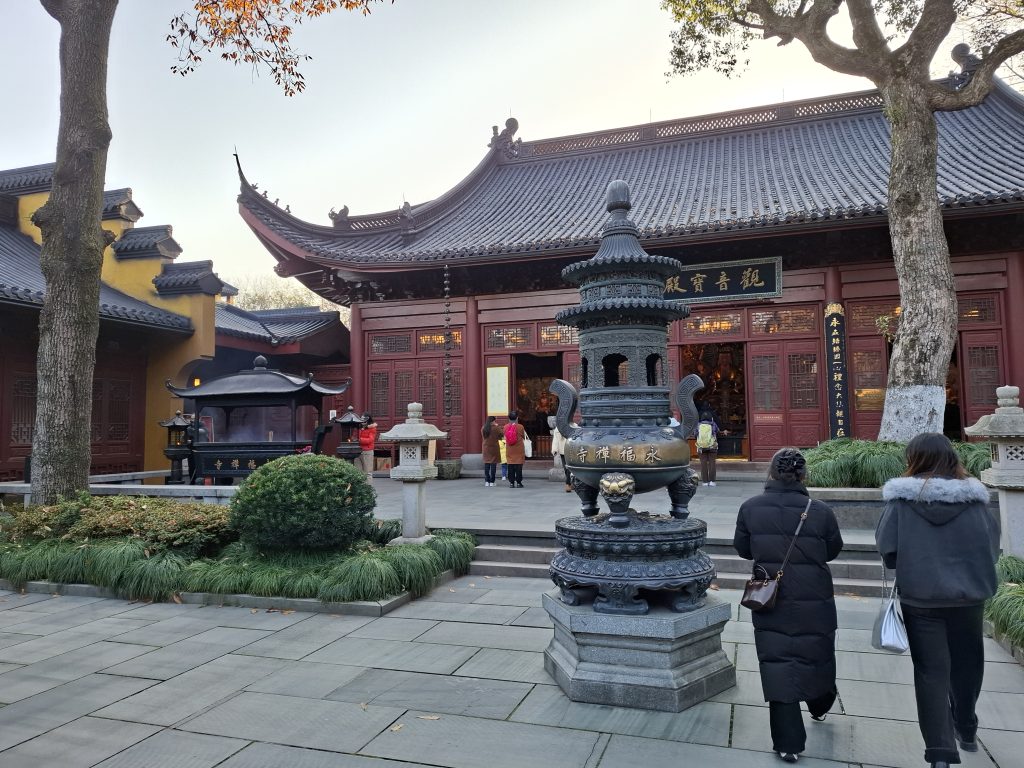
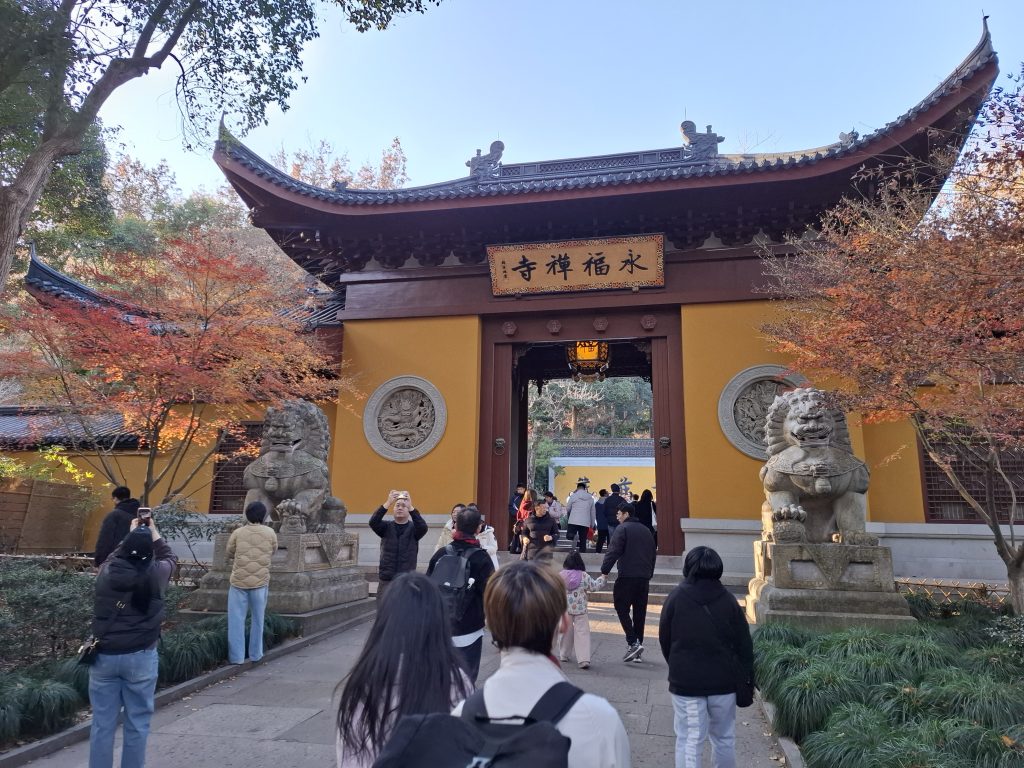
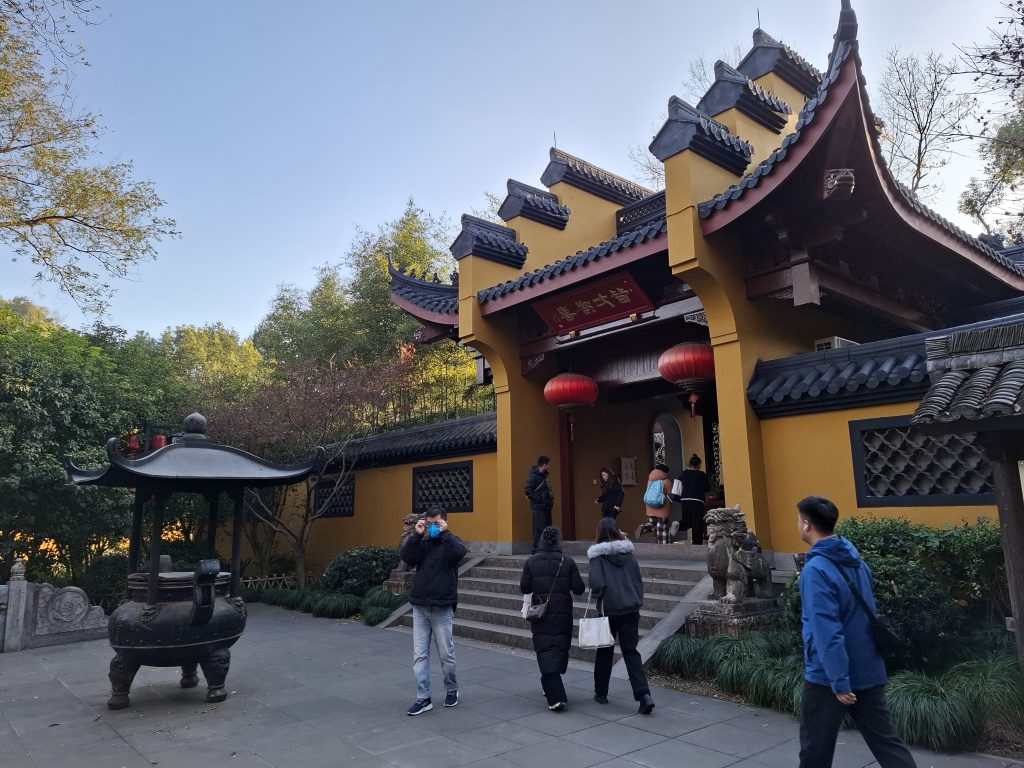
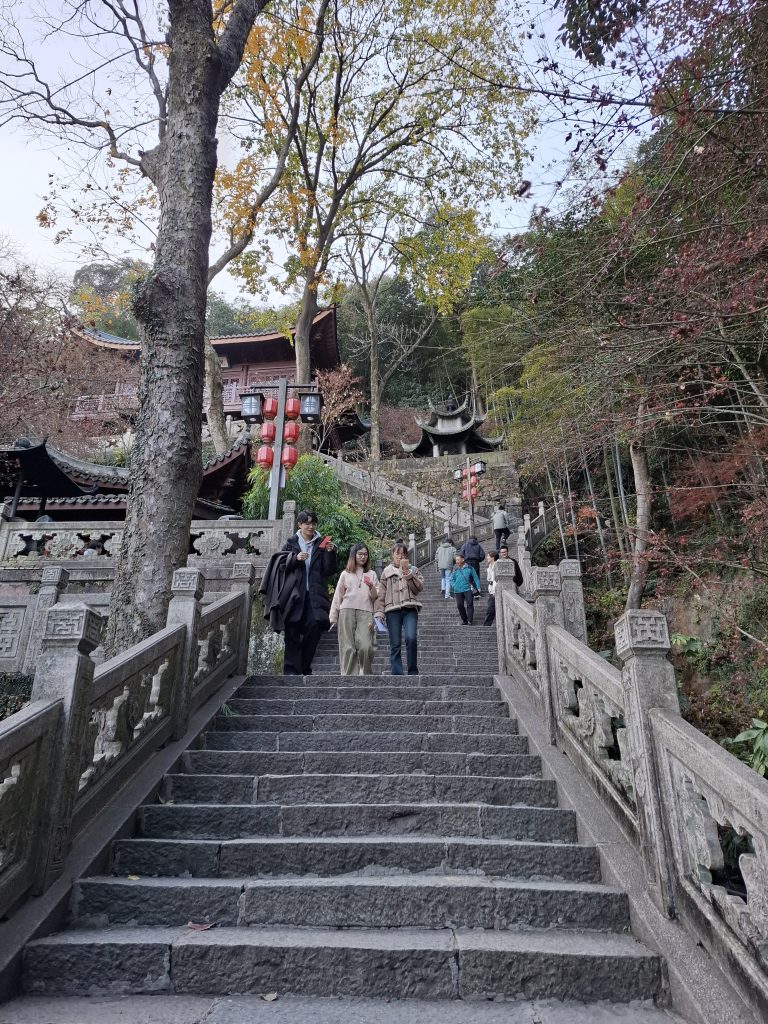
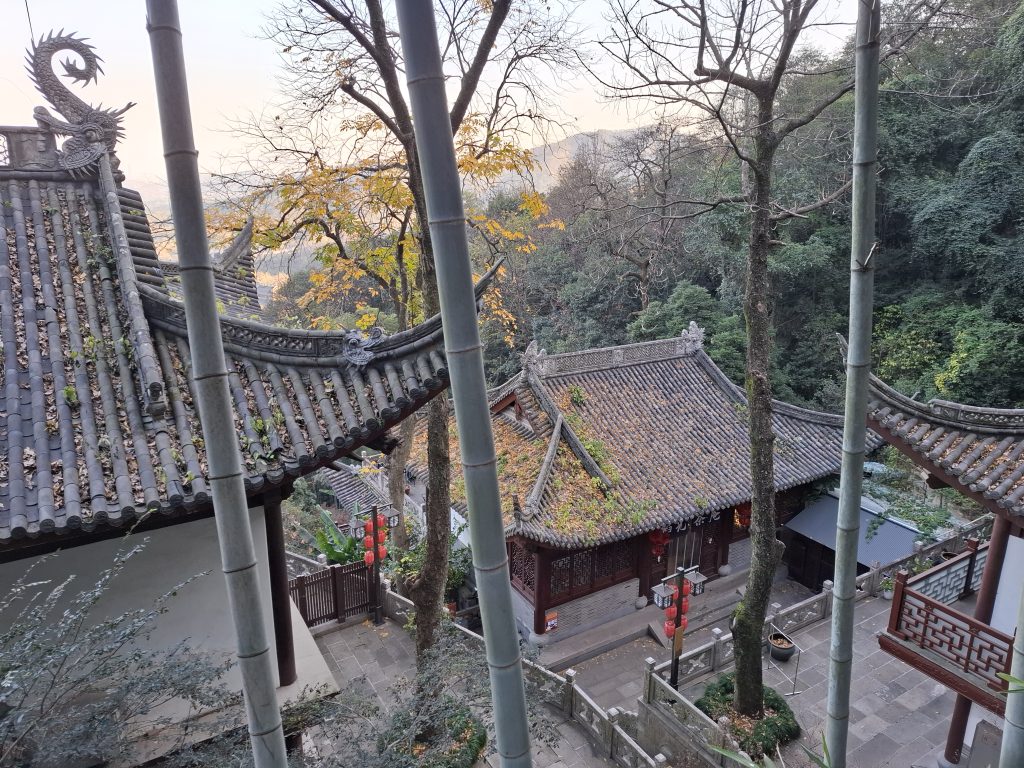
    Lingyin Temple (灵隐寺) and the adjacent Feilai Peak (飞来峰) form one of Hangzhou’s most important Buddhist cultural complexes located north-west of the West Lake. Founded in 326 AD, the temple is one of China’s oldest and most significant Zen (Chan) Buddhist temples, while the peak is an open-air museum of ancient rock carvings.

    The temple flourished as an imperial sanctuary during the Southern Song Dynasty (1127–1279) when Hangzhou was the capital. Emperors frequently visited for ceremonies and governance. The temple you see today was significantly rebuilt in the Qing Dynasty after a visit by Emperor Kangxi, who inscribed its name.

    Lingyin Temple features:

    • Hall of the Heavenly Kings, first main hall, that houses a large Laughing Buddha and a statue of Skanda, a Tang Dynasty guardian figure;
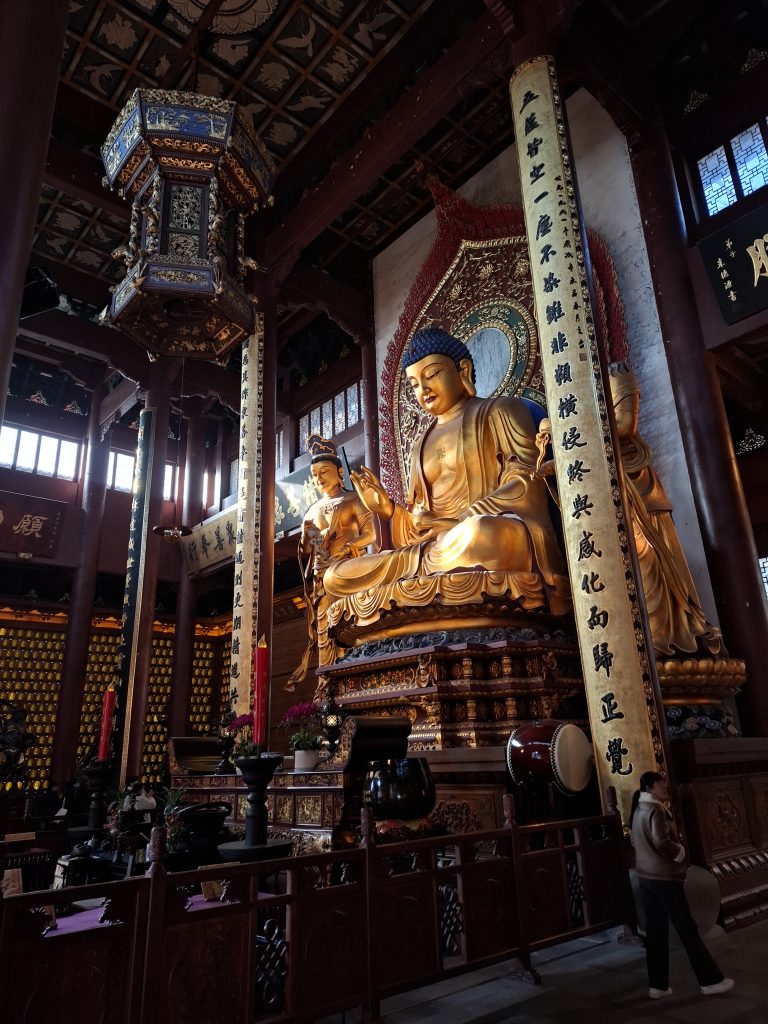
    • Mahavira Hall (Grand Hall), the temple’s centerpiece, that features a 24.8-meter-tall gilded camphor wood statue of Sakyamuni Buddha.
    • Hall of Ji Gong (Crazy Monk) that honors the legendary eccentric monk Ji Gong, a folk hero associated with the temple.

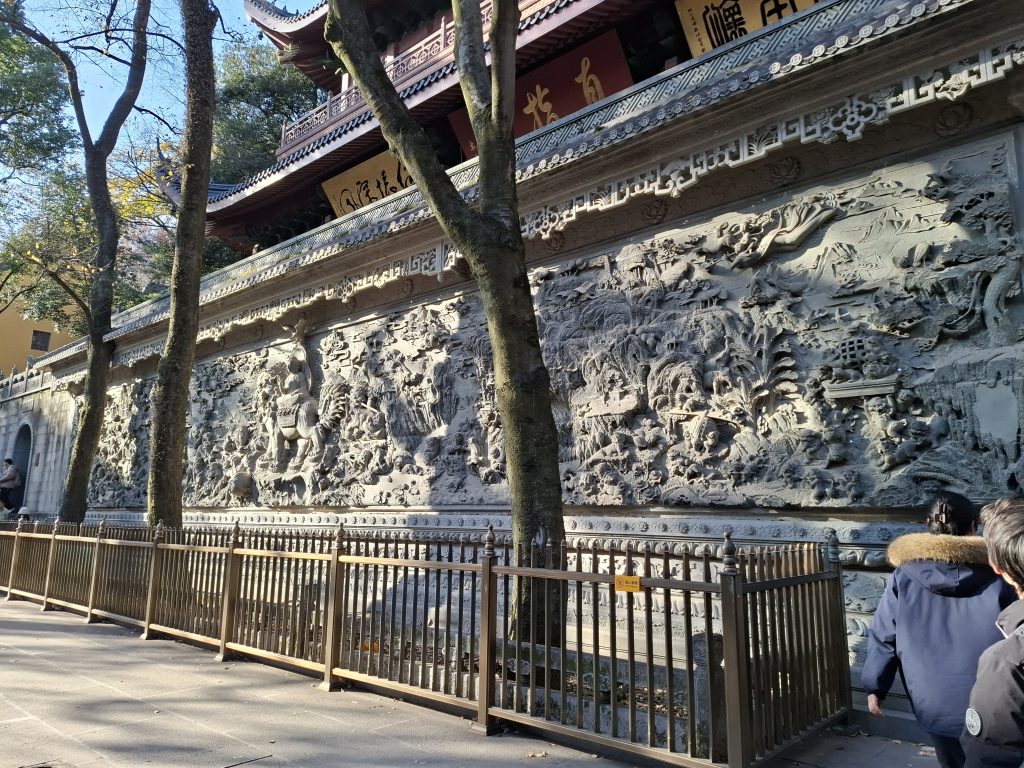
    At Feilai Peak, one may see over 340 ancient buddhist rock carvings in grottoes and cliffs dating from the 10th to 14th centuries and The Laughing Maitreya Buddha, the largest and most famous carving on the peak, a 5.3-meter-tall, joyful Buddha statue from the Song Dynasty.

    Don’t forget to reserve tickets for the Feilai Peak Scenic Area beforehand online, since the site has massive queues at on-site ticket office and tickets may be not available.

    Longjing Tea Plantations

    Hangzhou is the home of China’s most famous green tea, a short trip away from the plantations. Learn to pick and fry tea leaves in a sea of green terraces.

    Grand Canal

    Grand Canal is the world’s longest ans oldest man-made canal, with a history spanning over 2,500 years. Its construction linked northern and southern China, allowing for the transport of grain, commodities, and troops, which was vital for imperial administration and economic prosperity. For Hangzhou, becoming the canal’s southern endpoint during the Sui Dynasty (581-618 CE) cemented its status as a critical trade and cultural hub, fueling the growth and splendor you saw during the Southern Song period. Nowadays, it is a UNESCO World Heritage Site, which can be seen both in Hangzhou in the south and Beijing in the north. The southern terminus of this 1,794-kilometer canal has shaped Hangzhou’s development for centuries.

    To see the Canal in Hangzhou, travel to Qiaoxi Historical & Cultural Block, the core preservation area by the canal. It’s home to a landmark stone arch Gongchen Bridge, several unique museums, and traditional architecture. Xiaohe Direct Street (Xiaohe Zhijie) is a well-preserved ancient street that captures the essence of an old canal-side town with traditional houses, shops, and cafes. At Wulinmen Wharf, you can take Canal Boat Tours and Water Buses.

    The canal is an open scenic area, so you can visit anytime. For a richer experience, plan for half a day to leisurely walk the historic blocks, visit a museum, and take a short boat ride.

    Hangzhou New City

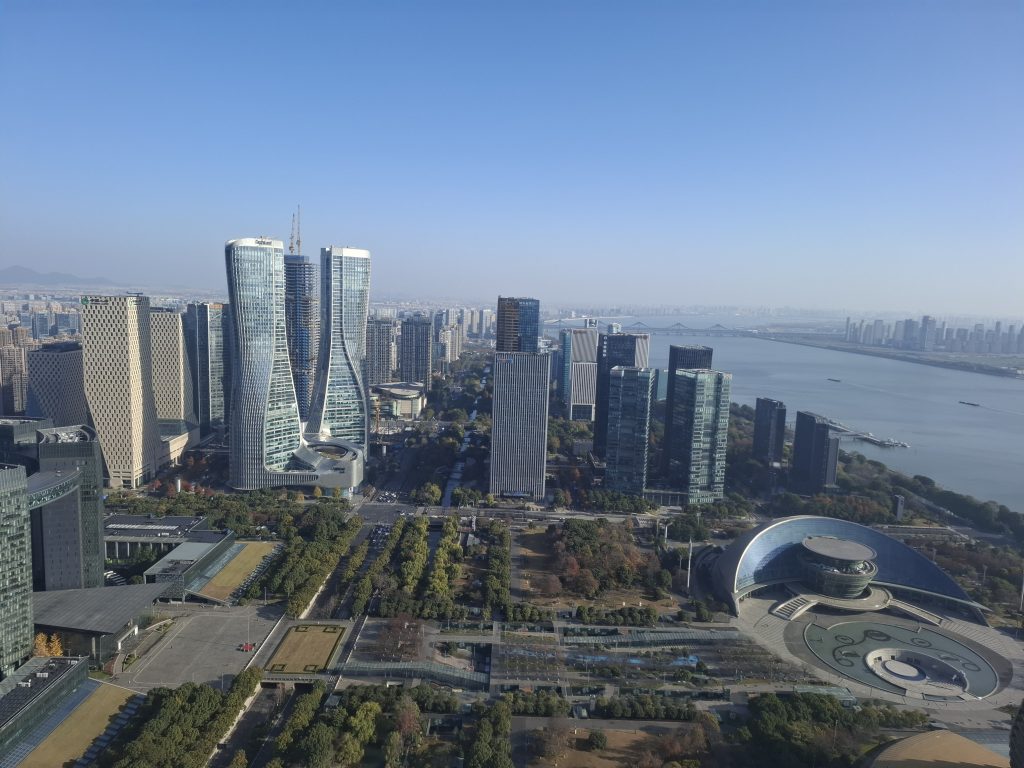
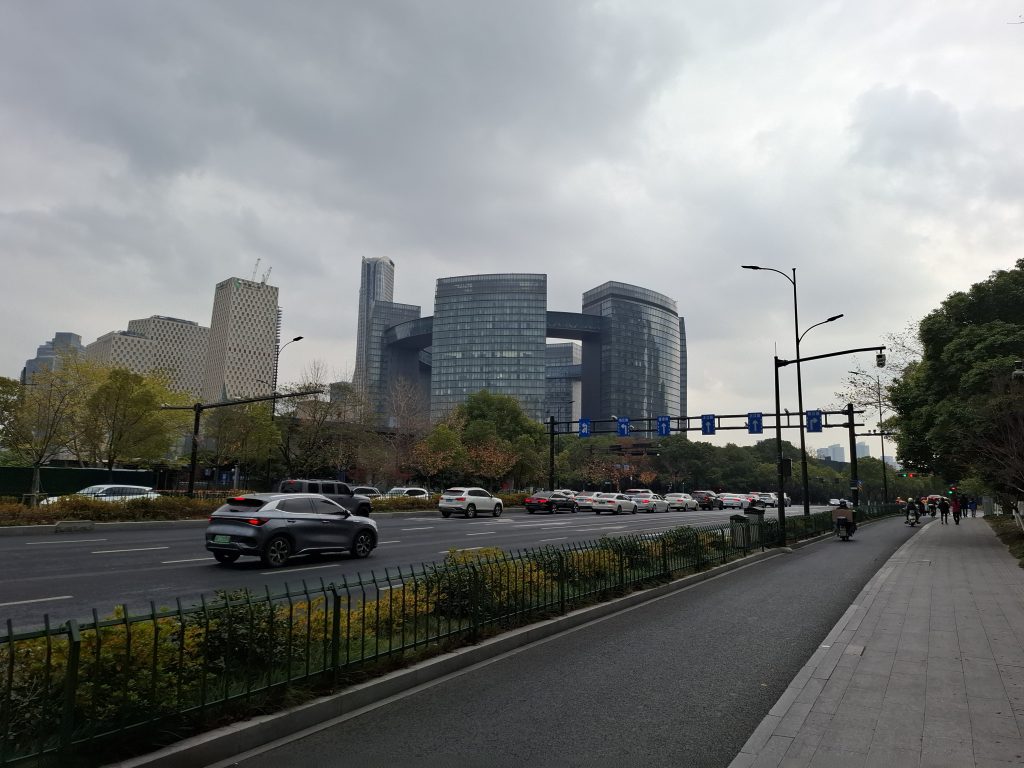
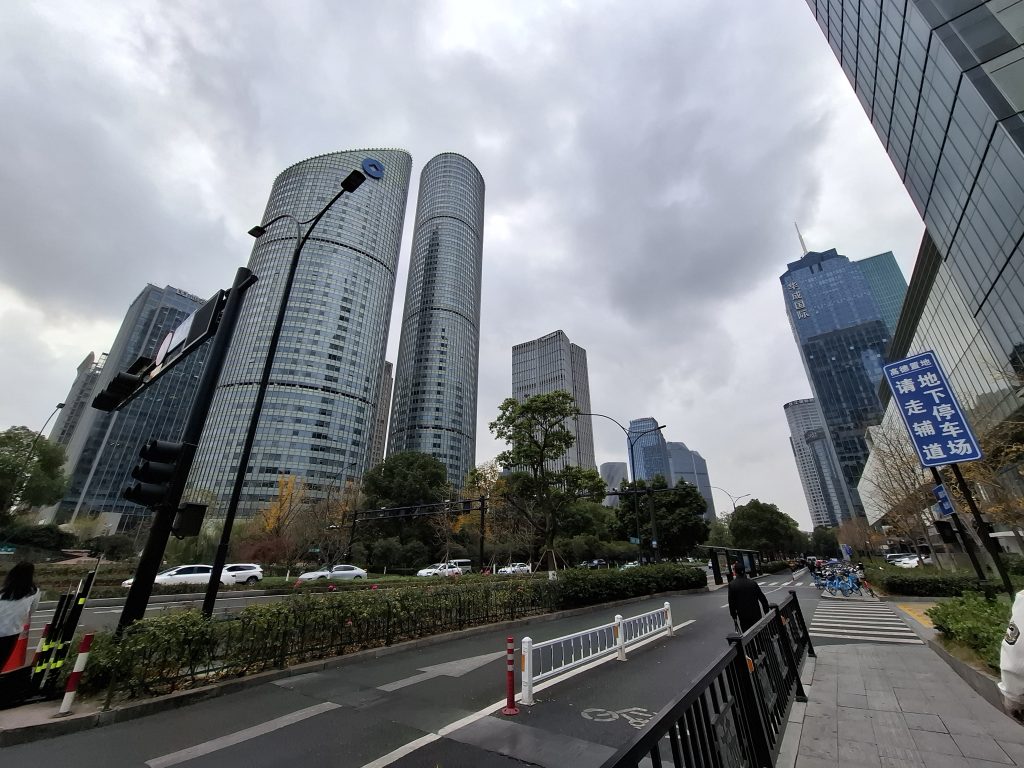
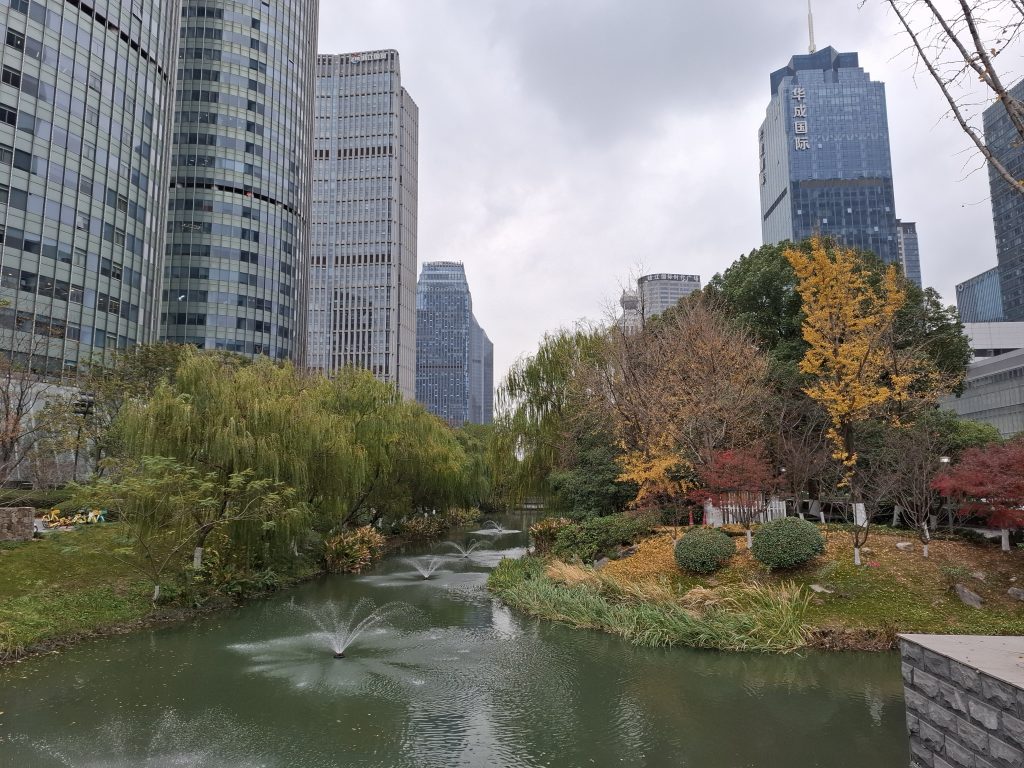
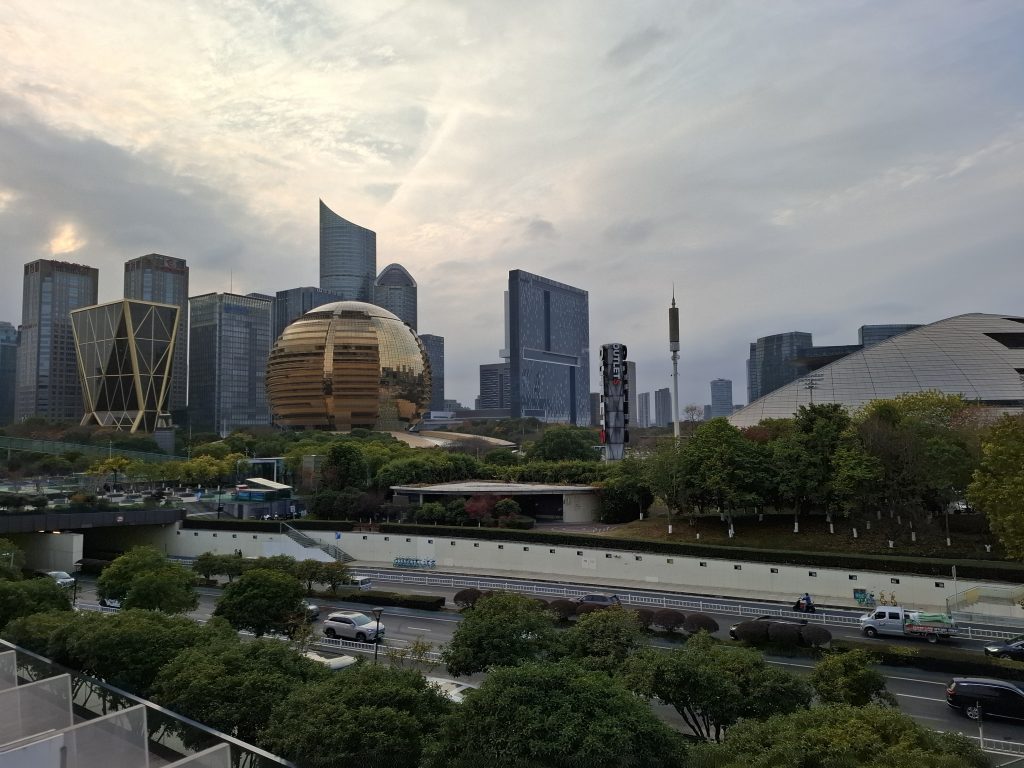
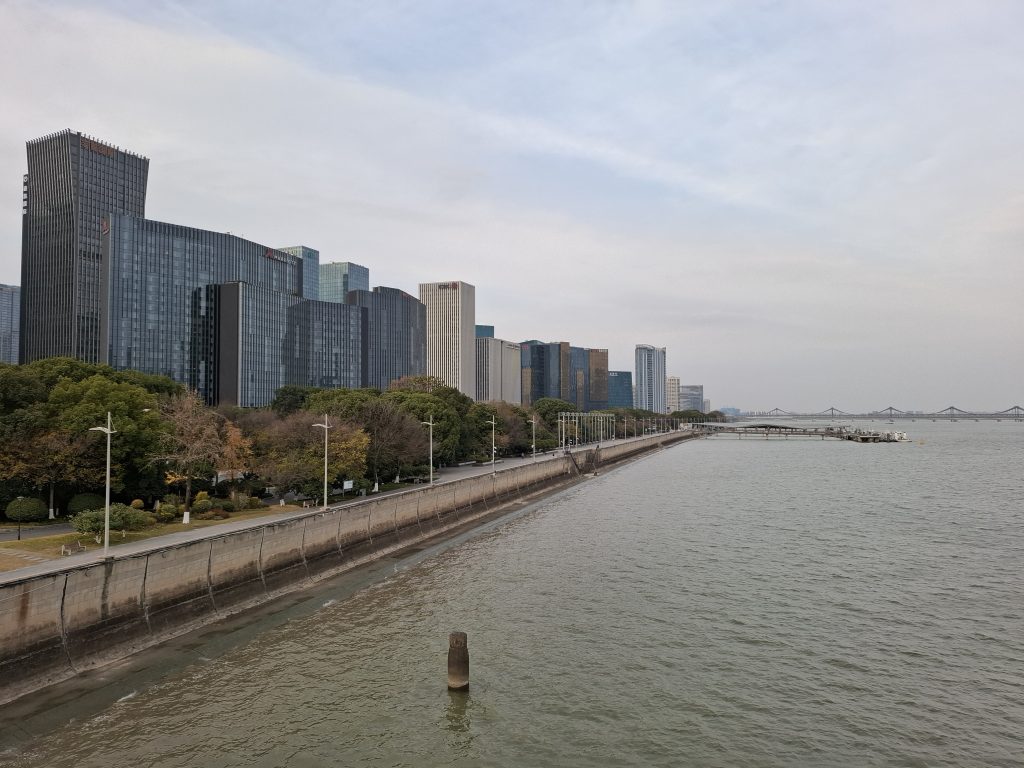
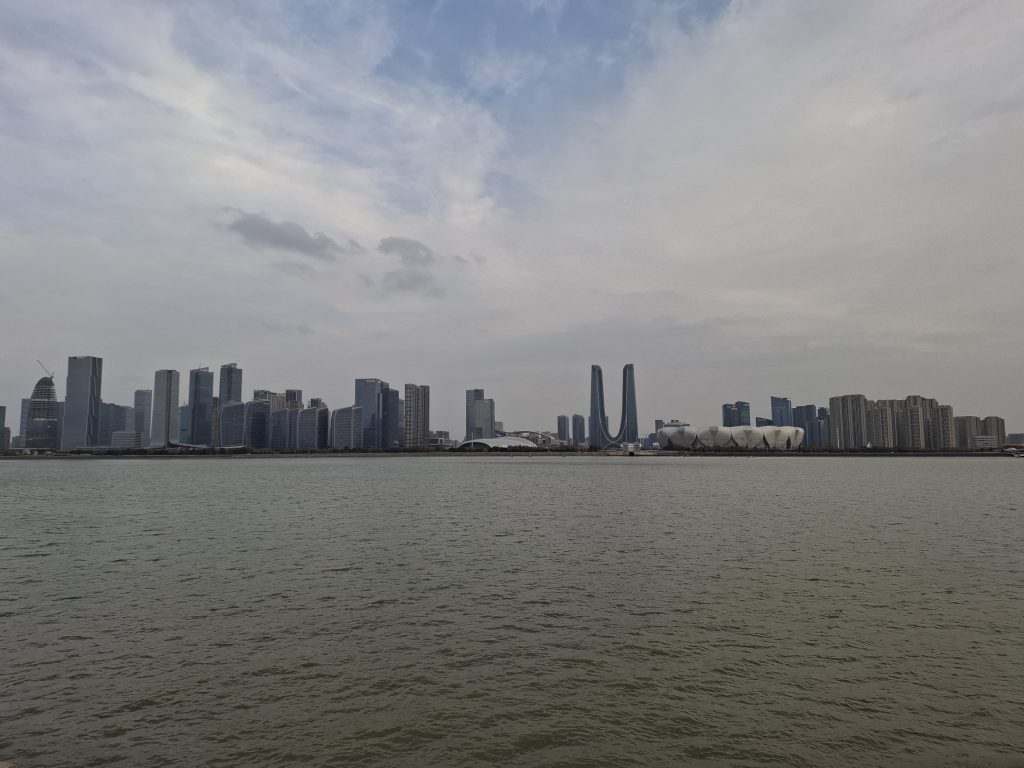
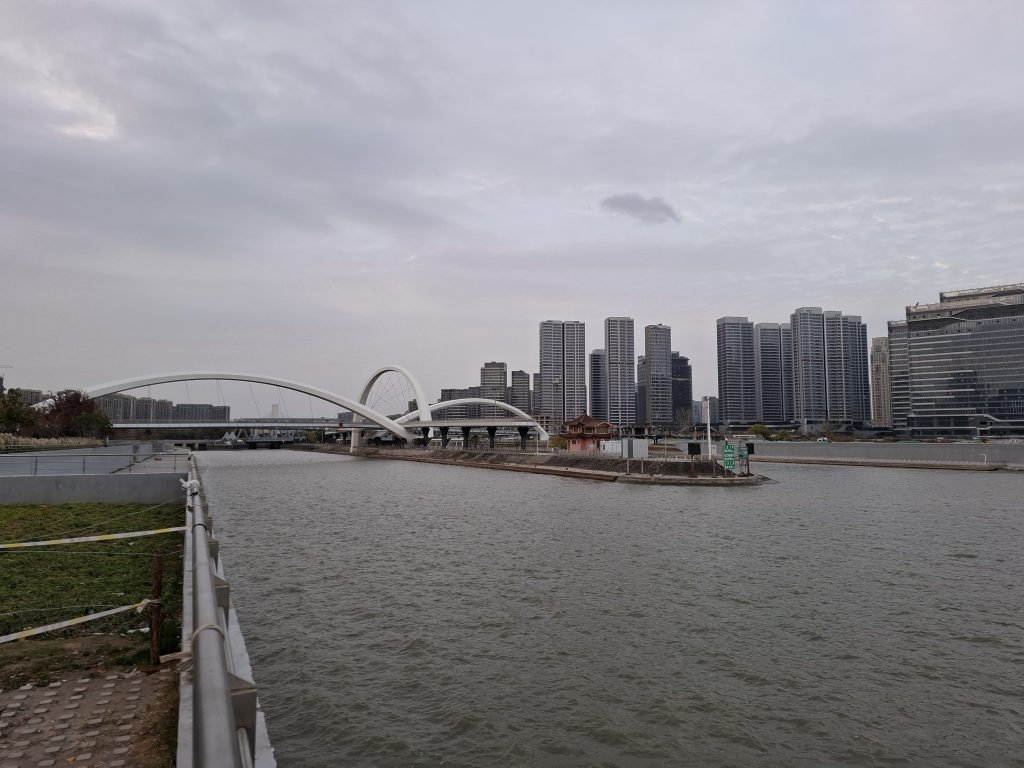
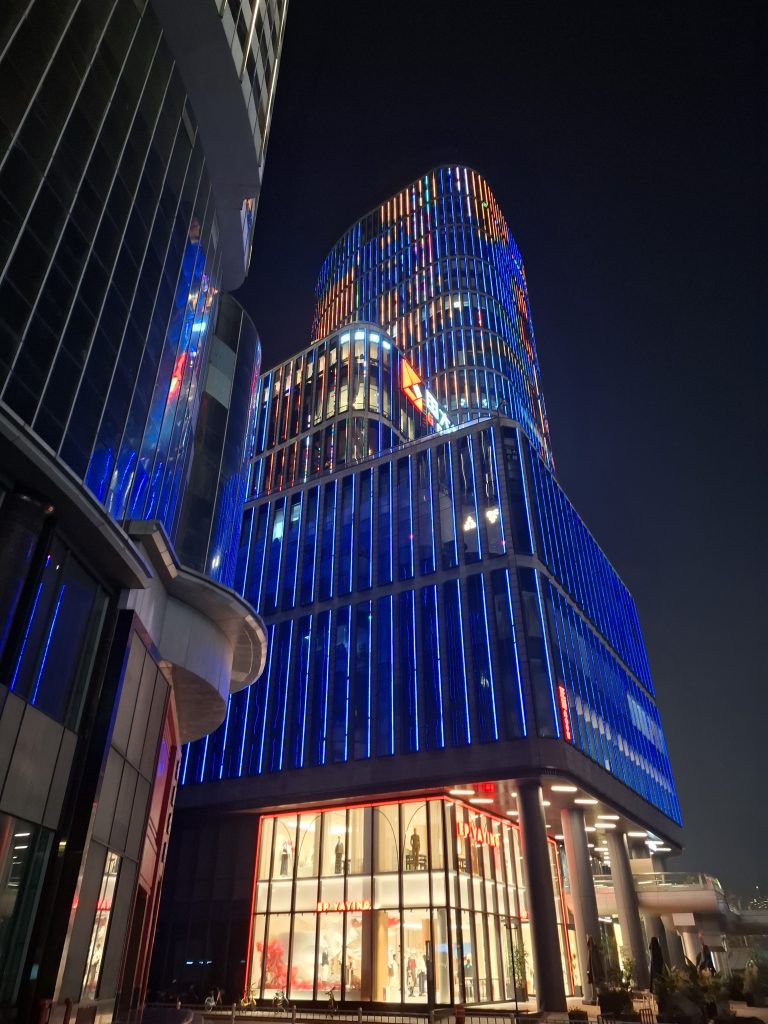
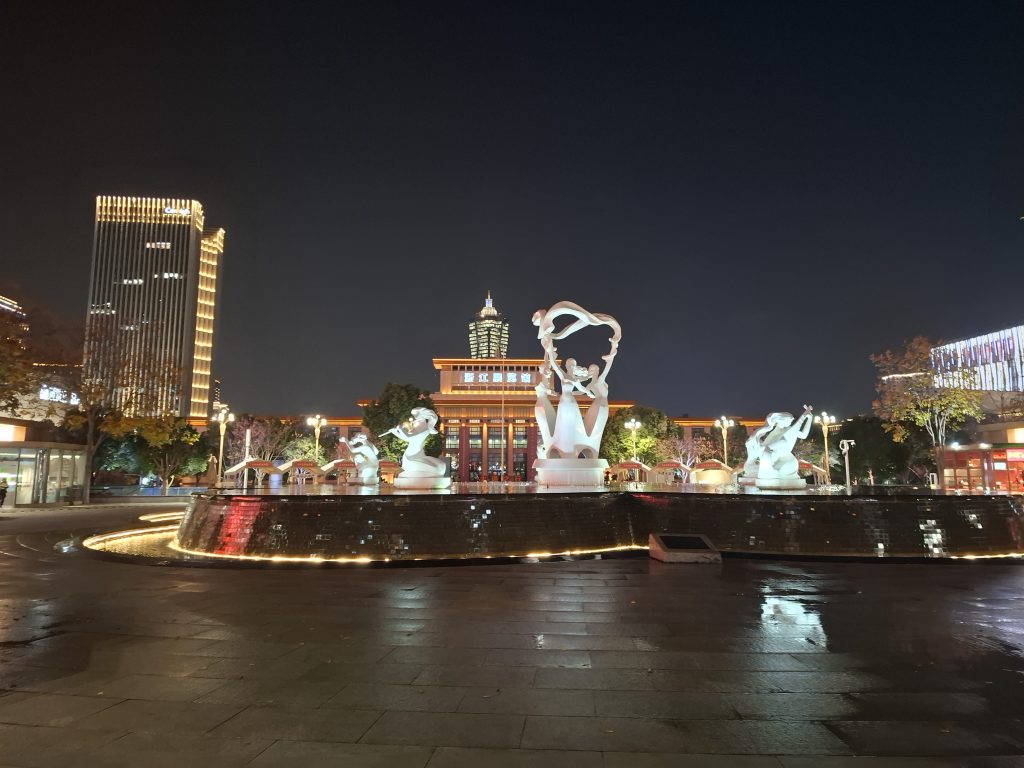
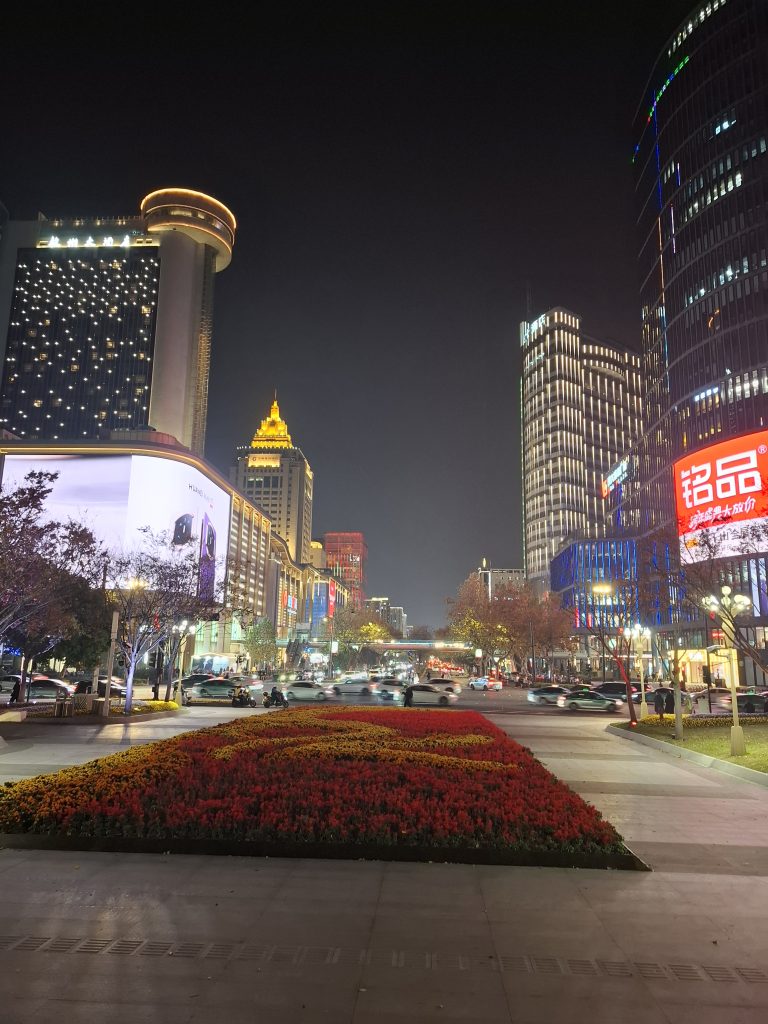
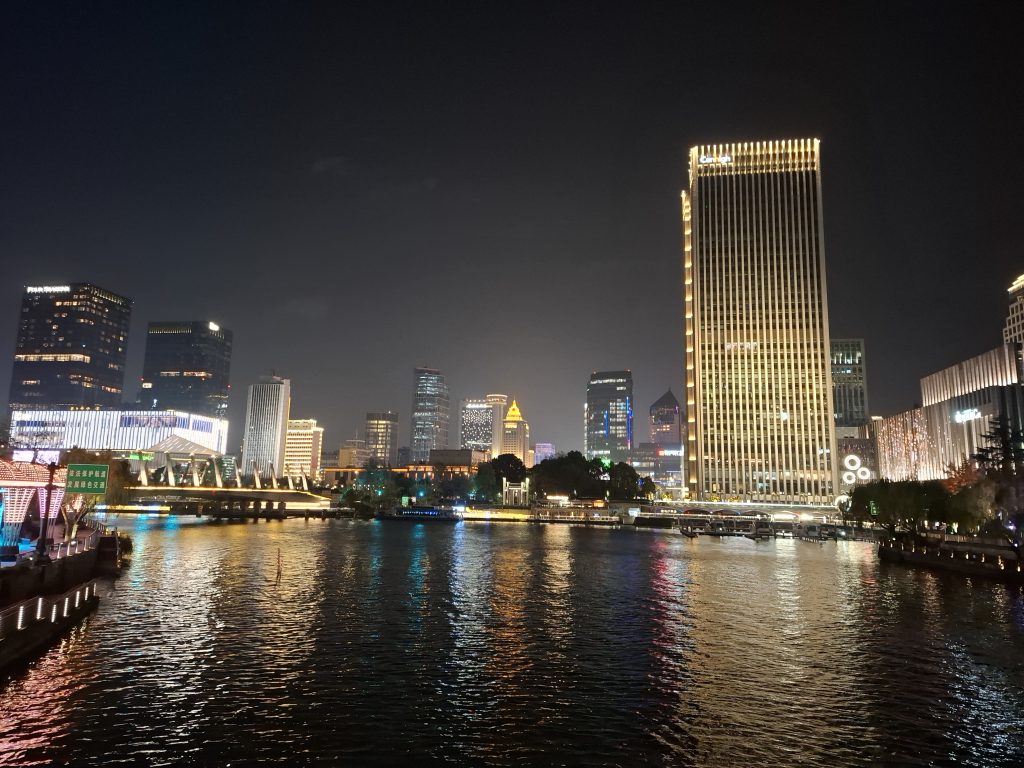
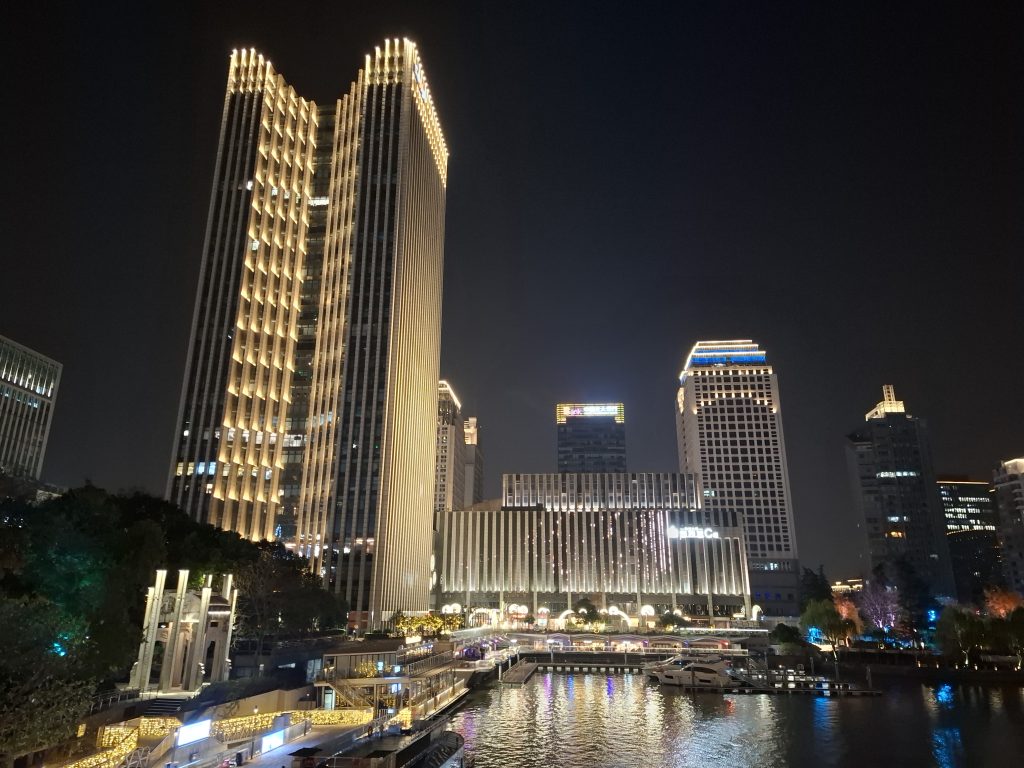
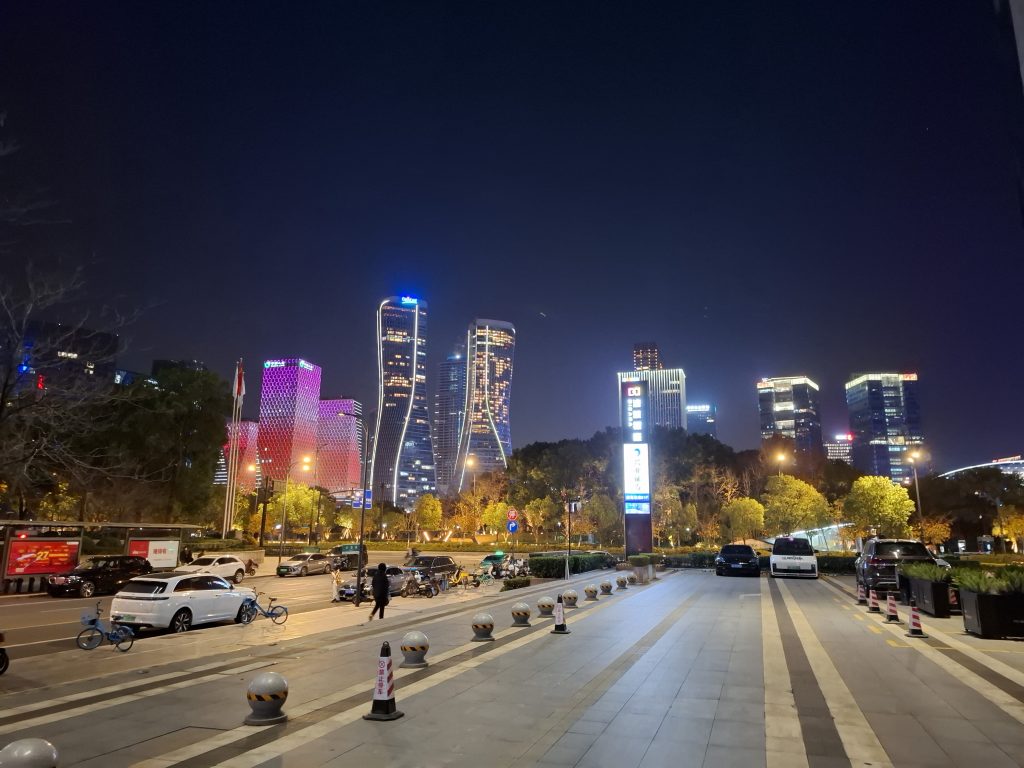
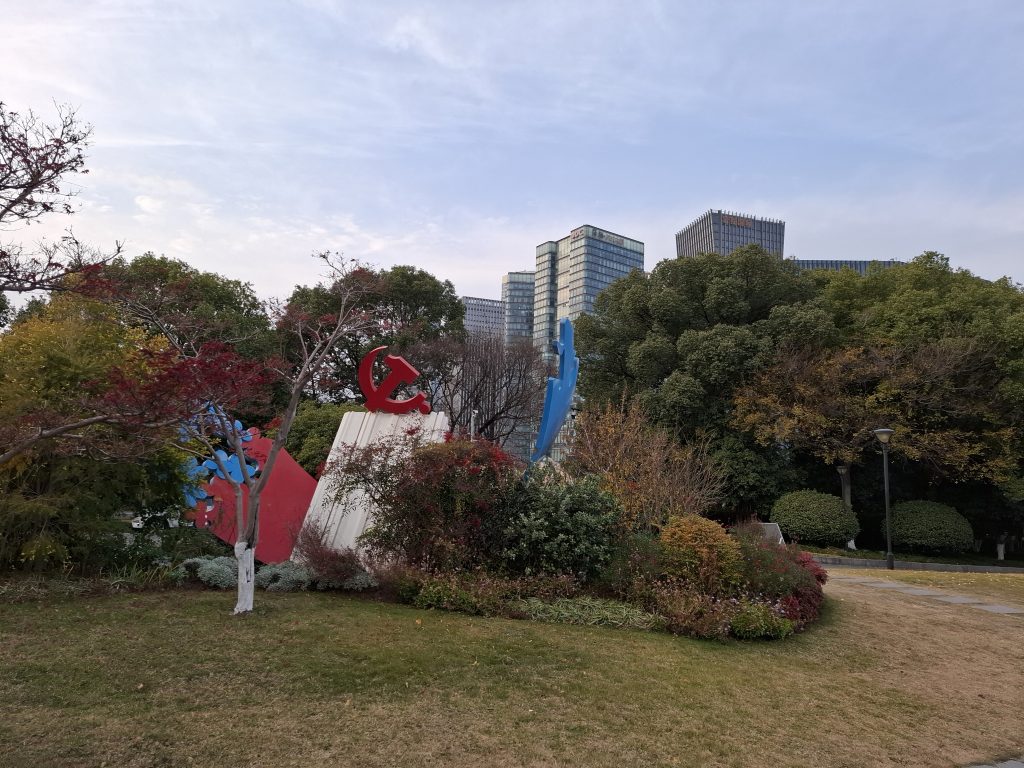
    Hangzhou’s modern skyline offers a dramatic contrast to its ancient West Lake scenery. The city’s skyscrapers are primarily concentrated in two adjacent, bustling districts on the north bank of the Qiantang River: Qianjiang New City and Qianjiang Century City. These districts represent Hangzhou’s contemporary ambition. Qianjiang New City is the city’s official Central Business District (CBD), featuring a futuristic skyline illuminated by spectacular light shows. Just across the river, Qianjiang Century City is a newer development anchored by the city’s tallest twin towers.

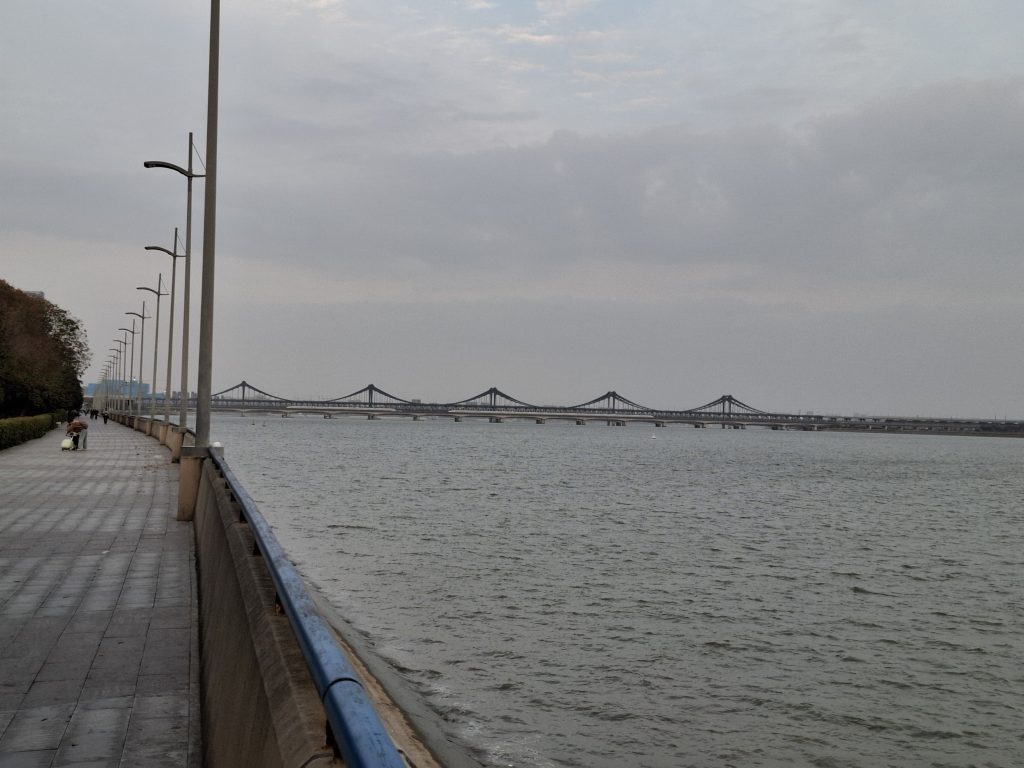
    Go for “Golden Hour” (shortly before sunset) to see the buildings glow, or after dark for the light shows. Enjoy a stroll along the Qiantang River promenade for the best panoramic views of the skyline.


    Hangzhou is more than a city or a collection of scenic spots. For over a millennium, the concept of harmonious coexistence between humanity and nature has been consciously cultivated here, transforming the landscape into what UNESCO recognizes as an ideal model of Chinese aesthetic philosophy. West Lake is a masterpiece of “consciously designed landscape” that has been “improved upon by poets, scholars, and emperors since the 9th century” to achieve its celebrated beauty.

    This spirit of harmony defines every corner of the “Lake Capital.” From the ancient Buddhist grottoes of Feilai Peak, where art is carved directly into nature, to the Longjing tea terraces that sculpt the hills into productive beauty, Hangzhou demonstrates how human activity can enhance rather than diminish the natural world. The Grand Canal stands as the ultimate testament to this, a monumental feat of engineering that connected the nation and nourished a civilization, all while becoming an organic part of the waterscape.

    The history inscribed on the Confucian Temple’s steles, the prayers whispered in Lingyin Temple, and the daily rhythms of life along Hefang Street are all part of a continuous story. Hangzhou is an invitation to wander, to contemplate, and to experience firsthand why this city has been revered for centuries as China’s “Heaven on Earth.” It’s an encounter with the soul of a culture that has long sought, and found, perfect balance.

  • 🇦🇿 Baku, Azerbaijan

    🇦🇿 Baku, Azerbaijan

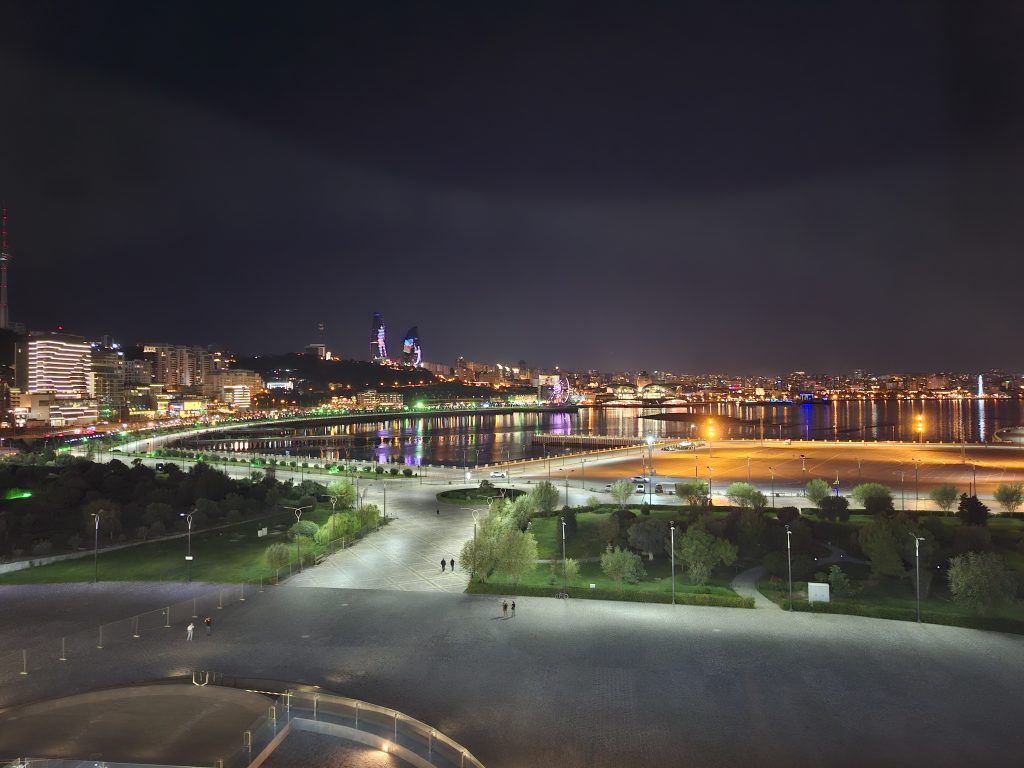
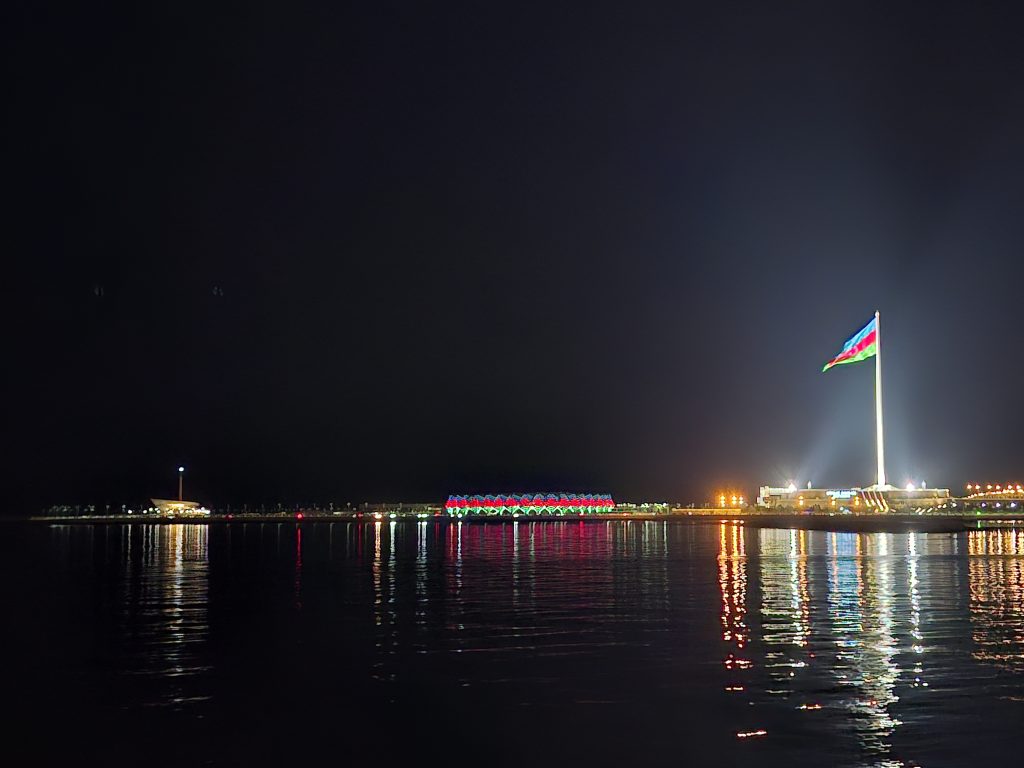
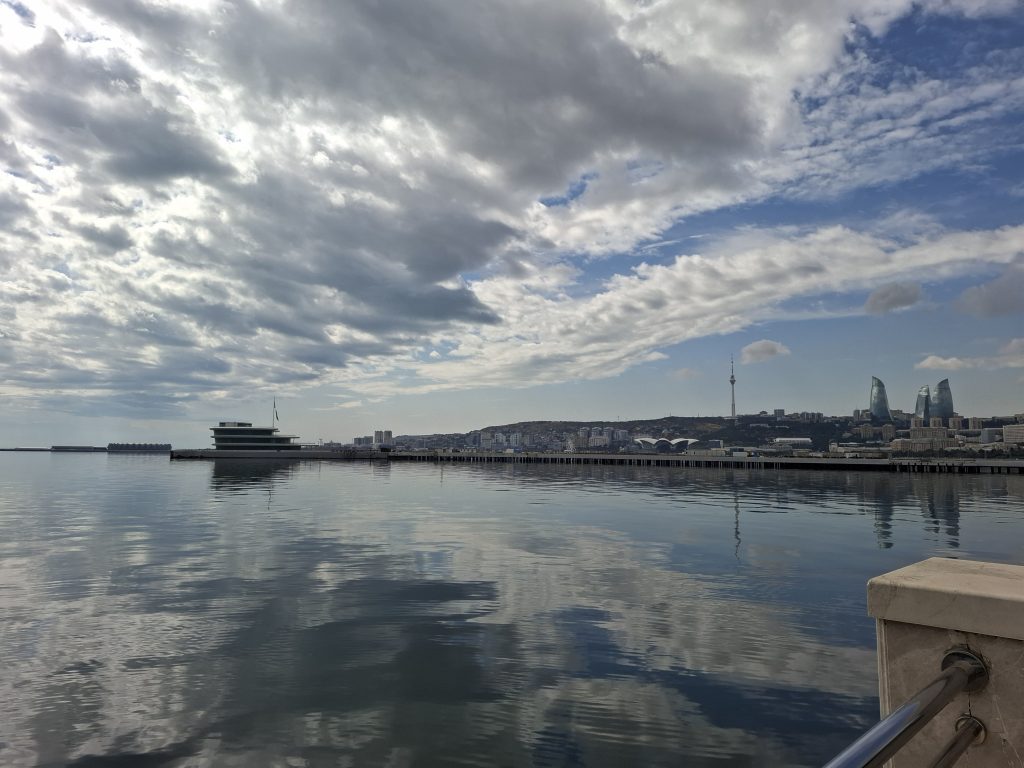
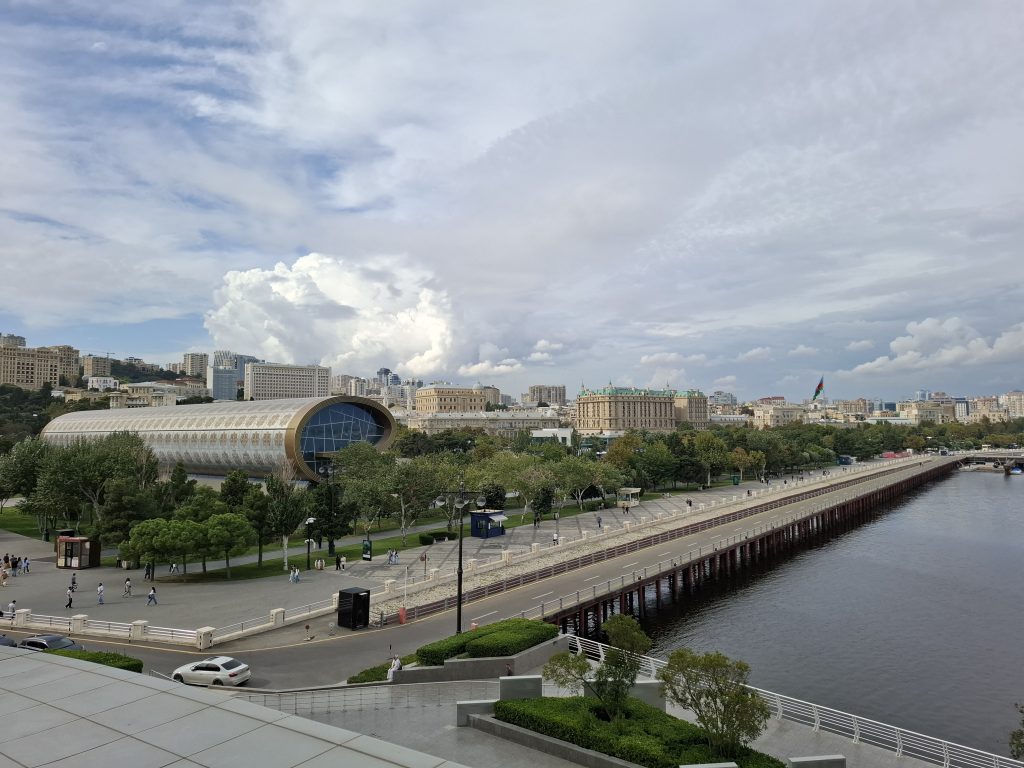
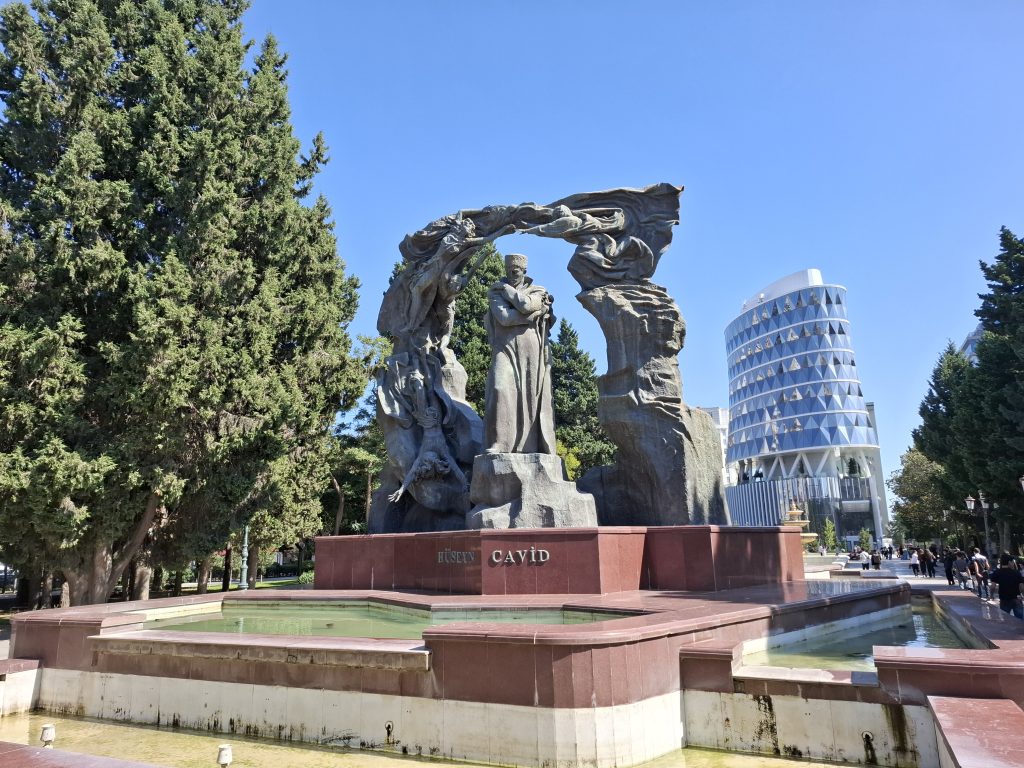
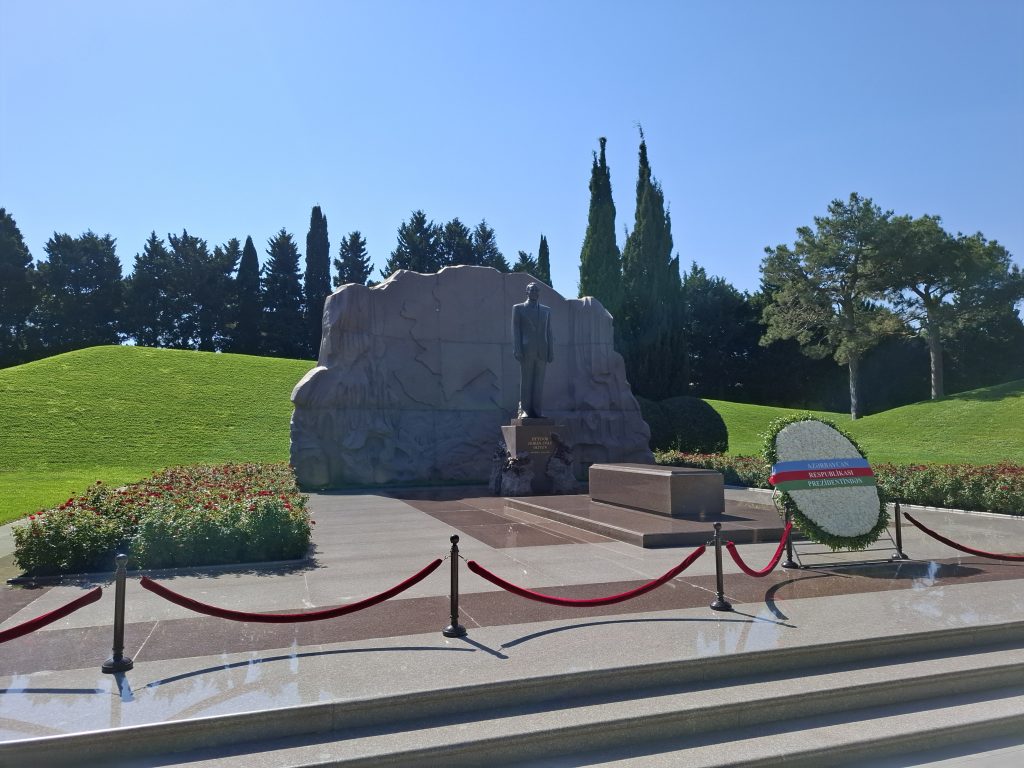
    Step into Baku, a captivating city on the shores of the Caspian Sea where ancient history and hyper-modern architecture meet.

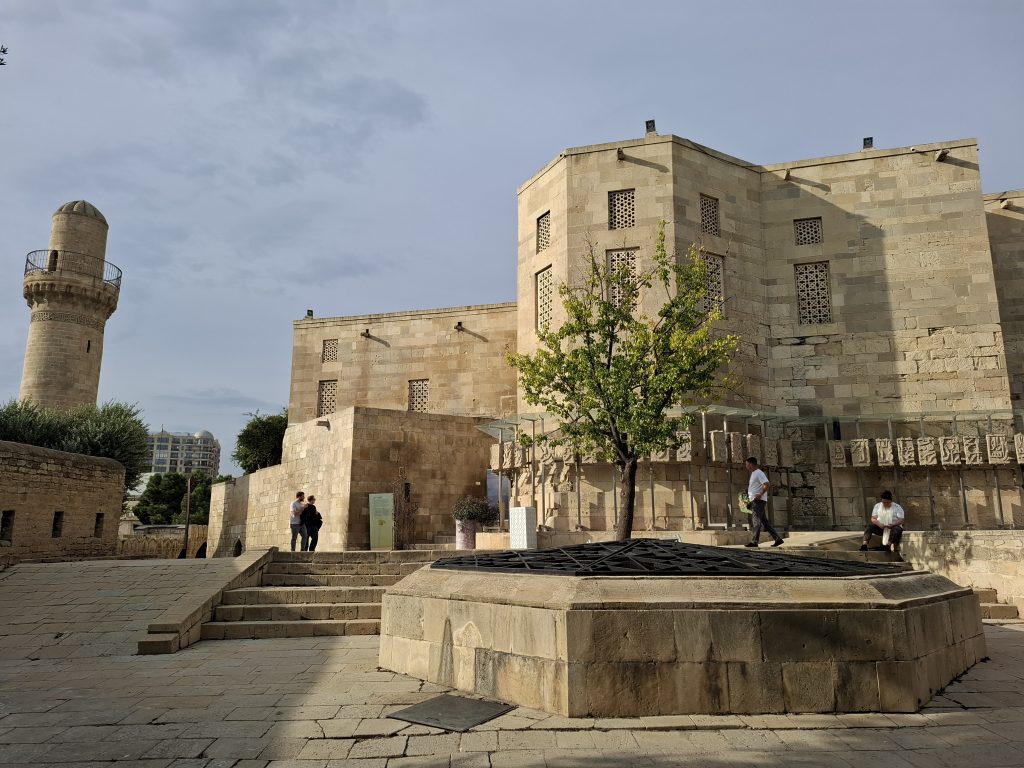
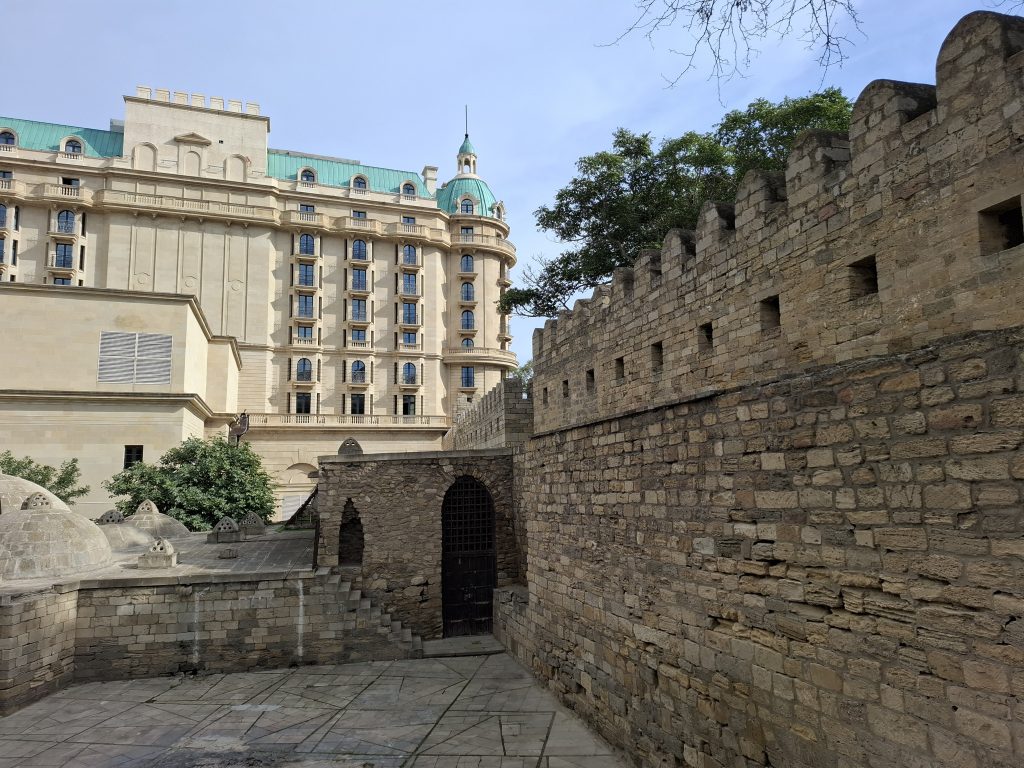
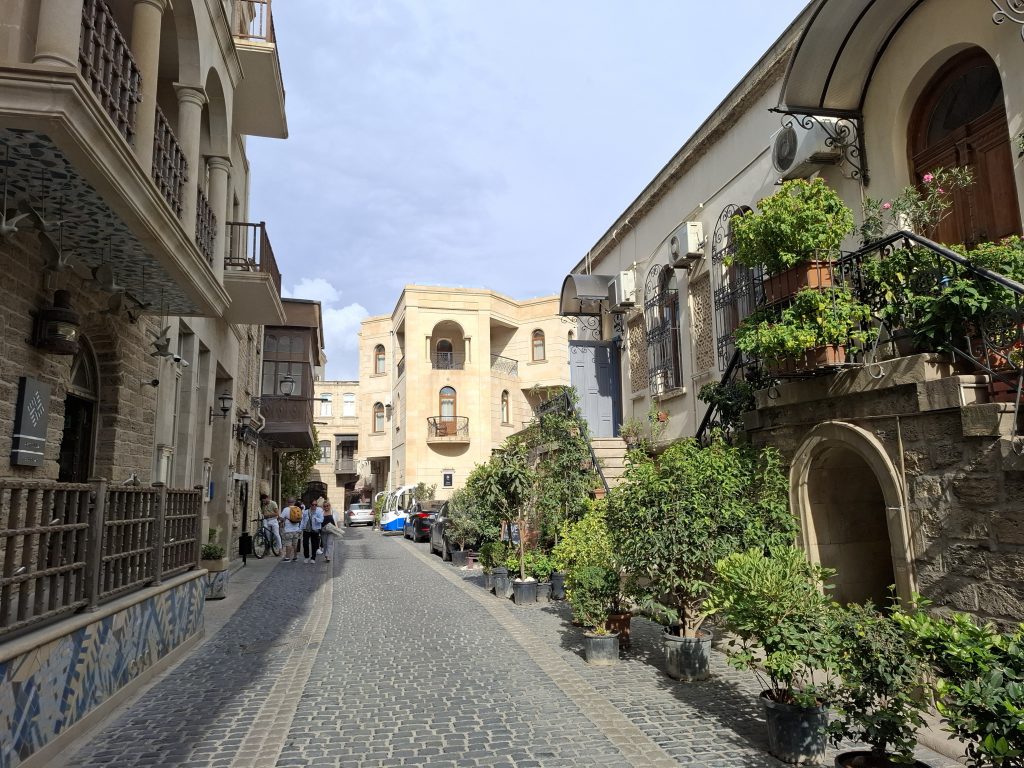
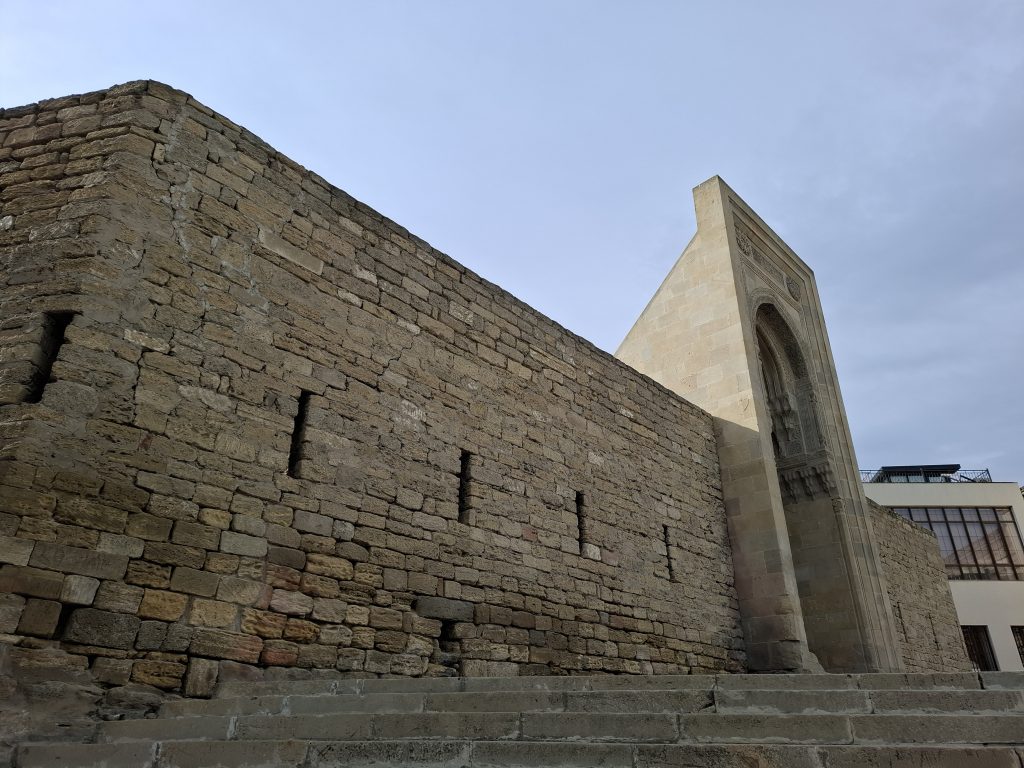
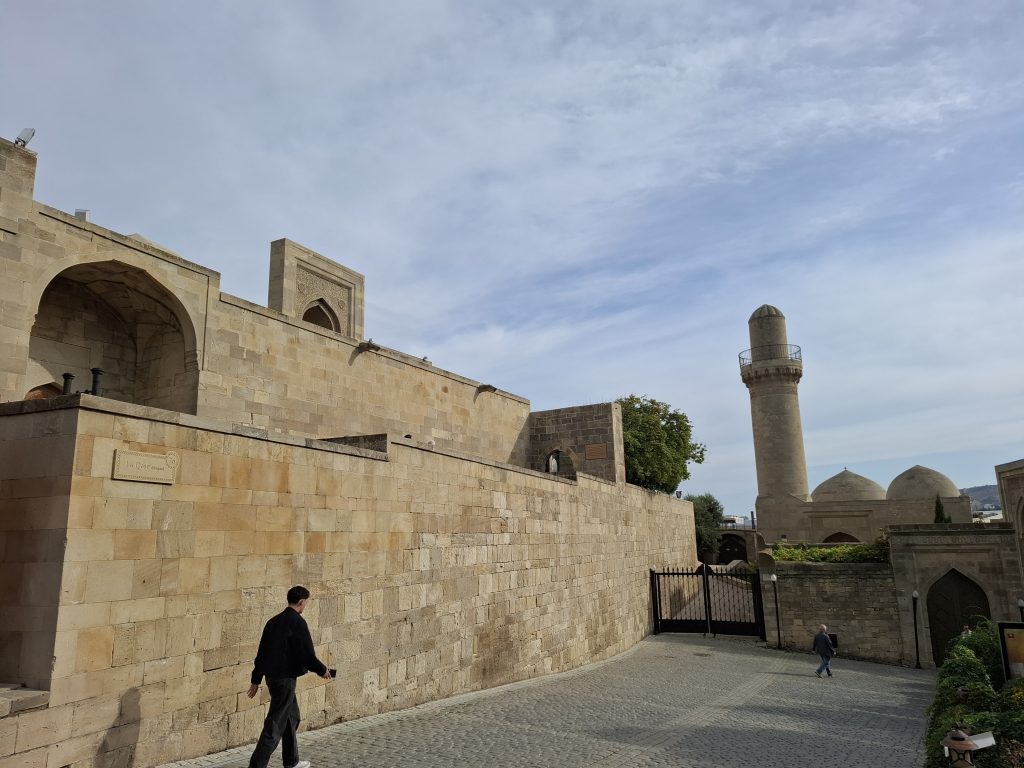
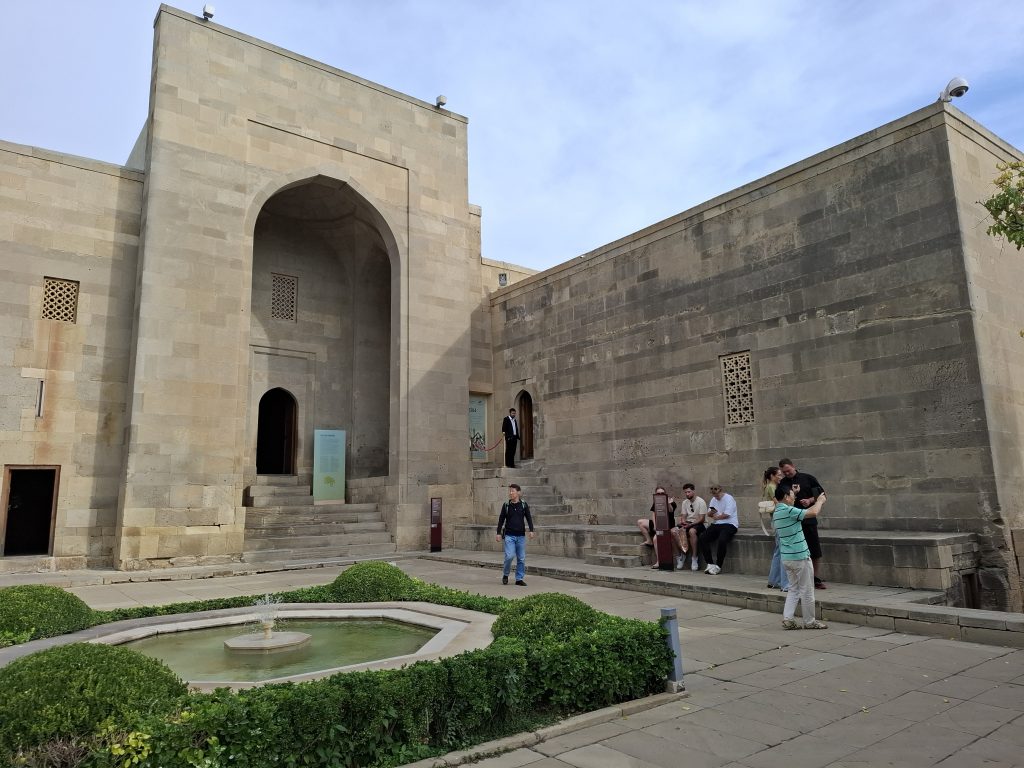
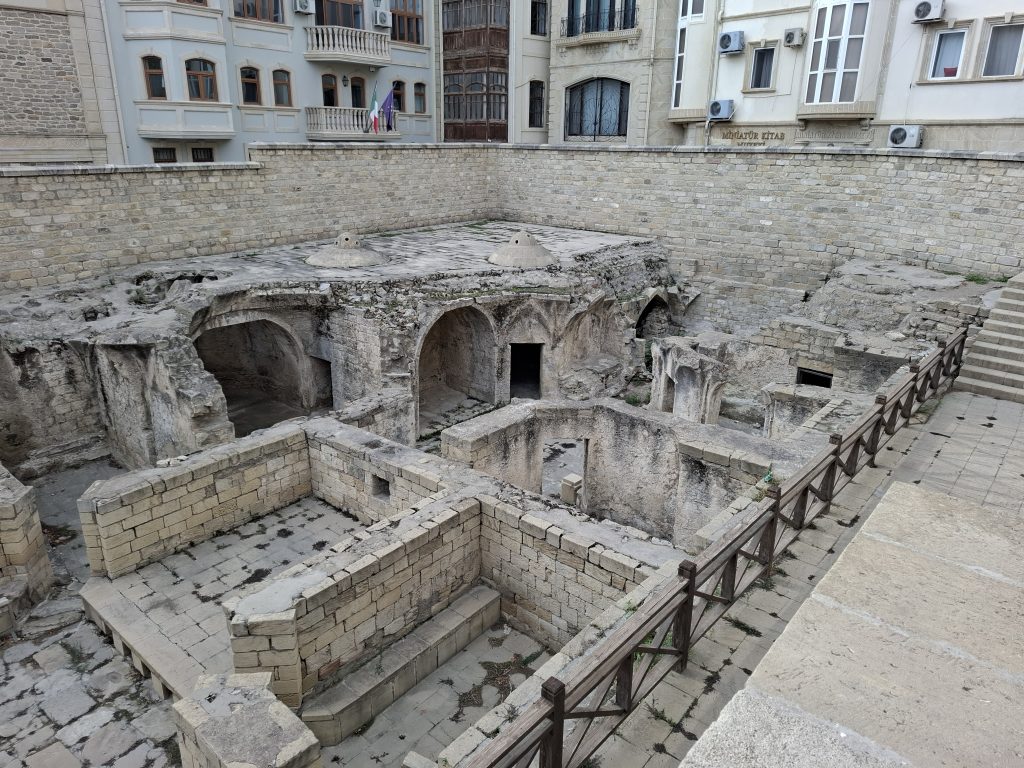
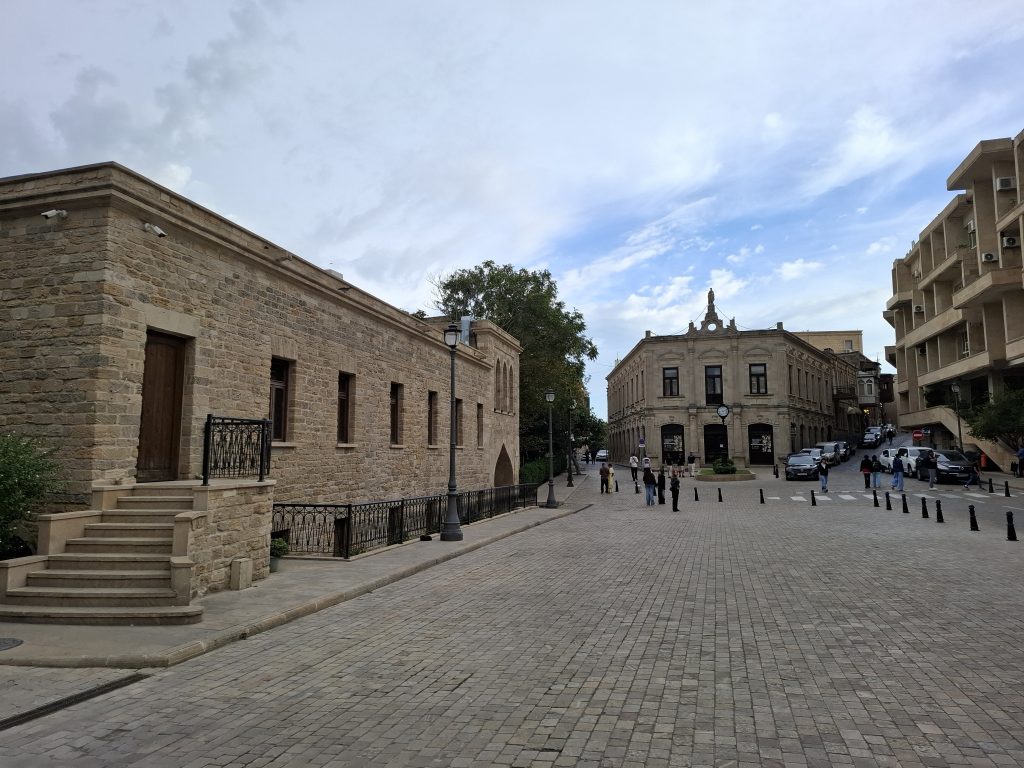
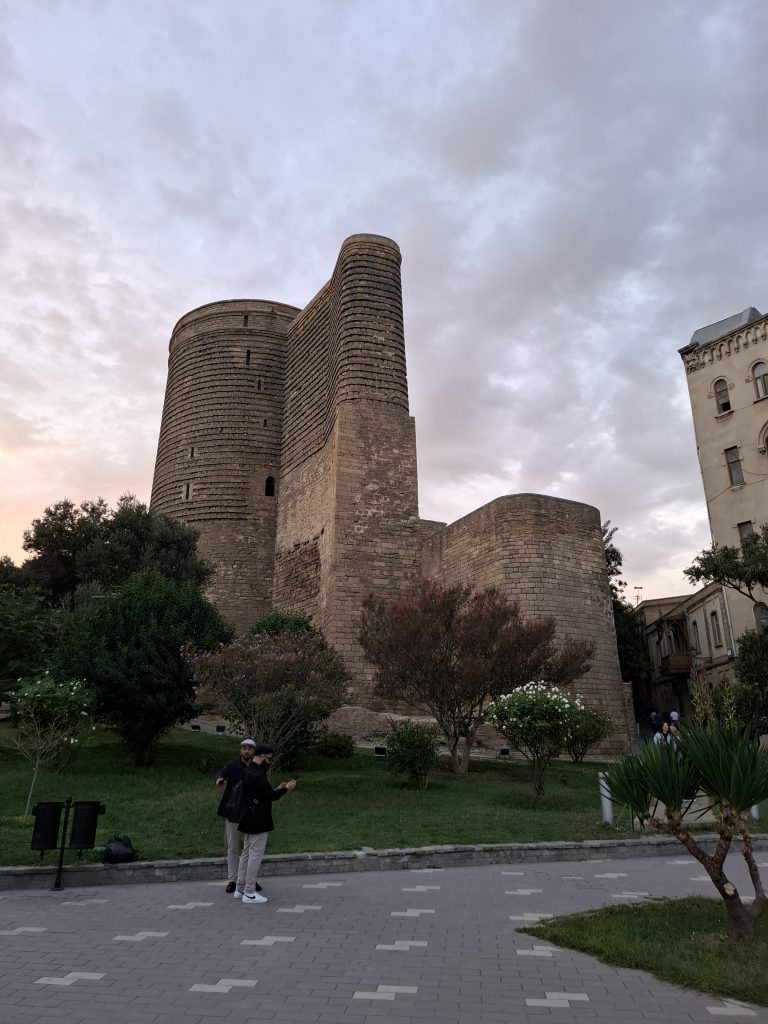
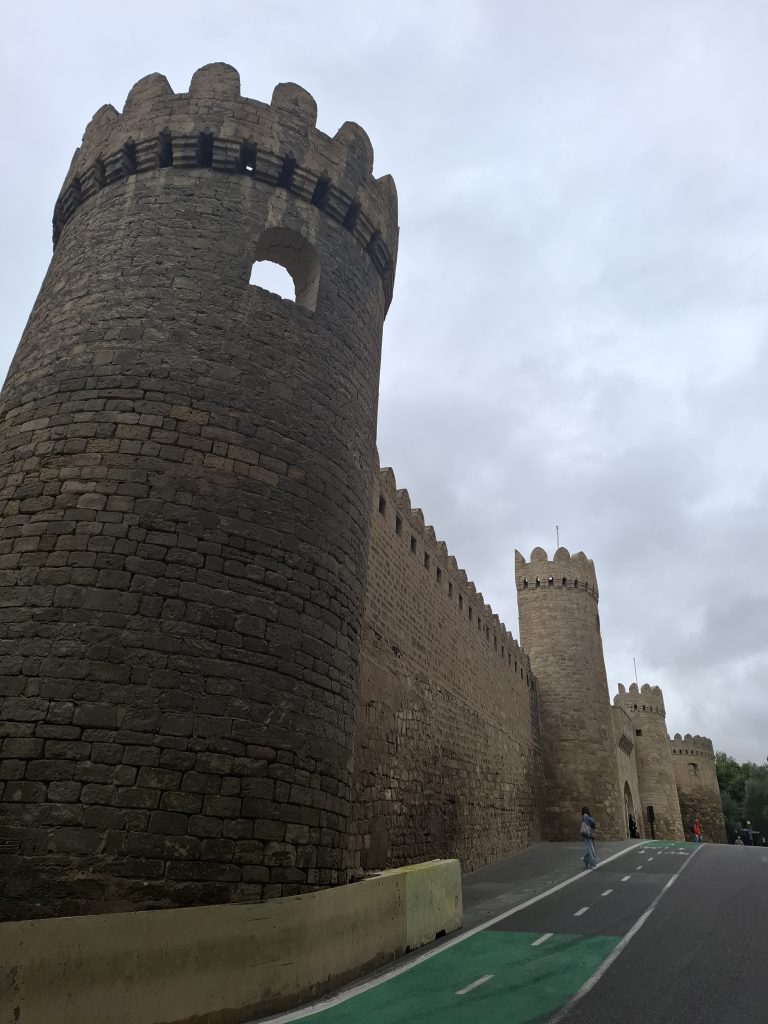
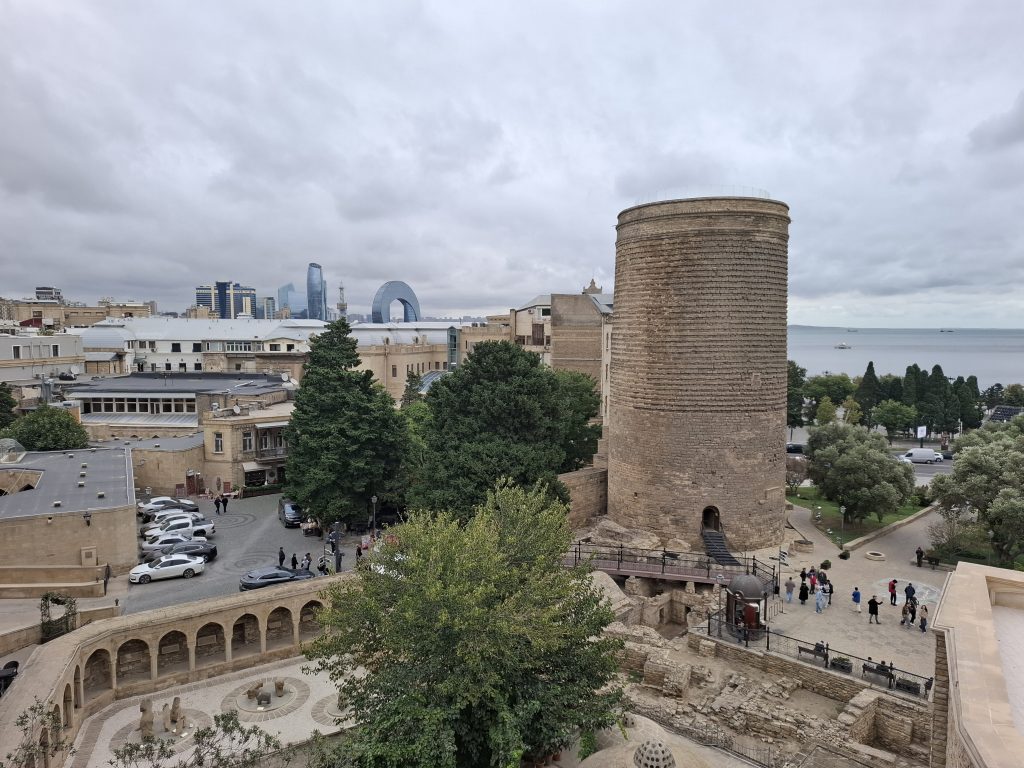
    🏰 Old City (Icherisheher): Explore this UNESCO World Heritage site with its labyrinth of narrow streets, home to the Maiden Tower and the Palace of the Shirvanshahs, a dynasty that once ruled whole of Persia.

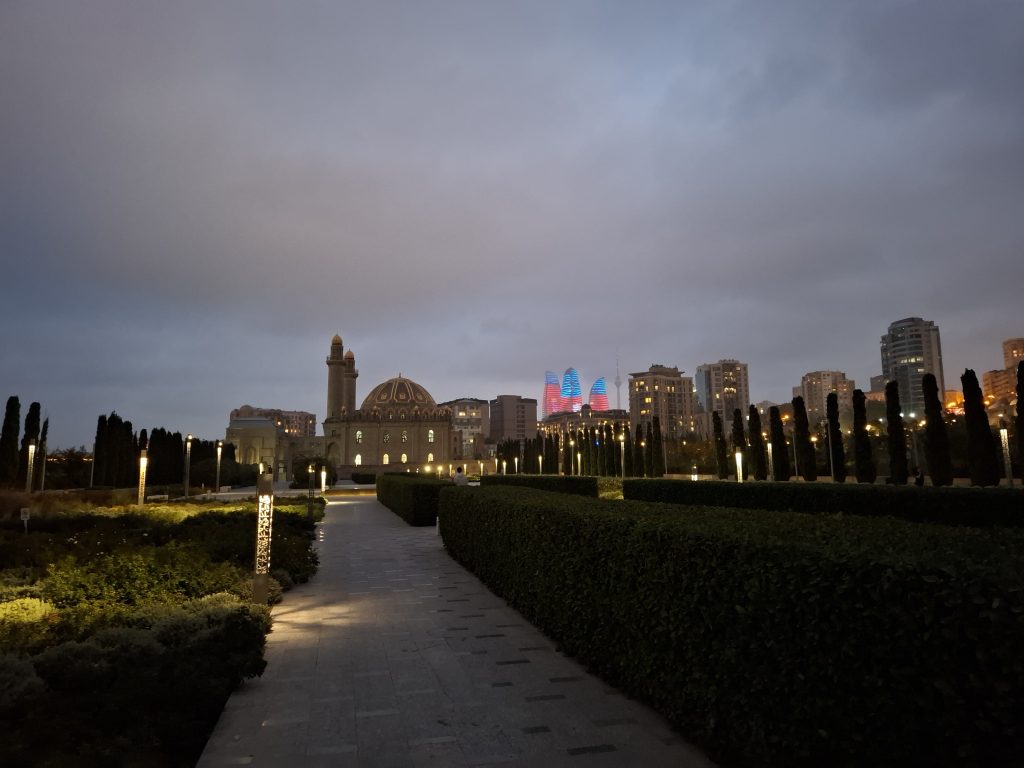
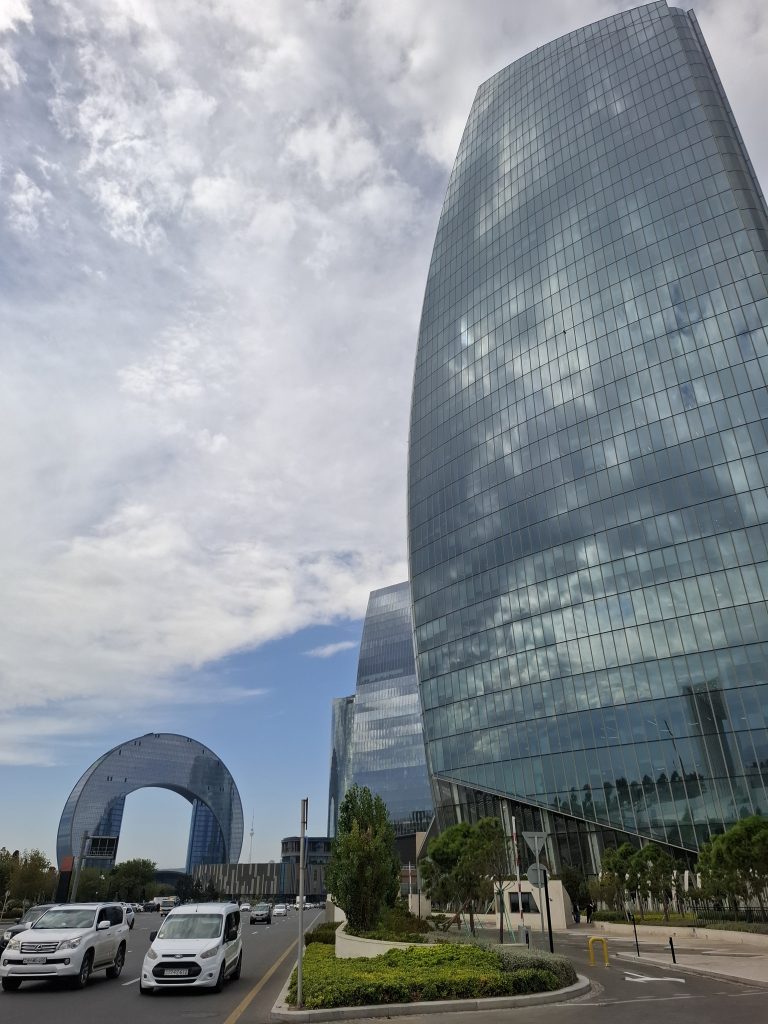
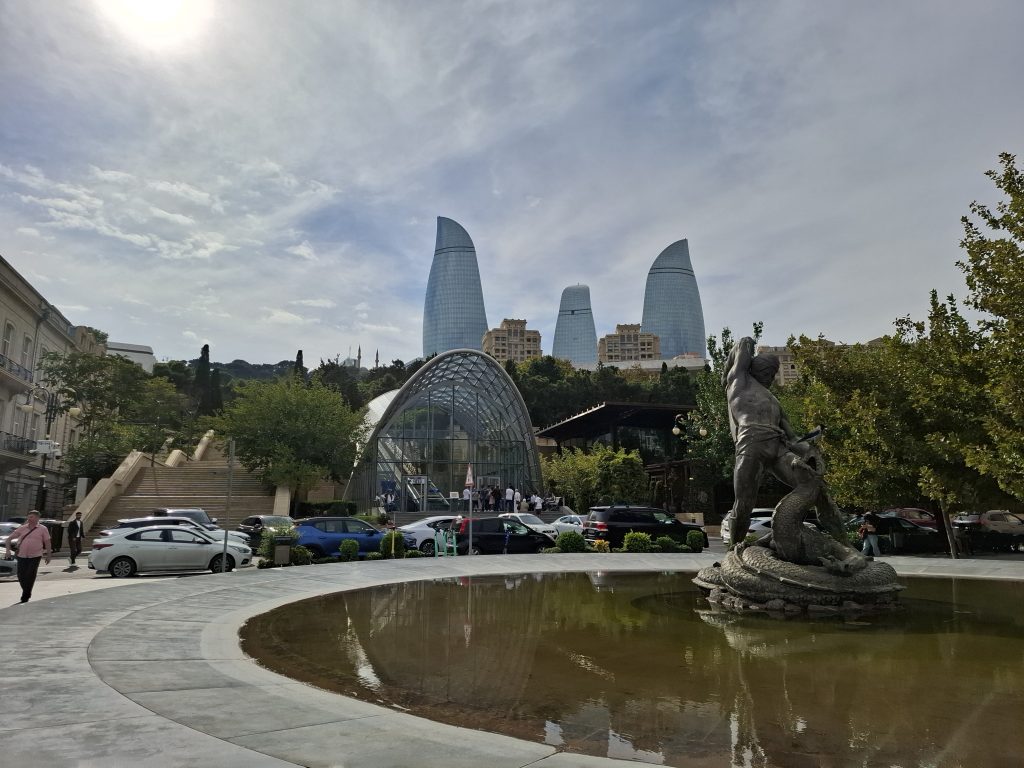
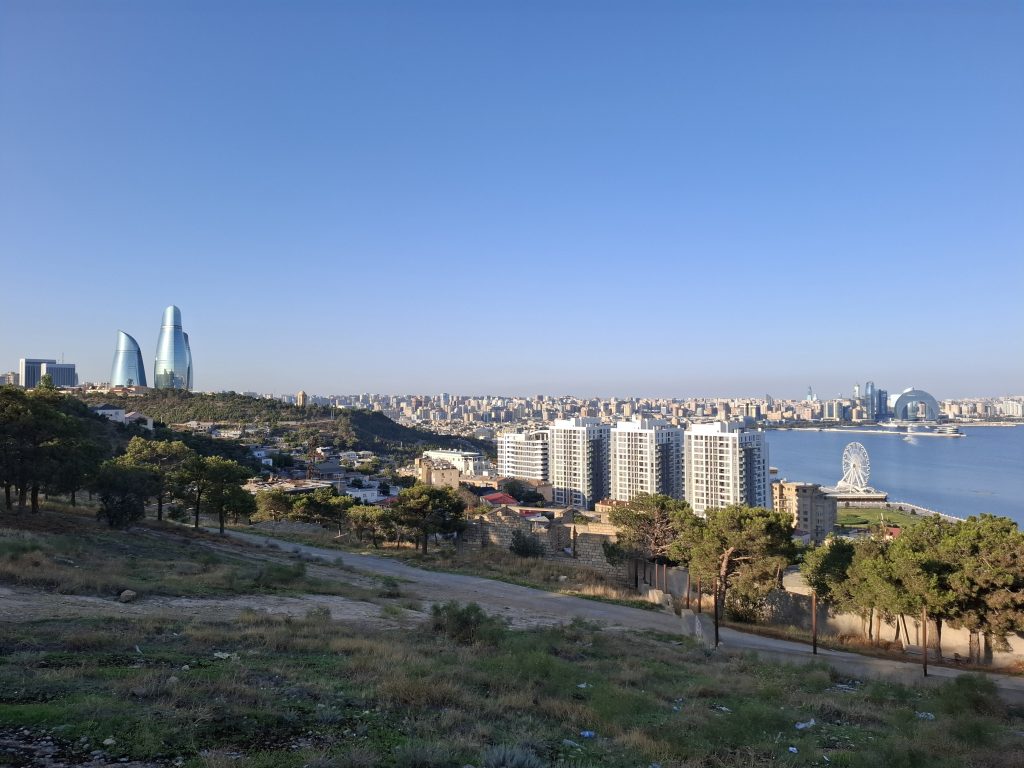
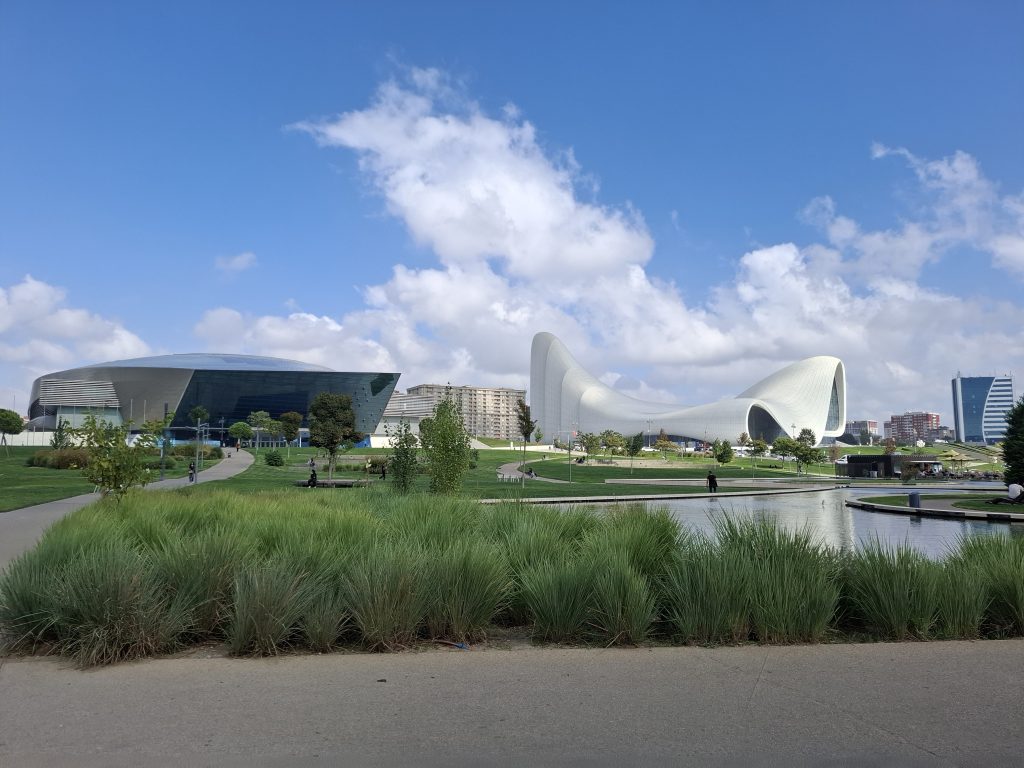
    🎨 Modern Marvels: Admire the iconic Flame Towers and the stunning architecture of the Heydar Aliyev Centre.

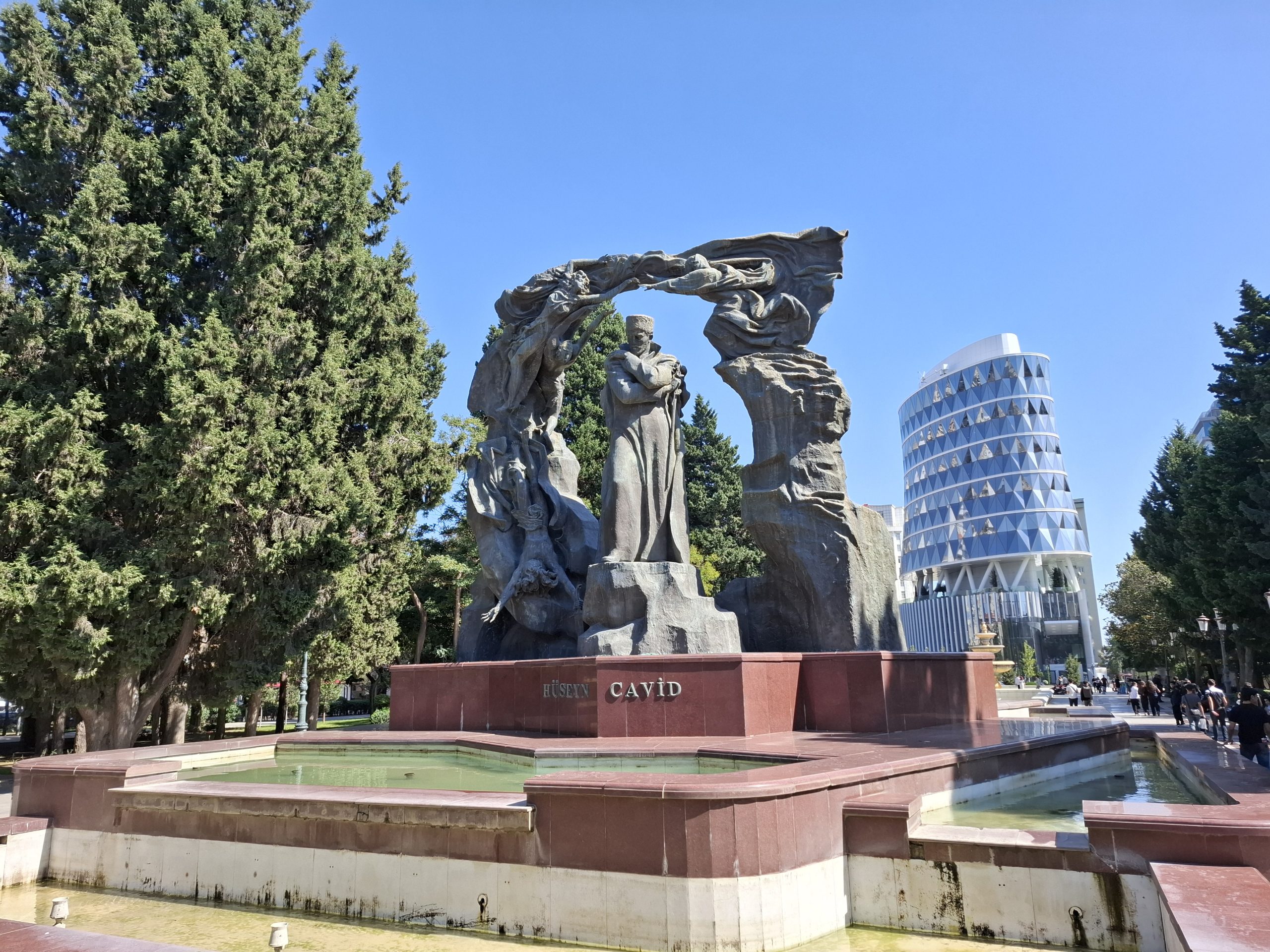
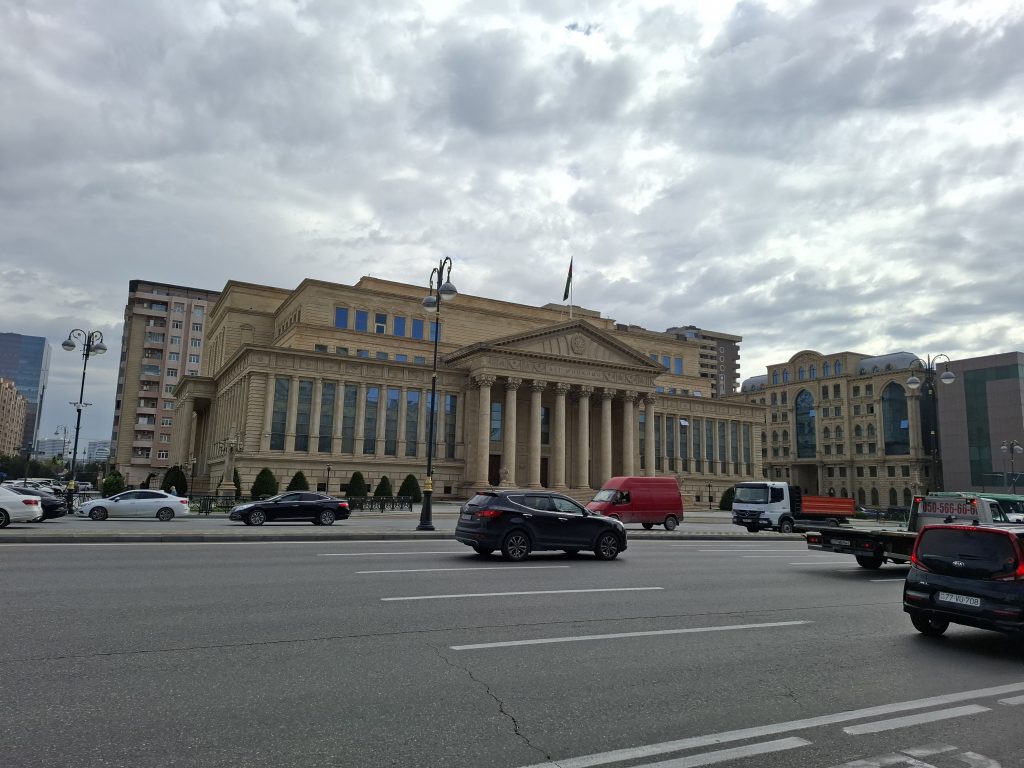
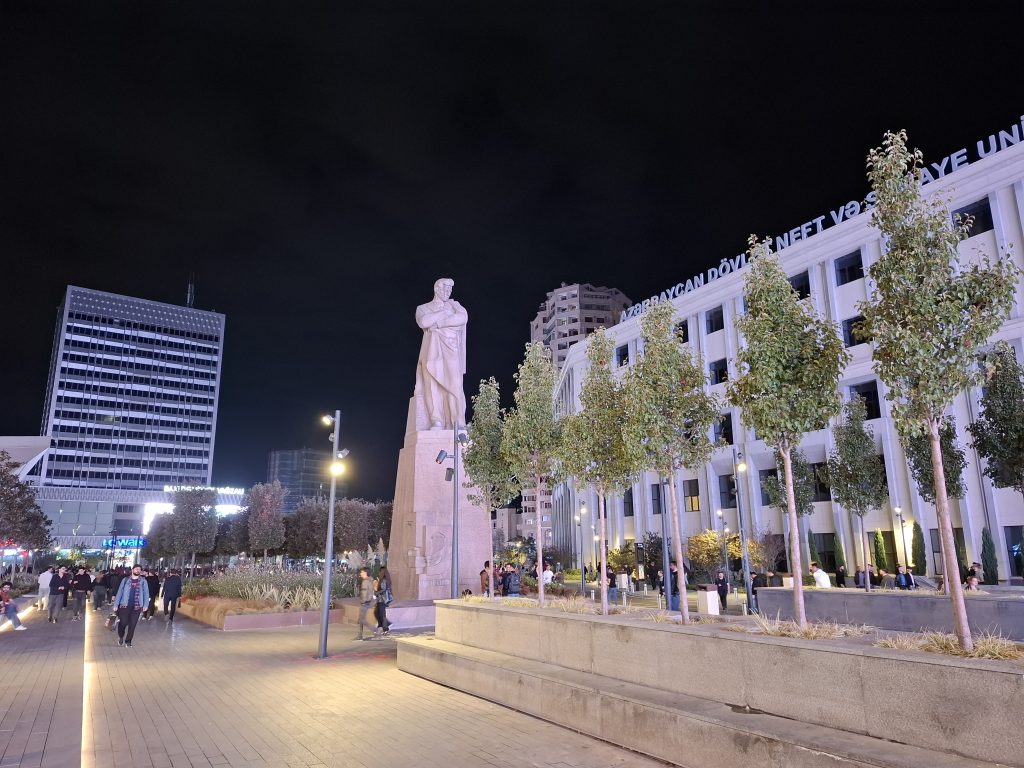
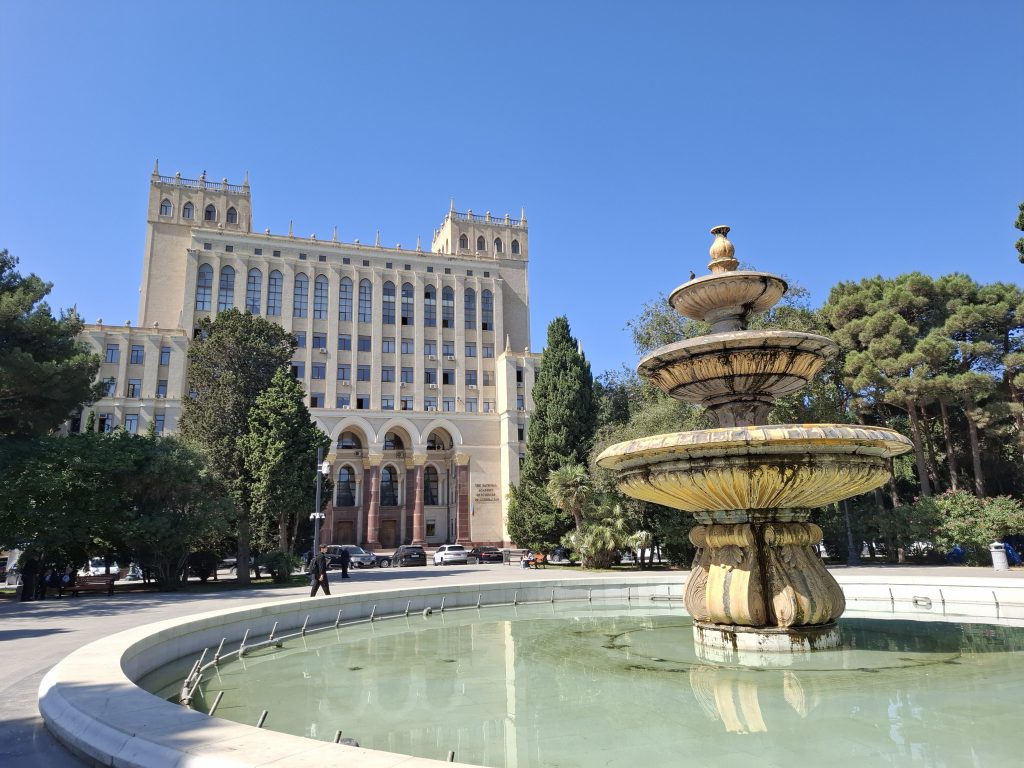
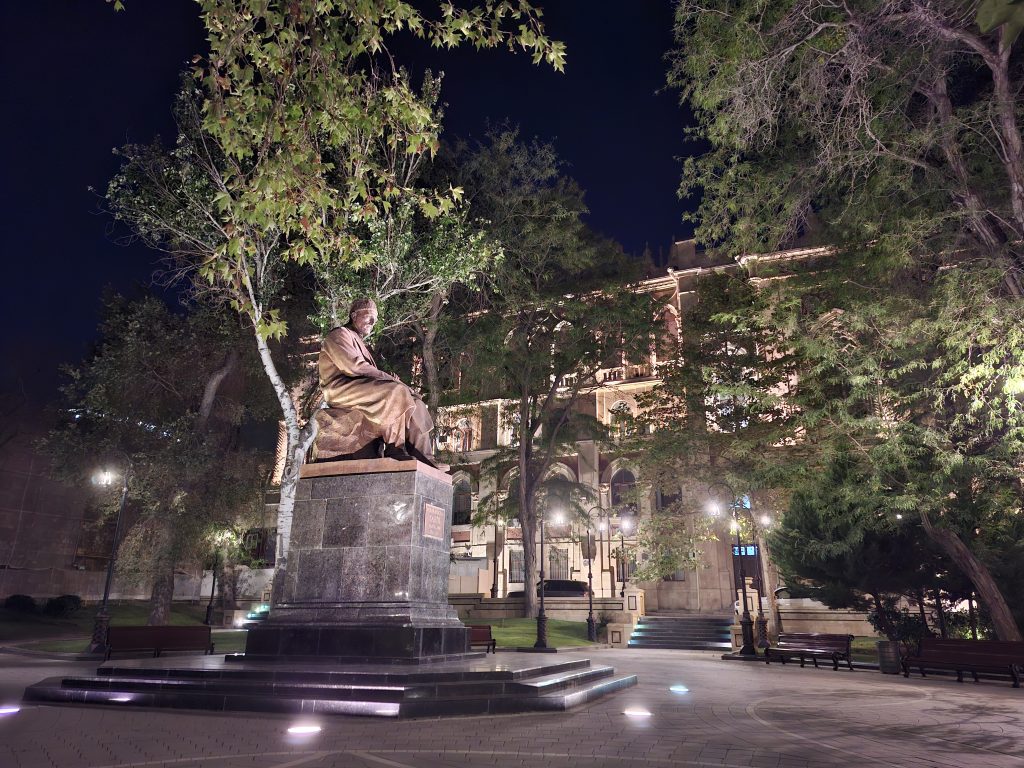
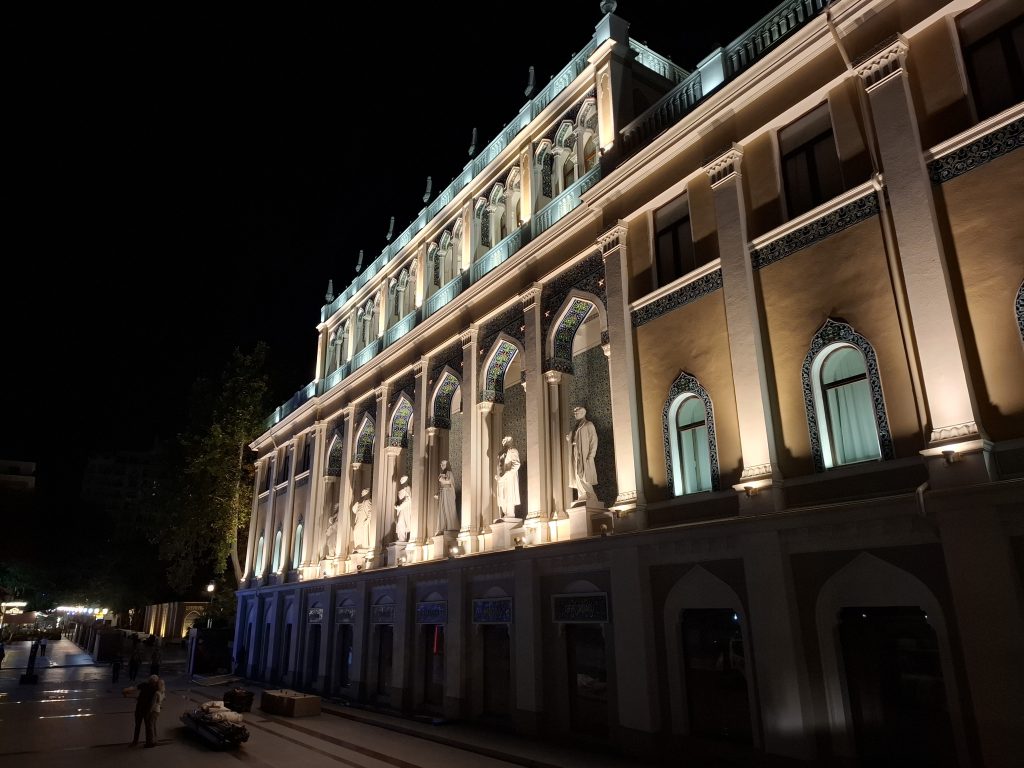
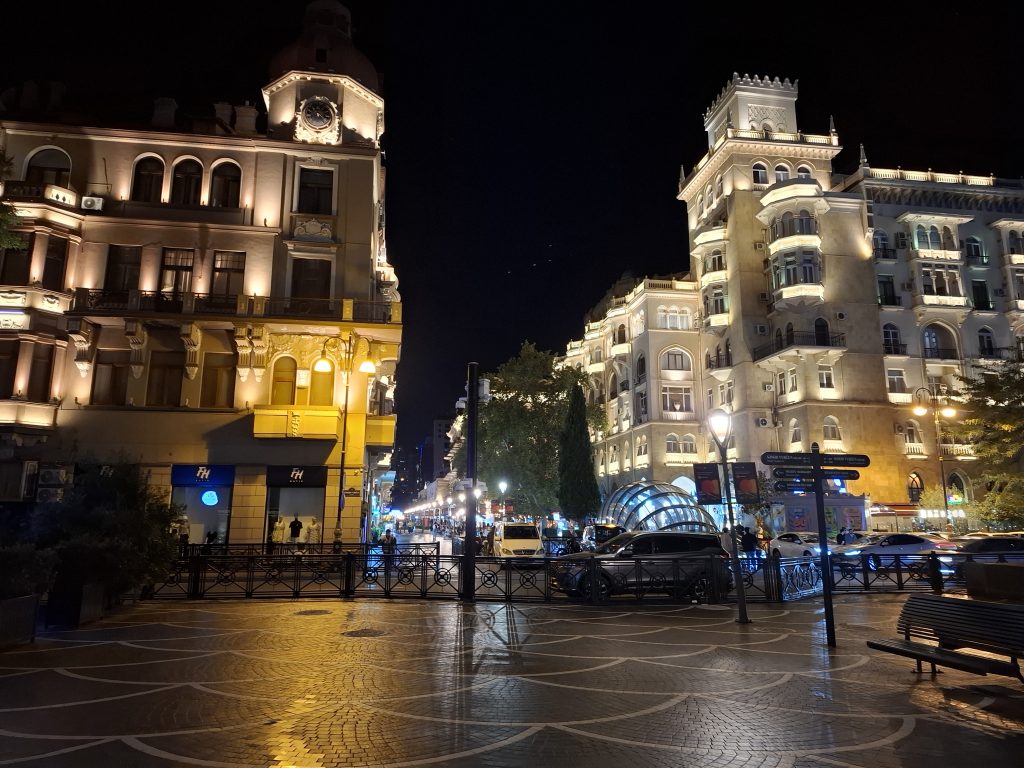
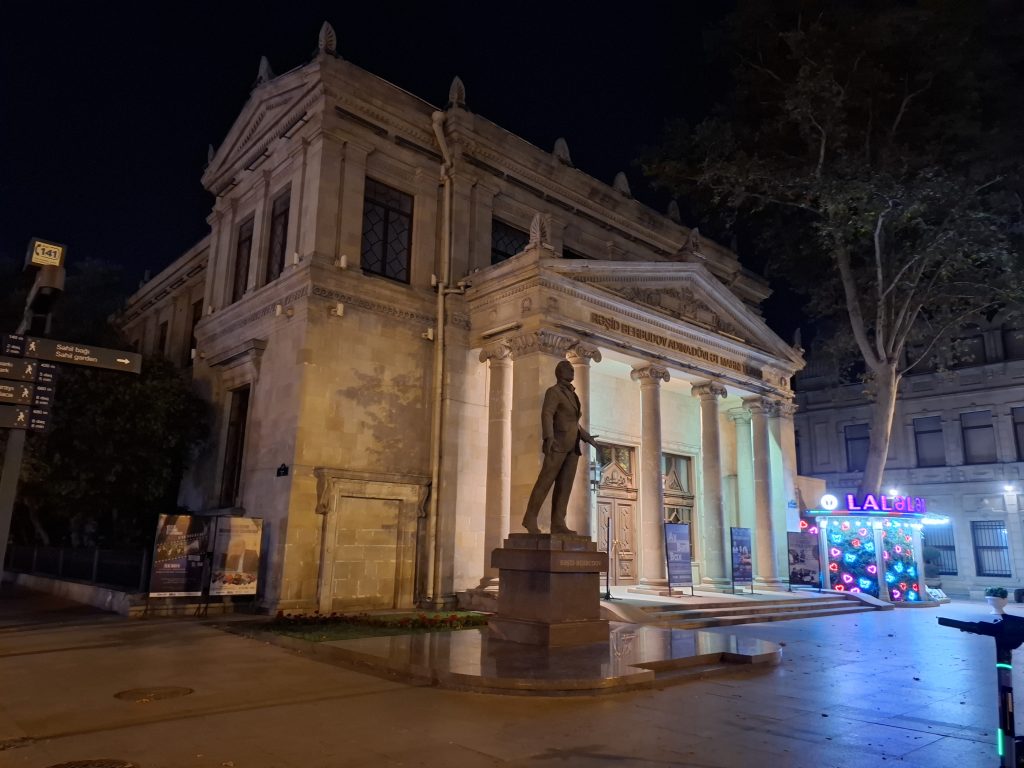
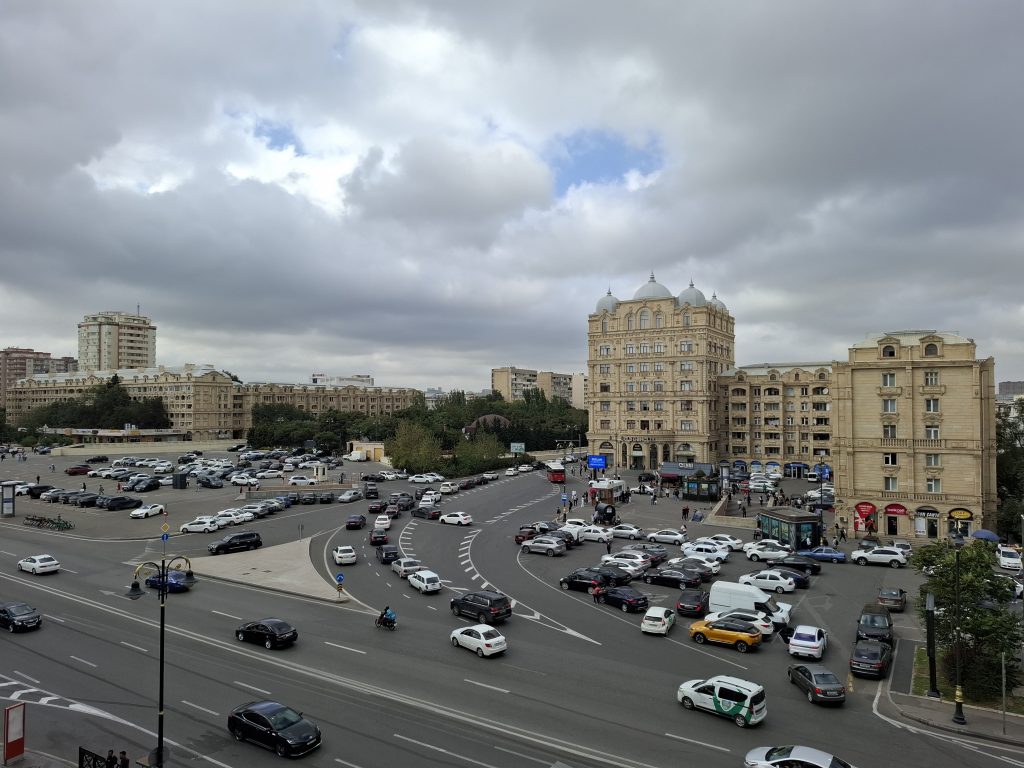
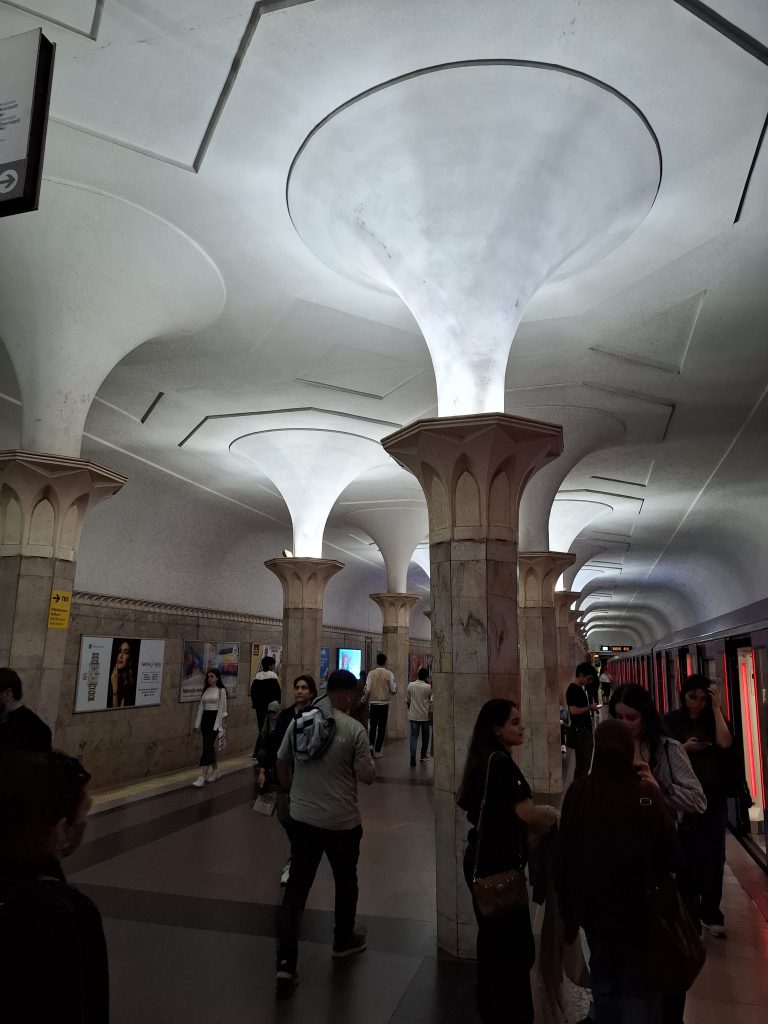
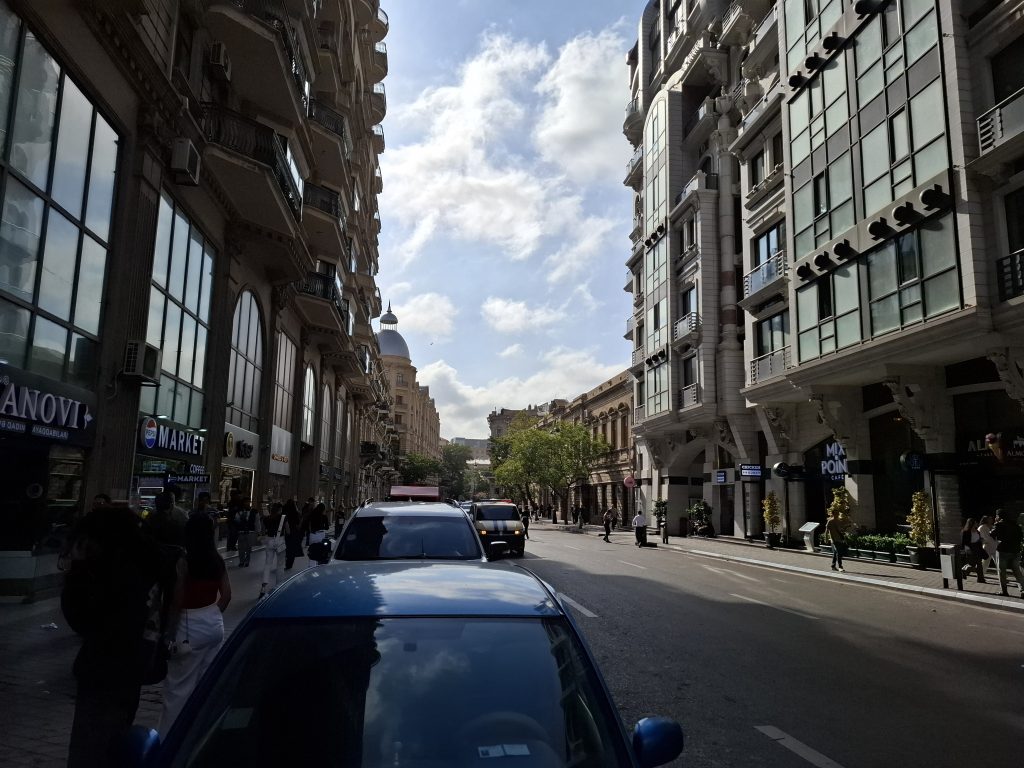
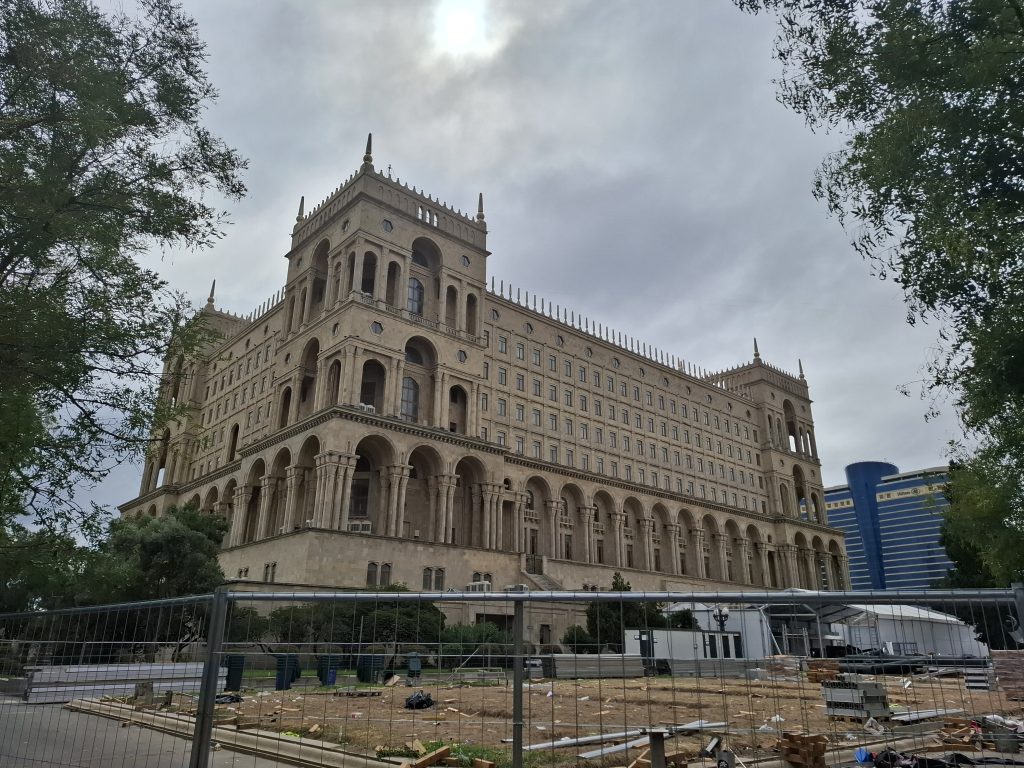
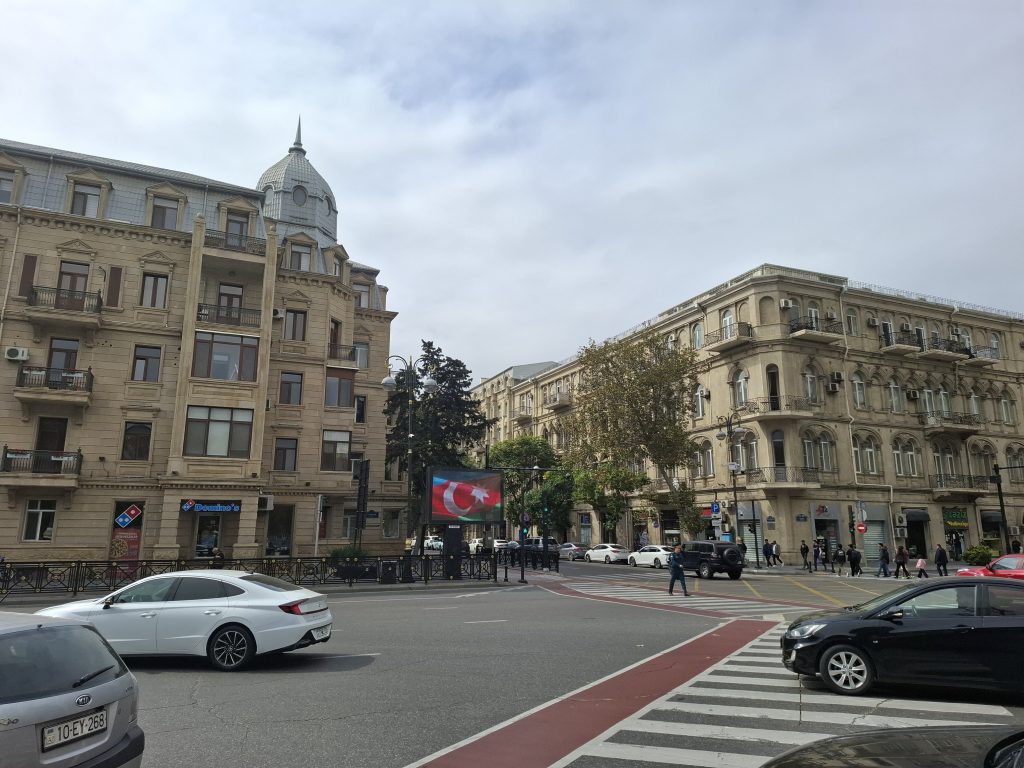
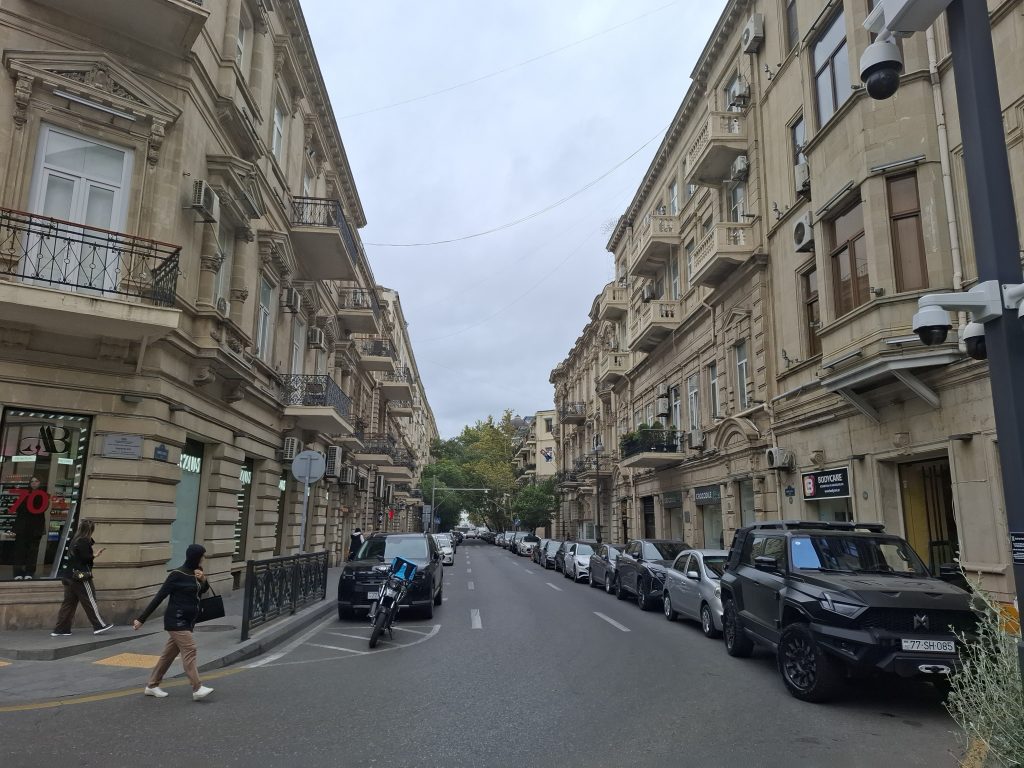
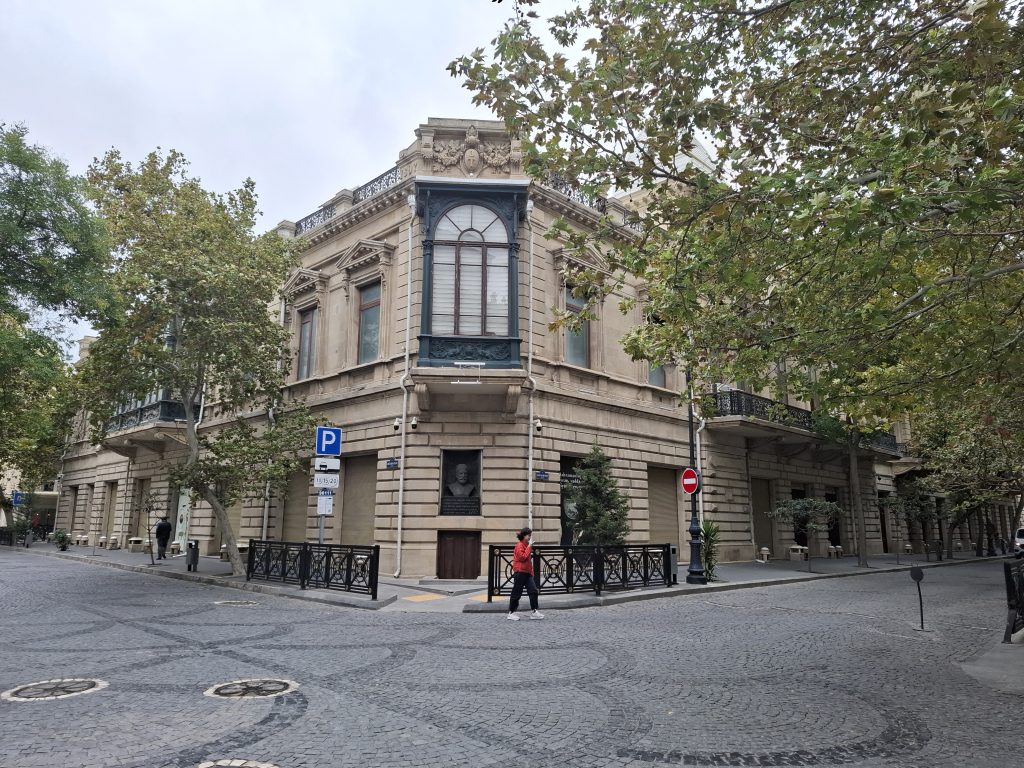
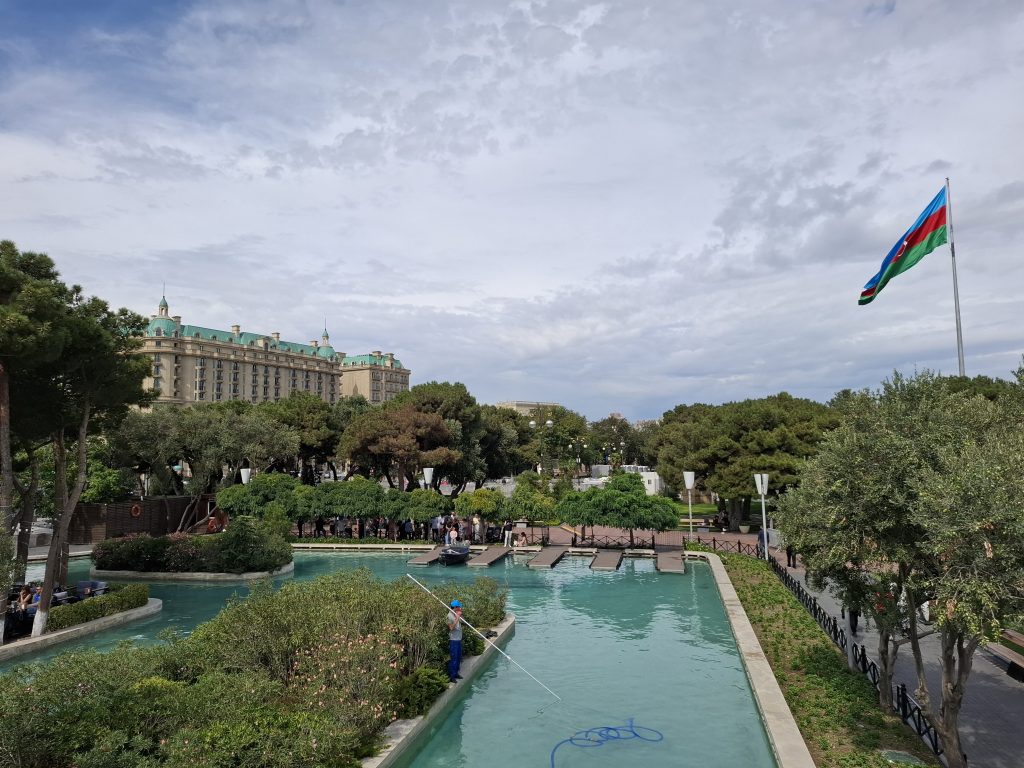
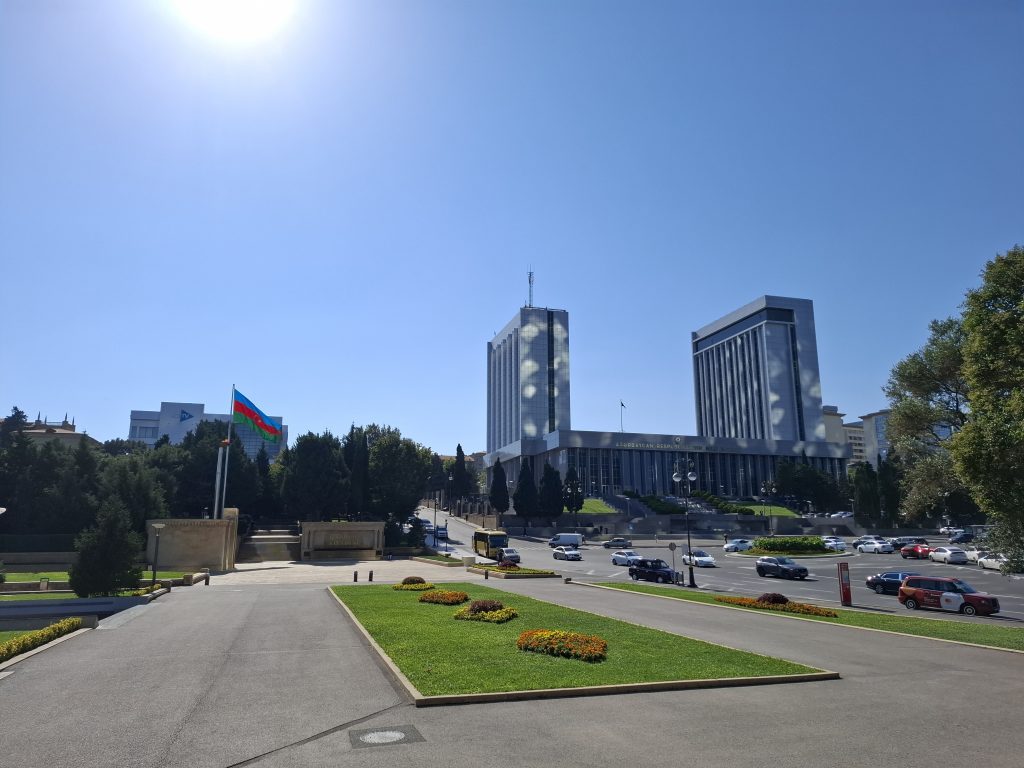
    🏛️ Paris of the Caucasus: Stroll through the city center to see the elegant, eclectic architecture. Wide, walkable boulevards like Istiglaliyyat Street are lined with pastel-colored mansions and civic buildings that give the city its Parisian flair.

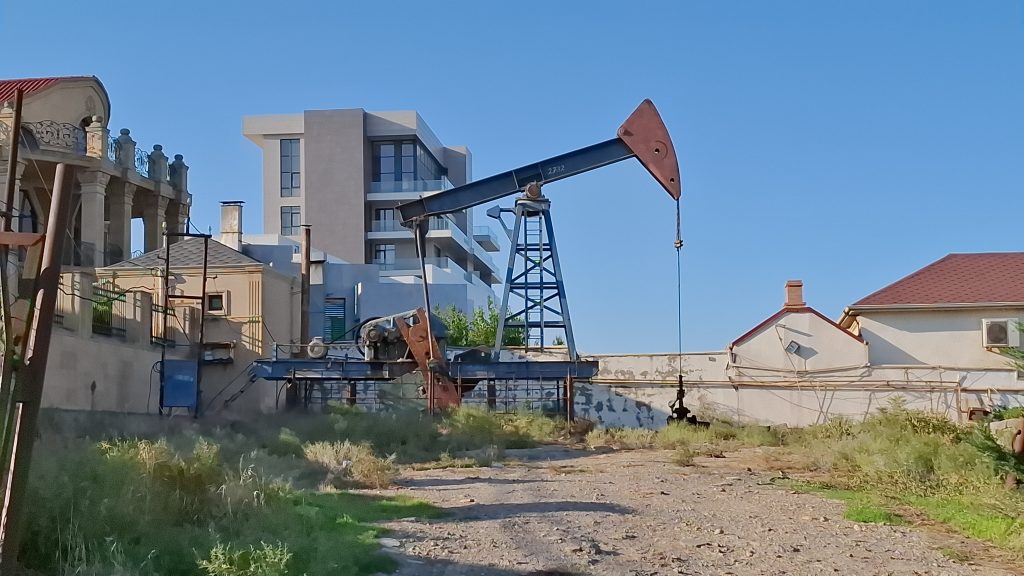
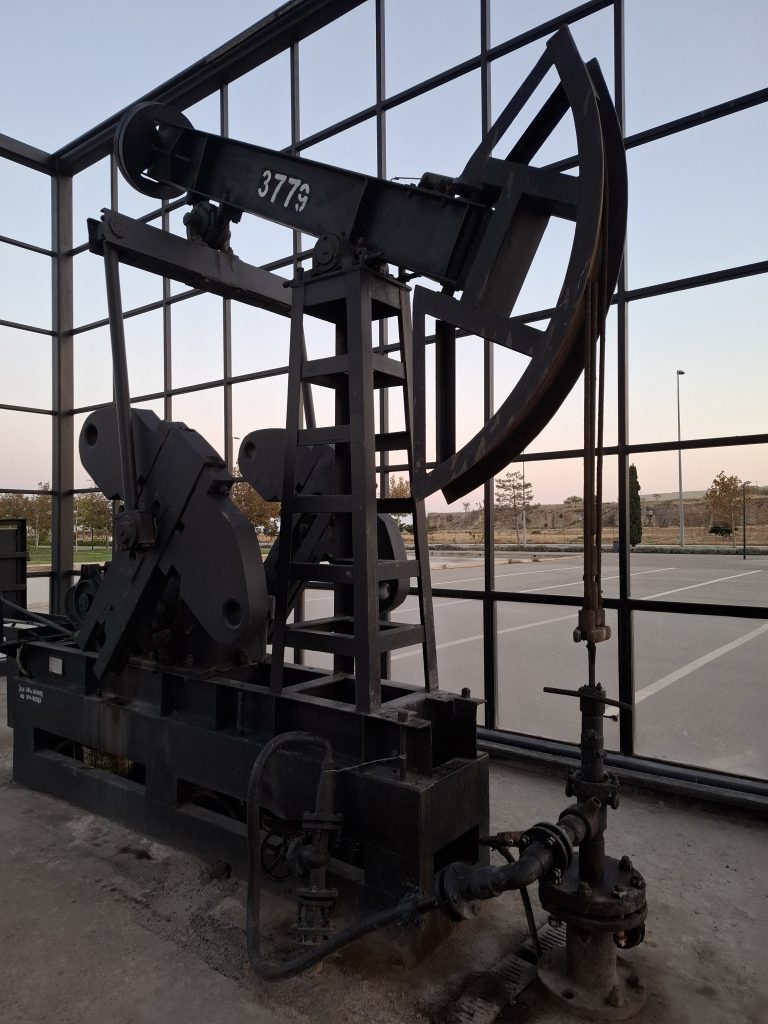
    🛢️ Oil Heritage: Discover the legacy of the world’s first oil boom. See the area in Bibi-Heybat where the first industrial oil well was drilled in 1846. The city’s story is shaped by oil barons like Haji Zeynalabdin Taghiyev and the Nobel brothers.

    Transport tip: Baku features an extensive subway system and 24/7 airport shuttle buses starting from the central railway station.

    Baku is a city of contrasts, offering a unique blend of the old and the new, just waiting to be explored!

  • Полное руководство по посещению Китая для Россиян

    Китай – удивительная страна-цивилизация с более чем 4-тысячелетней историей. При этом к поездке в КНР нужно готовиться заранее – многие процессы у китайцев работают совсем иначе, чем мы привыкли, и проблемы, возникающие от отсутствия должной подготовки, могут испортить любую поездку.

    Платёжные инструменты

    Вероятно, один из самых известных фактов про жизнь в КНР – это распространённость мобильных платежей по QR вместо привычных россиянам банковских карт.

    На этом рынке три основных игрока: WeChat (и функционал Weixin Pay), AliPay, и UnionPay. Здесь примечательно приложение UnionPay. По состоянию на начало 2026 года, карты UnionPay российских банков РСХБ и АТБ можно добавить в приложение и оплачивать покупки по выгодному курсу (дешевле покупки наличных юаней в Москве).

    В приложения WeChat и AliPay получится добавить только работающие карты VISA/MasterCard. При этом без работающих Weixin Pay/AliPay в КНР может быть весьма некомфортно. Например, стандартный процесс заказа еды в кафе и ресторанах выглядит так:

    1. Сканируем QR код микроприложения со стола.
    2. По меню в телефоне собираем заказ.
    3. Оплачиваем счёт.
    4. Официант выносит блюда.

    Встречаются как системы с постоплатой (сначала заказали, поели, затем оплатили счёт в приложении – например в Pizza Hut), так и с предоплатой (еду начнут готовить после оплаты). В McDonalds оплатить заказ со стойки можно и по QR Unionpay.

    Как результат, персонал заведений общепита не привык принимать заказы по меню или оплату счетов. Можно долго ждать, пока на вас обратят внимание. При расчёте наличными будет проблема с отсутствием сдачи у продавца, поскольку наличные в КНР редкость.

    Внешний интернет и коммуникации

    Китайцы даже в крупных отелях практически не знают английского. Для коммуникации используются приложения-переводчики в телефонах. Ваш собеседник наговаривает или набивает текст и показывает вам перевод. Вы поступаете аналогично. Поначалу это может казаться непривычным, но вы быстро освоитесь.

    Моя гипотеза – основные туристы в Китае (корейцы, японцы, вьетнамцы) тоже не знают английского. Поэтому прямой перевод с языка туриста на Мандарин – наилучшее решение.

    Функции оффлайн перевода на Китайский на хорошем уровне работают в Google Translate. Не забудьте скачать упрощённый китайский в приложении заранее. В КНР сервисы Google, включая Google Play, не работают.

    Однако для россиян есть хорошие новости. Привычные для нас российские сайты и приложения уже доступны в КНР. Поисковик Яндекс, почта, банки и соцсети – все локализованные сайты прекрасно работают.
    Поэтому для сёрфинга по китайскому интернету скачайте Yandex Browser – в нём доступен перевод страниц с Yandex Translate. В Google Chrome перевод работать не будет даже со скачанным словарём.

    Информация на стендах, билетных кассах и указателях зачастую также будет только на китайском языке. Для перевода китайских текстов и табличек по фотографиям лучше всего использовать китайское приложение Baidu Translate. Скачать его можно, например, в Huawei App Gallery, которая скачивается с официального сайта компании. Всё как с RuStore, ничего необычного.
    Для перевода текста с экрана телефона можно скачать Bubble Translate из Google Play. В нём также доступны оффлайн словари для бесплатного распознавания и перевода китайских текстов в других приложениях.

    Ваш главный помощник в поиске информации – Deepseek. Приложение можно скачать из того же Google Play, оно работает в КНР. Однако для использования приложения в КНР и здесь вам предстоит авторизация по китайскому номеру телефона (даже если вы были авторизованы ранее). Китайская версия Deepseek смешно переключается в ответах на китайский язык, если постоянно не напоминать ему “Answer in English”.

    Если же Deepseek вдруг не помог, то как поисковик используем Sogou.com или Яндекс.

    Лучшее приложение карт для Китая – Amap. У него есть международная версия в Google Play, англоязычный интерфейс, база всех местных объектов, знание транспортных маршрутов. Для просмотра фото и отзывов на объекты может потребоваться регистрация – опять же сработает только китайский номер телефона.

    В функционале оффлайн карт лучше всего справляется Maps.me, однако названия многих объектов на карте не переведены и доступны только в транскрипции иероглифов латиницей.

    Транспорт

    На метростанциях городов всегда присутствуют автоматы для продажи одноразовых билетов (или жетонов, как например в Нанкине) до предопределенного пункта назначения. Стоимость билета варьируется от пройденного расстояния и составляет обычно от 3 до 10 юаней.

    В аппаратах зачастую нет наличной сдачи, а платить легче всего теми же платёжными QR. Не везде принимаются карты Visa/Mastercard/Unionpay.

    Жители КНР в основном оплачивают проезд по QR из разделов транспорта приложений WeChat или AliPay сразу на турникетах.

    В современных городах вроде Шанхая доступен вход и выход по банковской карте. Стоимость проезда рассчитывается и списывается на выходе через турникеты.

    Аналогично в большинстве городов можно проехать на автобусе, оплатив поездку WeChat/AliPay/UnionPay QR или картой. Стоимость проезда здесь зависит от маршрута. Однако, например, в Пекине оплатить проезд в автобусе без транспортной карты (физической за 20 юаней или цифровой, например, в приложении WeChat/AliPay) не получится, т.к. стоимость проездки зависит от числа остановок. Сканировать QR в автобусах Пекина требуется на входе и на выходе.

    Железные дороги

    Сеть великолепных железных дорог связывает всю страну – это самый удобный способ перемещения между городами Китая. Также на длинных маршрутах есть отличные ночные поезда.

    Покупка билетов, вход на вокзалы – всё только по паспорту. Досмотр безопасности в чём-то жёстче чем в аэропорту – вещи в багаж не сдаются. Вокзалы огромные и ваш поезд может оказаться в здании на противоположной стороне площади. При этом в каждом городе будет несколько вокзалов, именующихся по сторонам света (Hangzhounan, Beijingbei) или местным населенным пунктам (Beijing Fengtai, Shanghai Hongqiao). Приезжайте заранее и тщательно сверяйте название вокзала в билетах с тем, откуда вы едете.

    Билеты можно покупать онлайн у перекупщиков (по моему опыту ChinaTicketOnline.com продаёт с минимальными наценками) или в официальном приложении китайских железных дорог – 12306. Скачивается оно также в Huawei App Gallery. После регистрации с китайским номером телефона требуется идентификация по паспорту. По моему опыту – пройти идентификацию иностранцу можно только в кассе вокзала. Это разовый процесс, который затем позволяет вам купить билет и проходить сразу в здание вокзала. Если билеты покупаются у посредников или на аккаунте без идентификации, то перед входом в вокзал их необходимо распечатать в здании касс, что создаёт лишний дискомфорт.

    Как альтернативу Убер обычно рекомендуют приложение Didi, однако я им не пользовался. Вызвать такси можно и из Amap, прямо как в Яндекс Картах. Приложение подскажет примерную цену поездки и предложит самого выгодного перевозчика. Такси в Китае недорогое. Так, например, поездка из центра Пекина до участка Великой Китайской Стены Mutianyu длиной в 70 км обойдётся примерно в 150 юаней в одну сторону.

    Посещение достопримечательностей

    Посещение самых популярных достопримечательностей требует онлайн резервации, даже если вход бесплатный (что распространено в Китае). В большинстве случаев используются мини-приложения WeChat. В Пекине у некоторых объектов ещё сохранились собственные сайты. Найти как и где оформить билеты помогает Deepseek.

    Регистрация в WeChat с 2025 года с российскими номерами телефонов доступна без приглашений от китайцев. Скачиваем приложение, подтверждаем кодом из СМС или входящего вызова (зависит от оператора), создаём аккаунт. В РФ WeChat работает без VPN, поэтому это удобный мессенджер для связи с друзьями и родственниками на время поездки в КНР.

    Для резерваций в большинстве случаев требуются данные загран паспорта и китайский номер телефона, поэтому обязательно покупаем СИМ по прилёту. В международных аэропортах есть точки продаж в зоне прилёта.

    Ворота для входа в достопримечательности обычно автоматические – жители КНР сканируют id-карты, иностранцы – биометрические паспорта. С небиометрическими паспортами вход доступен только через сотрудника, что создаёт излишние трудности, поэтому желательно оформить 10-летний биометрический паспорт перед поездкой.

    По состоянию на конец 2025-начало 2026 года билеты практически во все достопримечательности Пекина можно и нужно бронировать/покупать онлайн. Например, билеты в Национальный Музей Китая бесплатные, но резервация открывается за 7 дней и билеты быстро разбирают даже в несезон.

    В других городах посвободнее. Например, Шанхайский музей в сентябре 2025 отменил собственную систему онлайн резерваций. В Ханчжоу резервировать билеты онлайн стоит, вероятно, только в храм Lingyin из-за очередей в кассы. В Нанкине ажиотаж может случиться в мавзолее Сунь Ят Сена и других достопримечательностях Розовой Горы.

    Связь

    Сим карты продаются по паспорту. По состоянию на конец 2025-начало 2026 года предоплаченный тариф на 2 недели с 50 GB интернета, минутами и СМС стоит примерно 150 юаней.

    Обратите внимание, что некоторые сети WiFi или мобильные приложения (например, Amap) для подтверждения личности могут просить вас отправить СМС. Если СМС в ваш пакет не включены, то баланс уйдёт в минус и услуги связи будут приостановлены до внесения оплаты. Так, например, China Unicom берёт 0.1 юаня за СМС, что составляет около одного рубля. Тем не менее, вам потребуется пополнить баланс. Сделать это можно через мобильное приложение (ищем всё так же в Huawei APP Gallery) или офис оператора.

    Покрытие мобильной связью отличное, в крупных городах и популярных пригородах (таких как участки Великой Китайской Стены) беспокоиться не о чем.

  • 🇷🇺 Russia

    Think you know Russia? Get ready for a history lesson written across eleven time zones. From Viking princes to Tsars and the USSR‘s commissars, Russia’s story is told through its ever-shifting capitals and vast, diverse landscapes. This isn’t just a trip—it’s a trek through the epic of a civilization that once spanned 1/6th of the Earth’s land surface.

    Start with the ancient roots. Your history tour can begin with the first capitals of Rus’:

    • Staraya Ladoga & Veliky Novgorod: Where Viking ruler Ryurik founded the first Russian state in 862. Walk the ramparts of a 12th-century fortress and see Russia’s oldest churches.
    • Vladimir: The medieval heart of the 12th-century principality, home to stunning White Monuments and the Golden Gate.

    No trip is complete without the two souls of modern Russia:

    • Moscow: The enduring political heart. Feel the weight of history at the Kremlin and Red Square, a UNESCO site that has been the center of power for centuries.
    • St. Petersburg: The “Window to the West.” A masterpiece of canals and baroque palaces built by Peter the Great. Don’t miss the Hermitage Museum in the Winter Palace.

    Beyond the capitals, Russia’s regions offer incredible diversity:

    • The Golden Ring: A loop of ancient towns like Suzdal northeast of Moscow, full of onion domes and pastoral charm.
    • Kazan: The “Third Capital,” where the Qol-Şärif Mosque stands inside a Kremlin, showcasing Tatar and Russian culture.
    • The Trans-Siberian Railway: The ultimate journey. Hop off at Irkutsk for Lake Baikal, the world’s deepest lake, or in Yekaterinburg, a Ural hub with dramatic 20th-century history.
    • Sochi: Enjoy Black Sea beaches and Caucasus mountain skiing at this unique resort city.
  • 🏭 Yekaterinburg, Russia

    🏭 Yekaterinburg, Russia

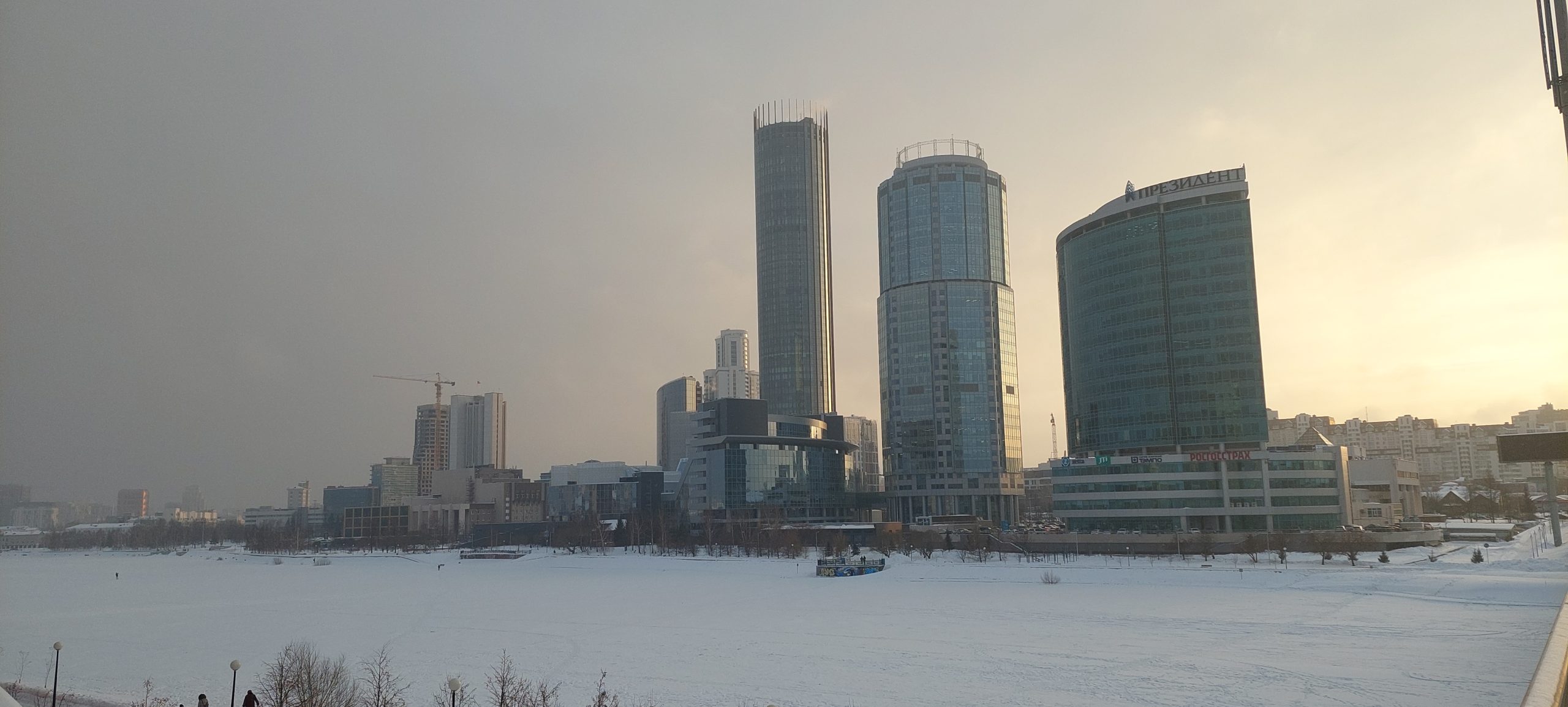
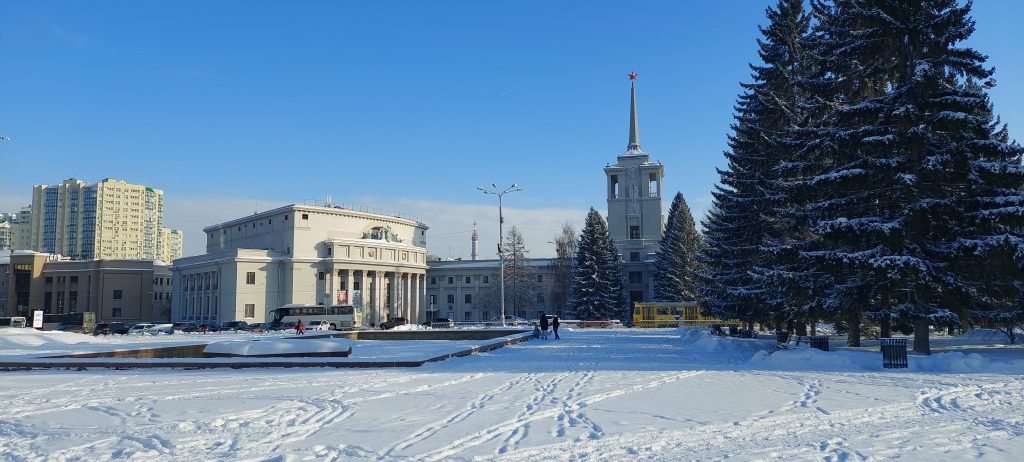
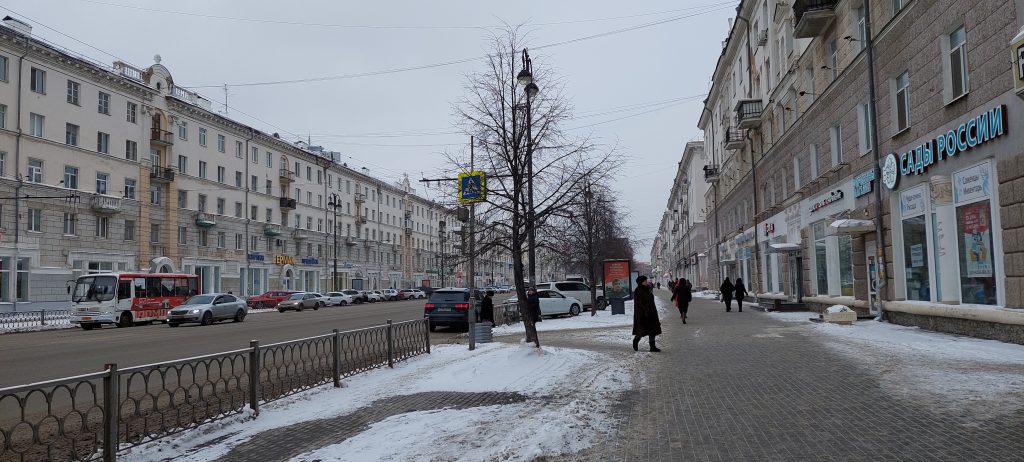
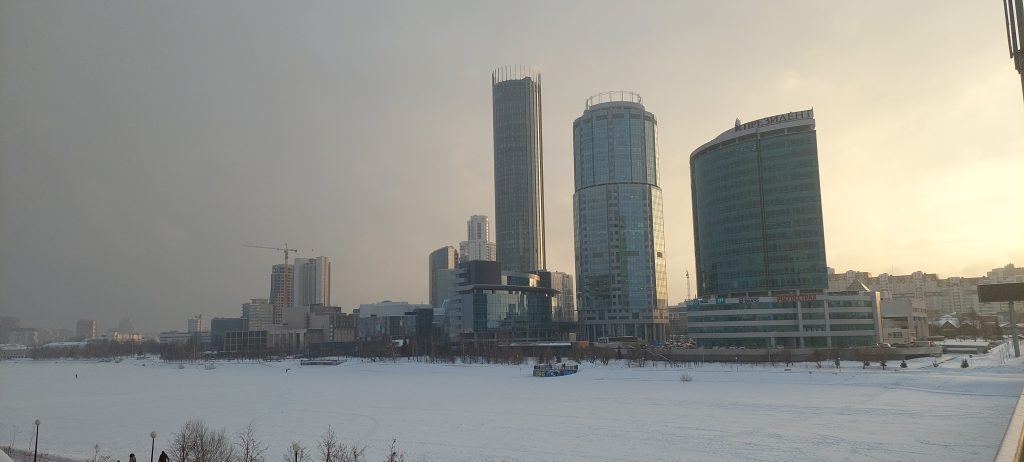
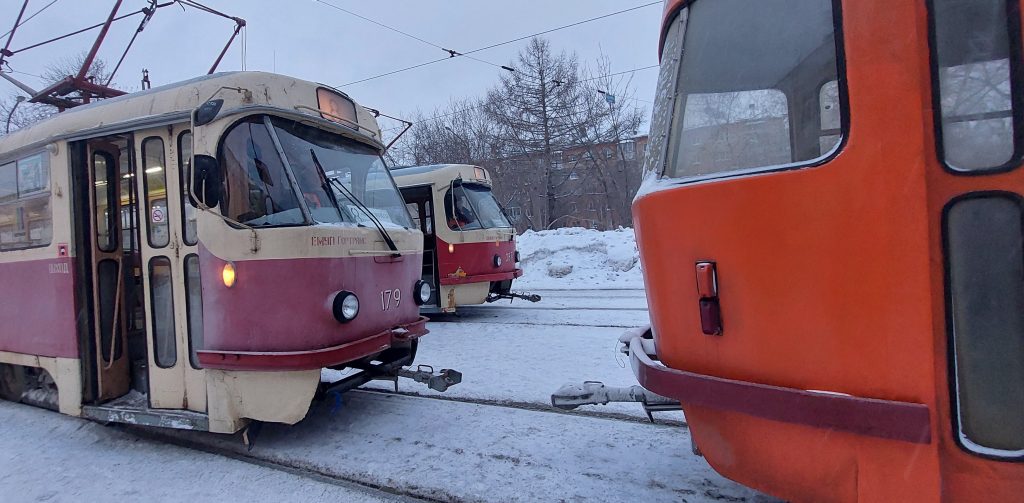
    Looking beyond the classic Golden Ring cities? Head east to Ekaterinburg, Russia‘s fourth-largest city and the historical “Gateway to Siberia.” Founded in 1723 as a strategic industrial hub on orders from Peter the Great, this city witnessed one of the 20th century’s defining moments: the execution of the last Russian Tsar, Nicholas II, and his family in 1918.

    During the Soviet era, Ekaterinburg, then known as Sverdlovsk, was transformed from a historic industrial city into a closed administrative and industrial powerhouse, known as “the industrial capital of the Urals”, crucial to the USSR‘s economy and security. Due to its concentration of strategic defense industries, the city was closed to foreigners for decades. It was also a key node on the Trans-Siberian Railway, cementing its status as a vital logistical hub connecting European Russia with Siberia.

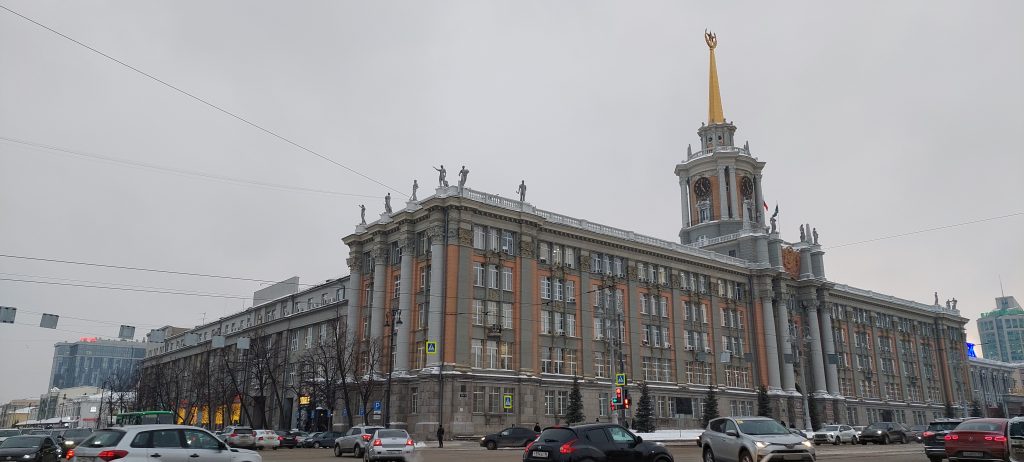
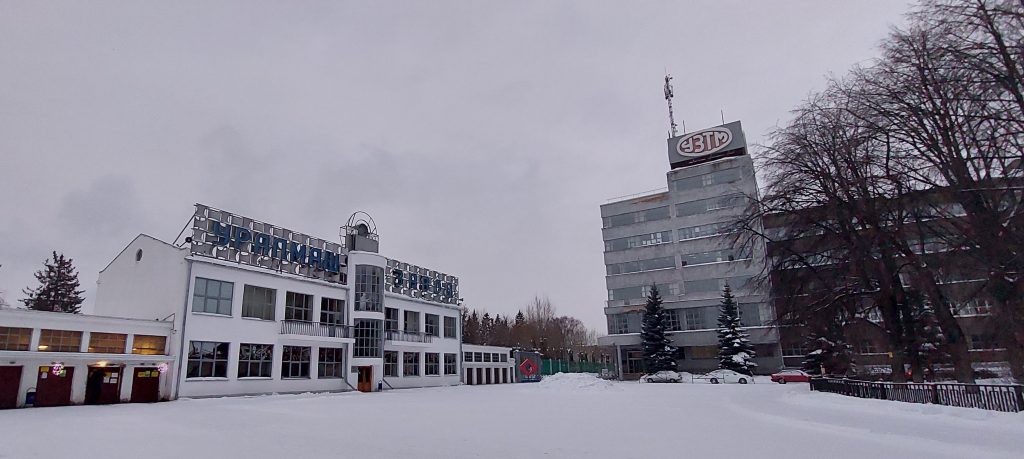
    Beyond industry, Sverdlovsk was a significant hub for science and culture with the presidium of the Ural Branch of the Russian Academy of Sciences and a renowned opera and ballet theater. The city is also noted for its Constructivist architecture from the 1920s and 1930s.

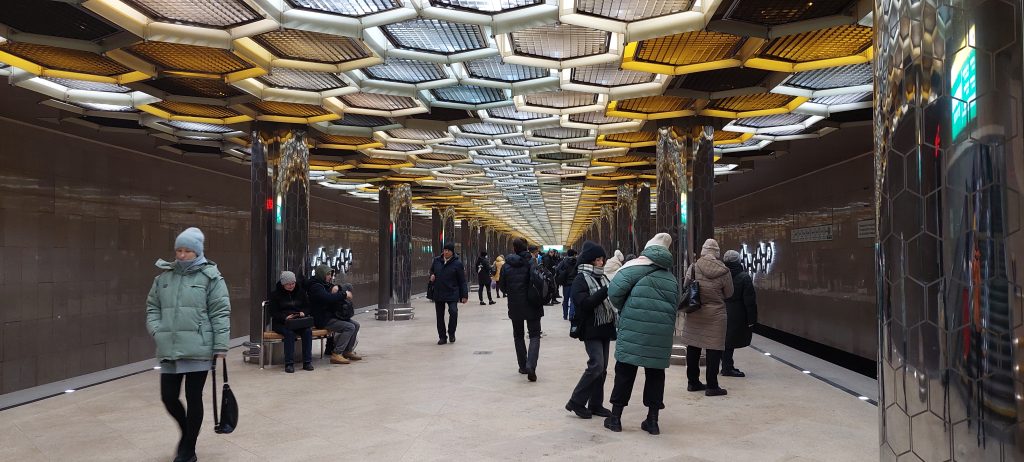
    A key symbol of its enduring importance is the Yekaterinburg Metro. Opened in April 1991, it was the thirteenth and final metro system inaugurated in the USSR. Its stations, like Geologicheskaya, decorated with Ural gemstones, were designed as “palaces for the people,” reflecting classic Soviet values even as the state neared its end.

    The Soviet legacy directly shaped the turbulent post-Soviet 1990s. The collapse of the command economy led to chaos, with infamous gang wars erupting among groups like the “Uralmash” gang for control over former state assets. In 1991, the city reverted to its historical name, Yekaterinburg.

    Today, Yekaterinburg is a vibrant metropolis where this layered past meets modern energy, all set against the backdrop of the Ural Mountains.

    🔑 Key Attractions:

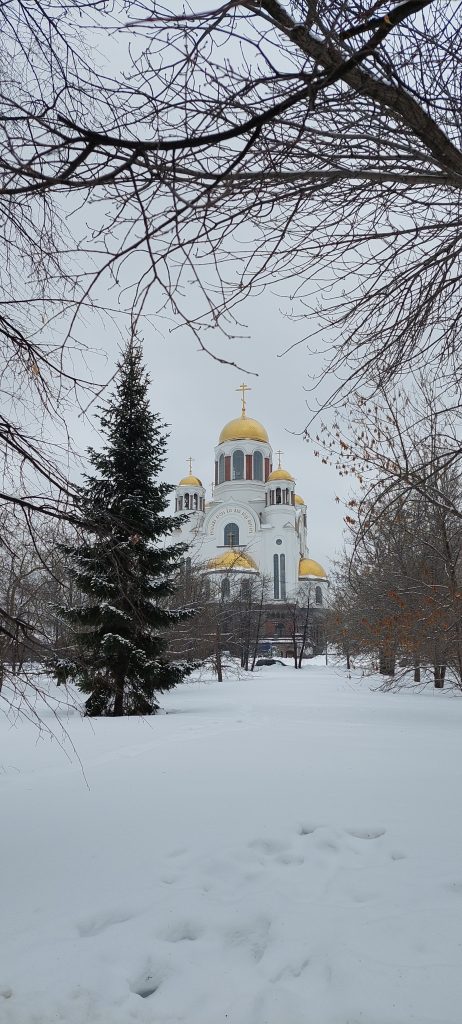
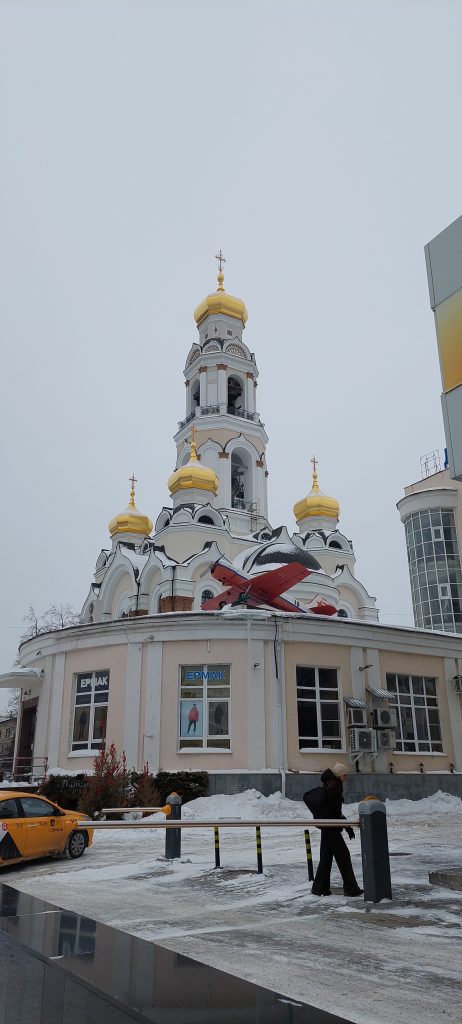
    • The Church on the Blood: Built on the exact site of the Romanov execution, this stunning modern church is a profound memorial to the tragic end of imperial Russia.
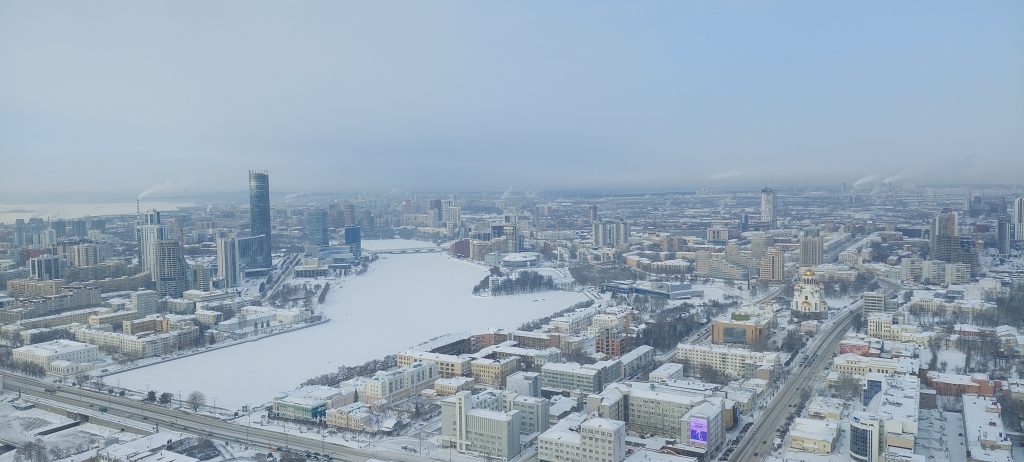
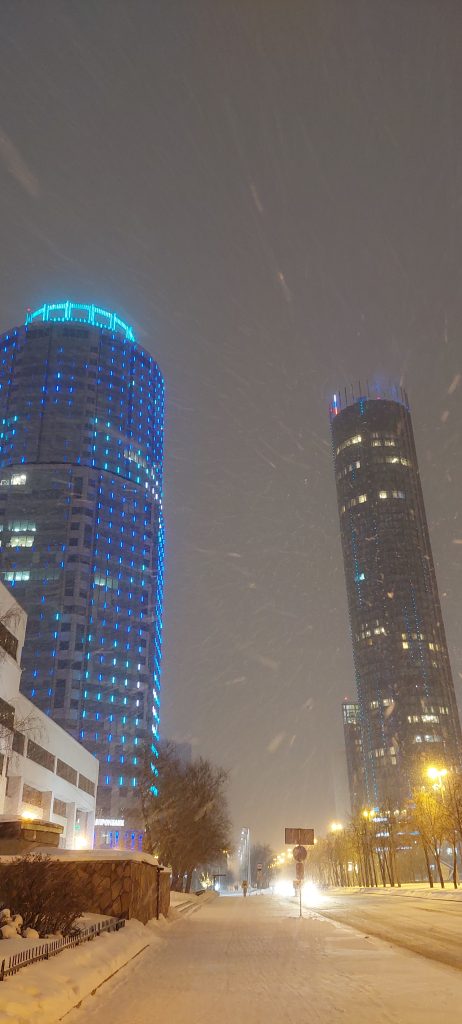
    • Vysotsky Skyscraper: For a complete contrast, ascend to the observation deck on the 52nd floor for breathtaking panoramic views of the sprawling city and the distant Urals.
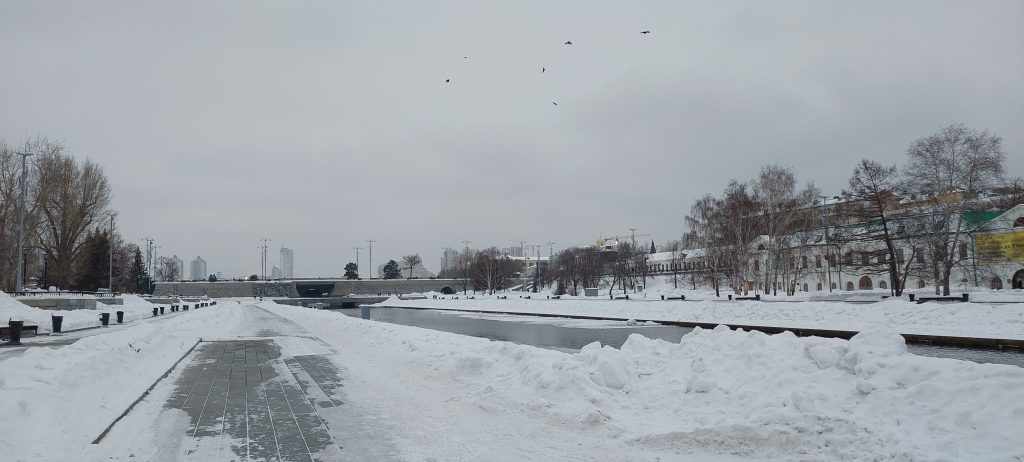
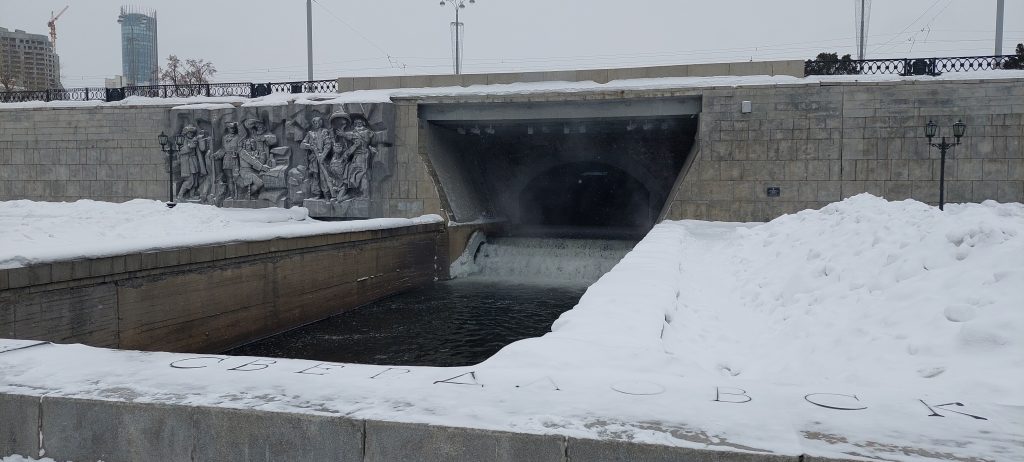
    • Plotinka (The Historic Dam): This is where the city began. The stone dam on the Iset River created the city pond and powered its first ironworks. It’s now the favorite promenade for locals.
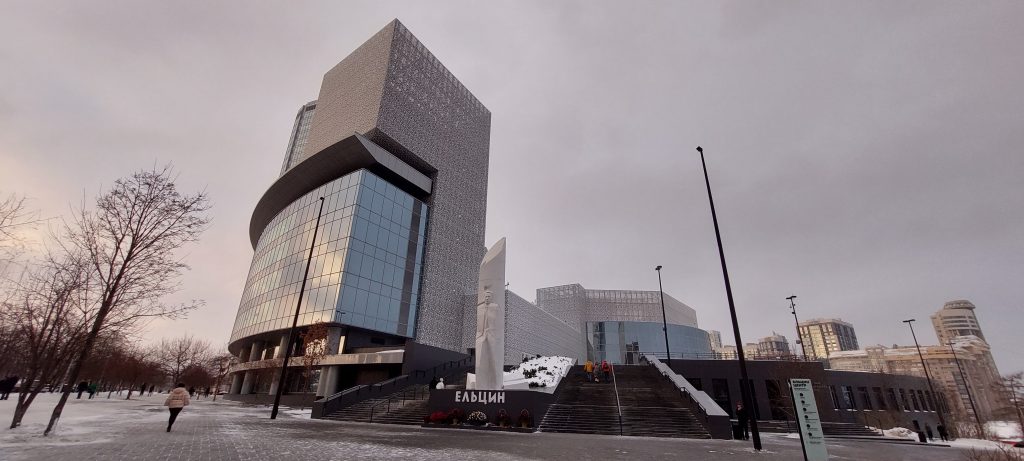
    • The Yeltsin Center: A modern museum dedicated to Boris Yeltsin, the first President of Russia who began his career here. It’s a fascinating, high-tech deep dive into the country’s recent history.
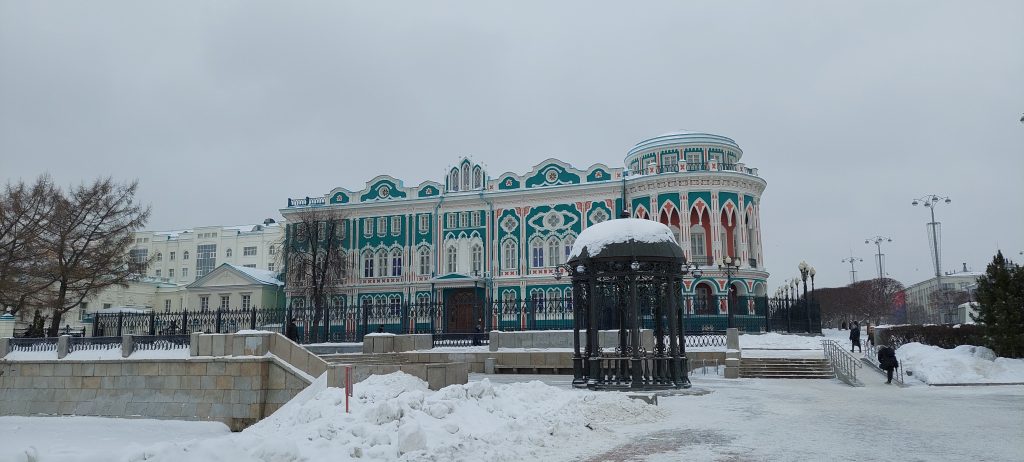
    • Sevastyanov House: Marvel at this ornate, Gothic-Revival mansion on the city pond—it’s arguably the most beautiful building in Yekaterinburg and a symbol of its 19th-century merchant wealth.

    ✈️ Travel Tip: Don’t miss the chance to take a short trip to the Europe-Asia Border Monument just outside the city and stand with a foot on each continent. The best time to visit is during the mild summers.

    Ready to explore the Ural capital?

  • Former USSR

    Looking for an adventure that spans continents, centuries, and countless cultures? Forget a single destination—explore a whole world within the lands of the former Soviet Union. From the Silk Road cities of Central Asia to the ancient capitals of Europe, here’s your guide to 15 unique republics.

    🇷🇺 Russia: The Colossal Heartland
    As the largest successor state, Russia itself contains multitudes.

    • Moscow is the political and historical core, home to the Kremlin, Red Square, and the Museum of Cosmonauts.
    • St. Petersburg is Russia’s “Window to the West,” famed for the Hermitage Museum and the Church of the Savior on Spilled Blood.
    • For a deeper dive into medieval history, visit the ancient cities of the “Golden Ring,” like Vladimir and Suzdal.

    🏛️ Eastern Europe & The Baltics: From Medieval Towns to Soviet Relics
    This area offers a journey through layers of European and 20th-century history.

    • Belarus holds well-preserved historical gems like the Mir Castle Complex and the Architectural Complex of the Radziwill Family at Nesvizh, both UNESCO sites.
    • 🇪🇪 Estonia seamlessly blends medieval charm with cutting-edge digital innovation. Its crown jewel is Tallinn’s fairy-tale Old Town, a UNESCO site with cobbled streets and city walls. The culture is deeply rooted in song and sauna. As the world’s first digital society, you can hail a robot delivery in Tartu after hiking in vast, silent forests.
    • 🇱🇻 Latvia offers a vibrant mix of urban energy and serene nature. The capital, Riga, is famed for having the world’s finest collection of Art Nouveau architecture. Latvian culture is profoundly connected to folk songs and nature, celebrated in massive, UNESCO-recognized Song and Dance Festivals. Beyond the cities, explore the charming town of Kuldīga, home to Europe’s widest waterfall, or the windswept beaches and unique Soviet-era Karosta district in Liepāja.
    • Lithuania features the thought-provoking Grutas Park (often called “Stalin World”), a unique sculpture garden of Soviet monuments.

    ⛰️ The Caucasus: Where Europe Meets Asia
    A compact region of dramatic mountains, deep history, and warm hospitality.

    • Georgia is a paradise for food and wine lovers, with beautiful landscapes dotted with ancient churches and watchtowers.
    • Azerbaijan is the “Land of Fire.” Explore the Walled City of Baku with its Maiden Tower and Shirvanshahs’ Palace, and the beautiful merchant city of Sheki.
    • Armenia, one of the world’s oldest Christian nations, is home to the rock-carved Geghard Monastery and the Garni Temple. The capital, Yerevan, features the moving Armenian Genocide Museum.

    🏜️ Central Asia: The Heart of the Silk Road
    This region is defined by ancient trade routes and stunning architecture.

    • Uzbekistan is the soul of the Silk Road. Don’t miss the majestic Registan Square in Samarkand, the medieval centre of Bukhara, and the walled city of Khiva.
    • Kazakhstan blends modern cities with ancient history. Visit the 14th-century Khoja Ahmed Yasawi Mausoleum in Turkistan and see the mysterious Akyrtas palace complex, a key Silk Road site.
    • Kyrgyzstan offers breathtaking nature and history. The Sulaiman-Too Sacred Mountain in Osh has been a pilgrimage site for millennia.
    • 🇹🇯 Tajikistan is dominated by the breathtaking Pamir Mountains. The capital, Dushanbe, surprises with its leafy boulevards and houses the immense 6th-century “Sleeping Buddha” statue in its Museum of Antiquities. History whispers from ancient sites like the 2,500-year-old Hissar Fortress and the UNESCO-listed ruins of Sarazm, one of Central Asia’s oldest settlements.
    • 🇹🇲 Turkmenistan is a living museum of Silk Road empires. Its desert landscape guards legendary cities: the 4,500-year-old oasis of Merv, once the “Queen of the World”; Konye Urgench, a medieval capital of Islamic science with its beautiful mausoleums; and Old Nisa, the fortress-city of the powerful Parthian Empire. This fascinating history contrasts with the modern, marble-clad capital, Ashgabat.

    Every republic has its charm: Turkmenistan’s marble capital Ashgabat, Tajikistan’s pristine mountain lakes, Moldova’s famous vineyards, and the charming Baltic capitals.

    Ready to plan your epic trip across one of the world’s most fascinating regions?

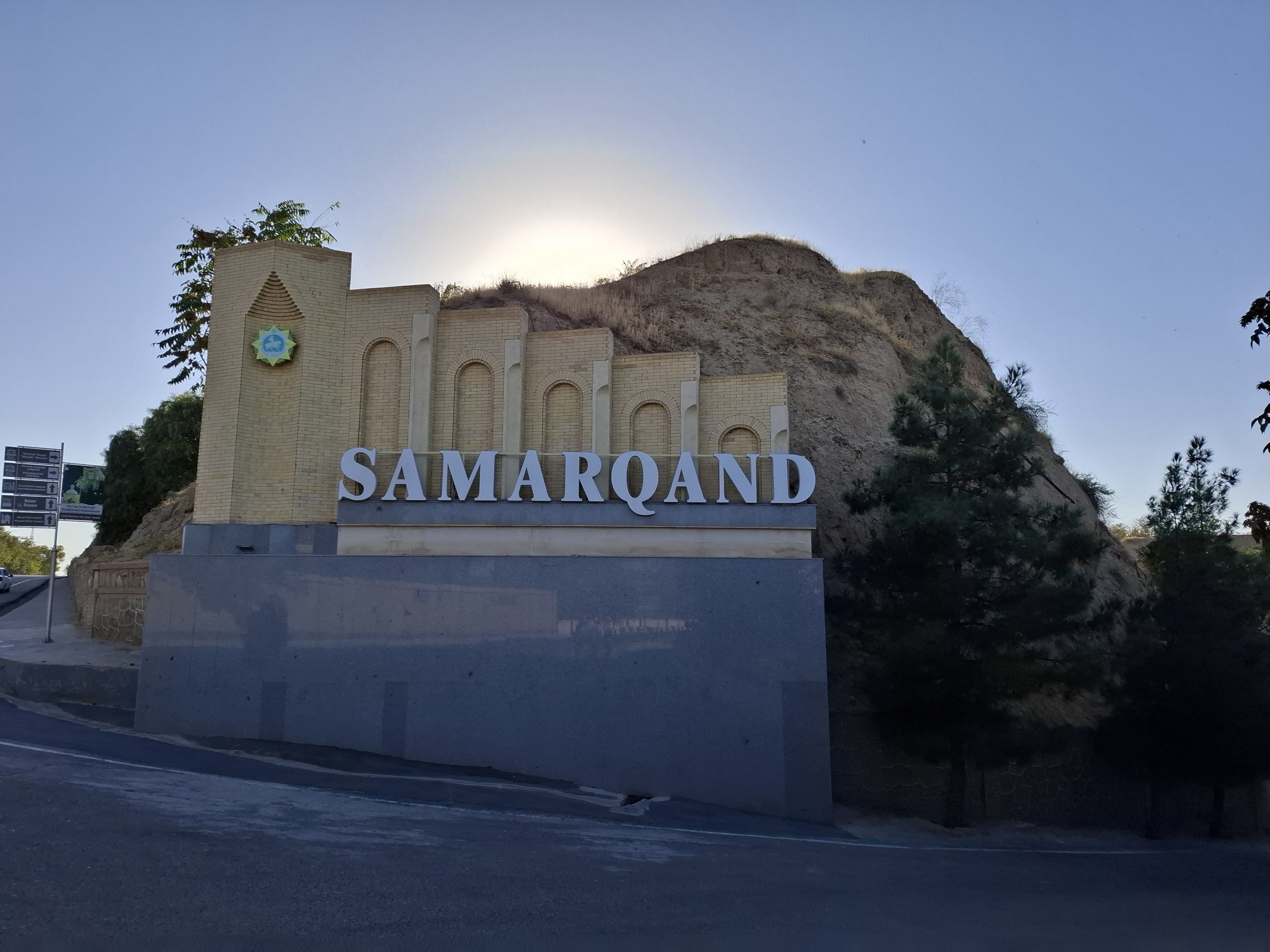
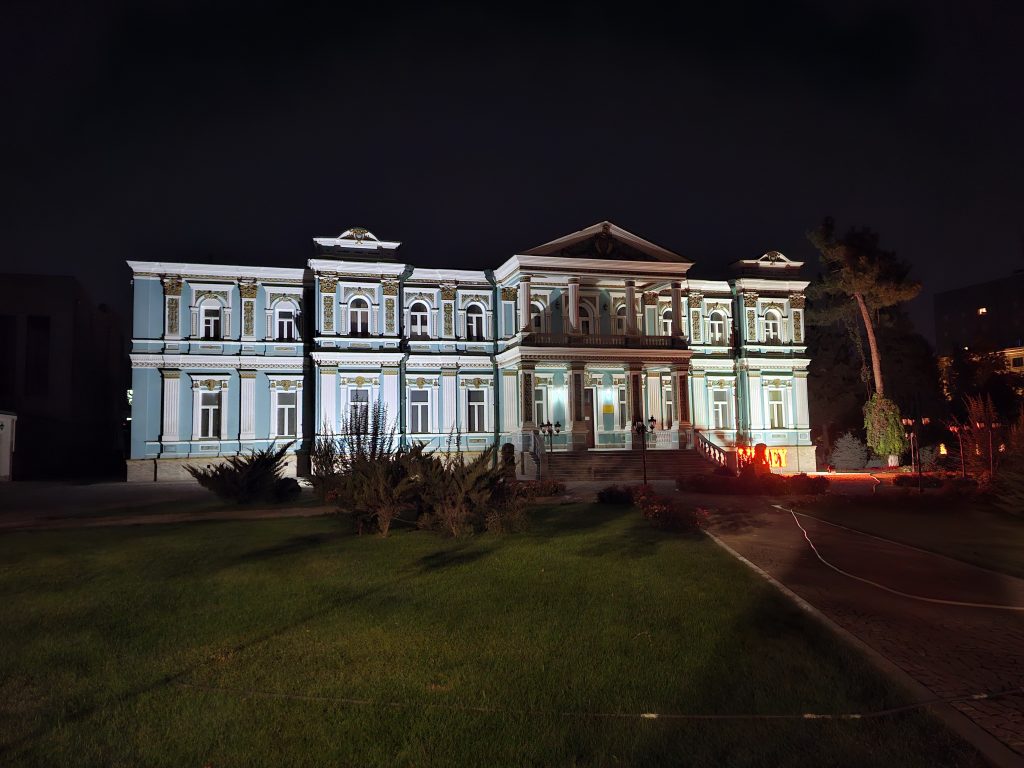
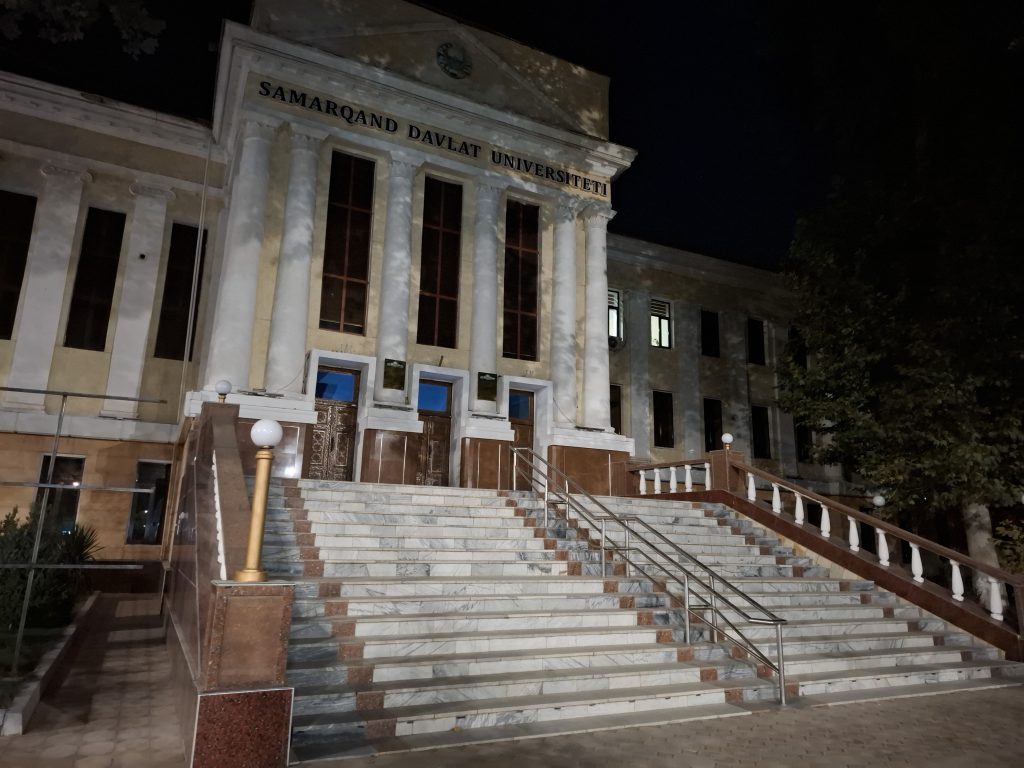
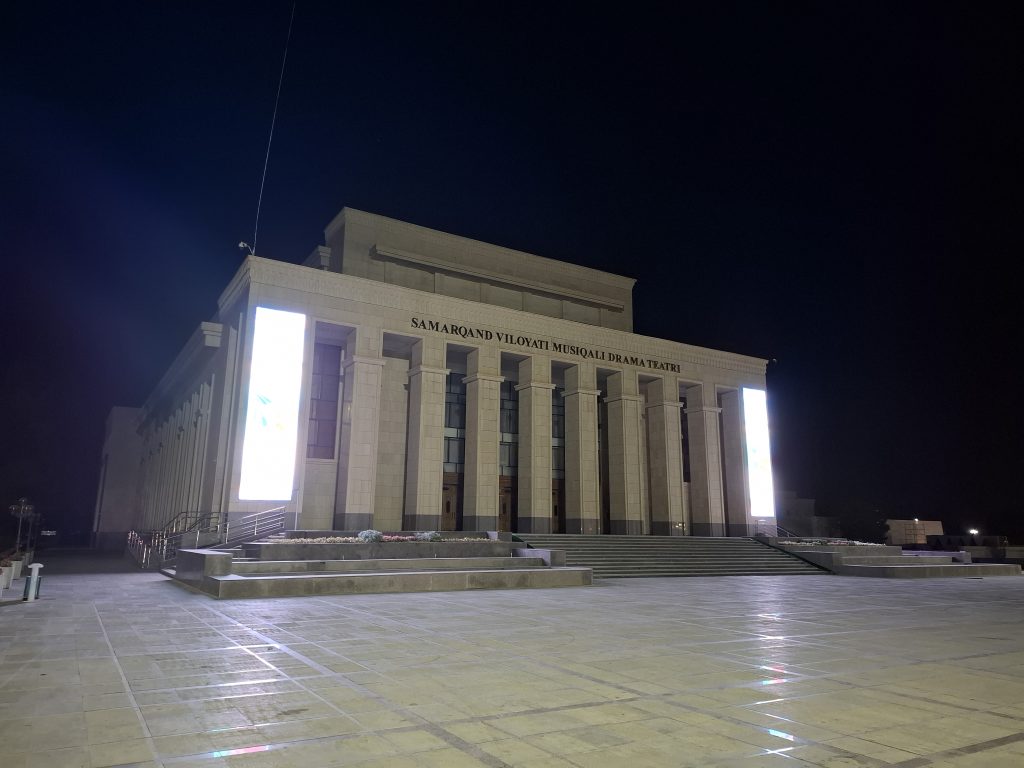
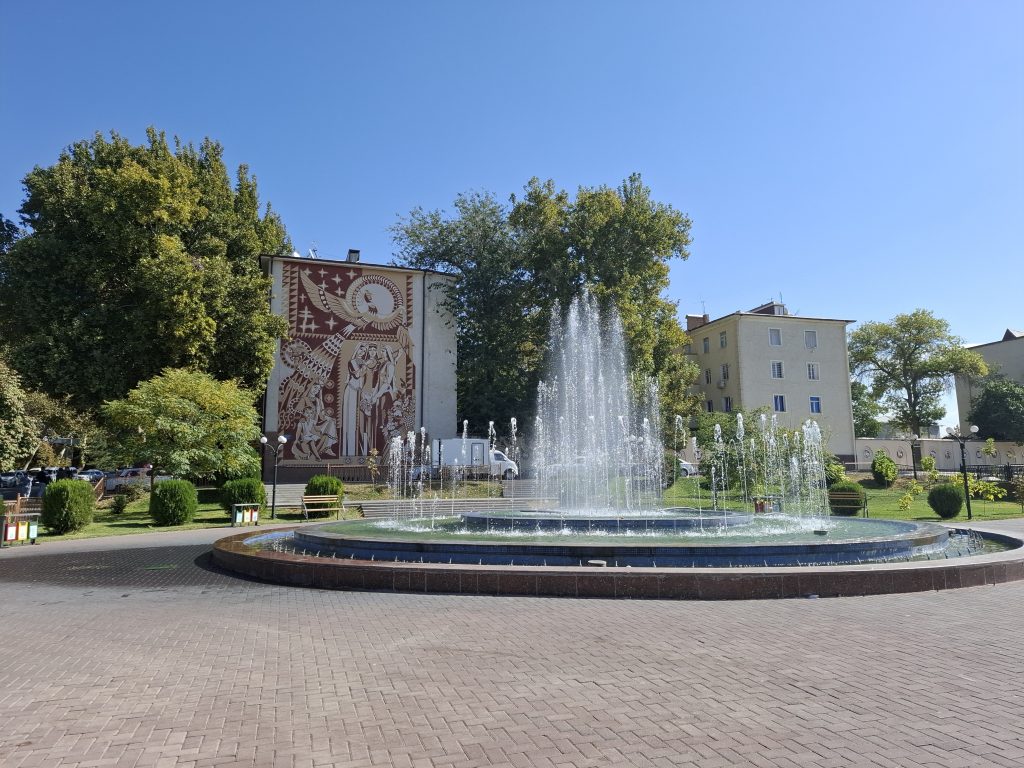
  • Samarkand as a modern city

    Samarkand as a modern city

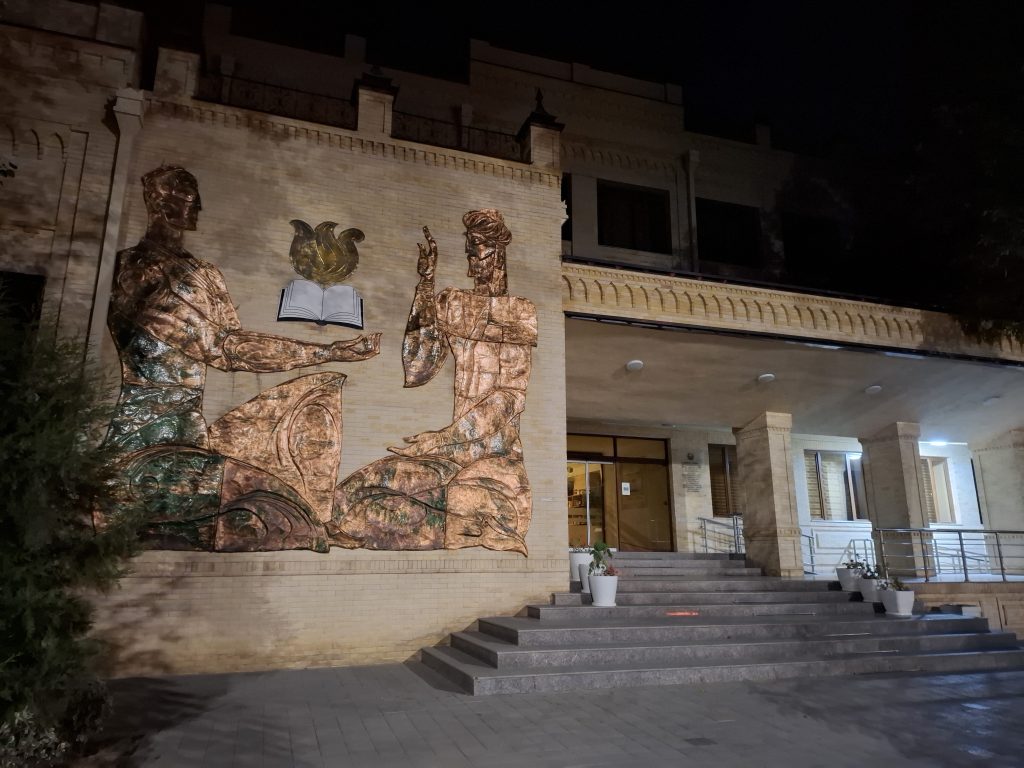
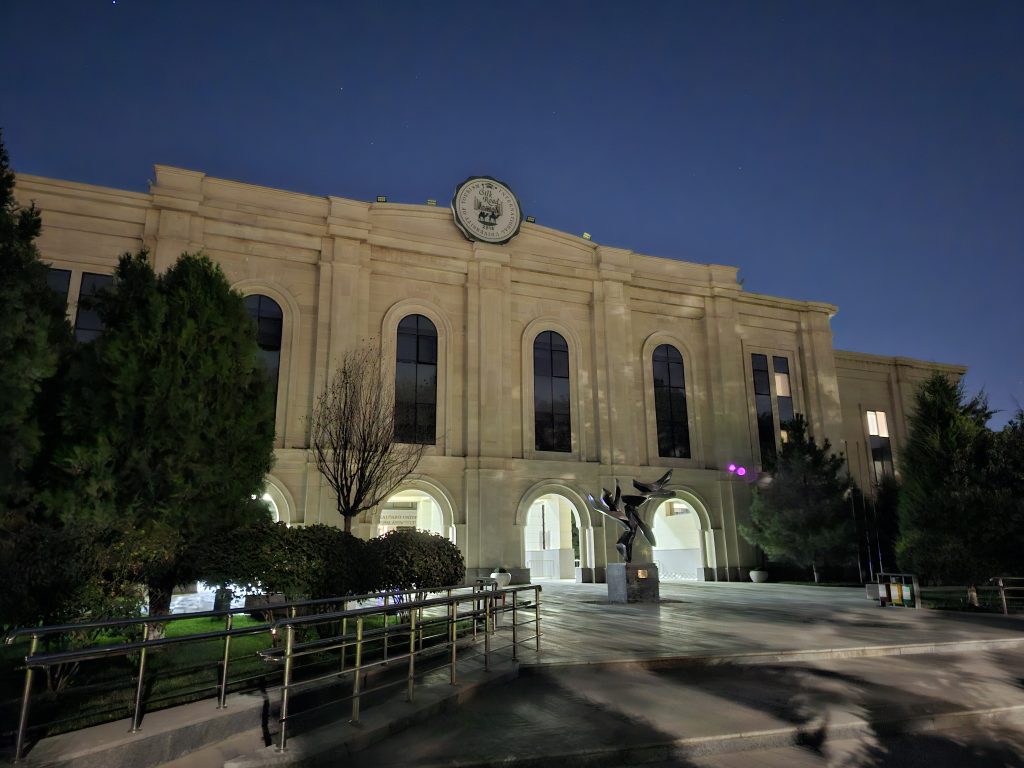
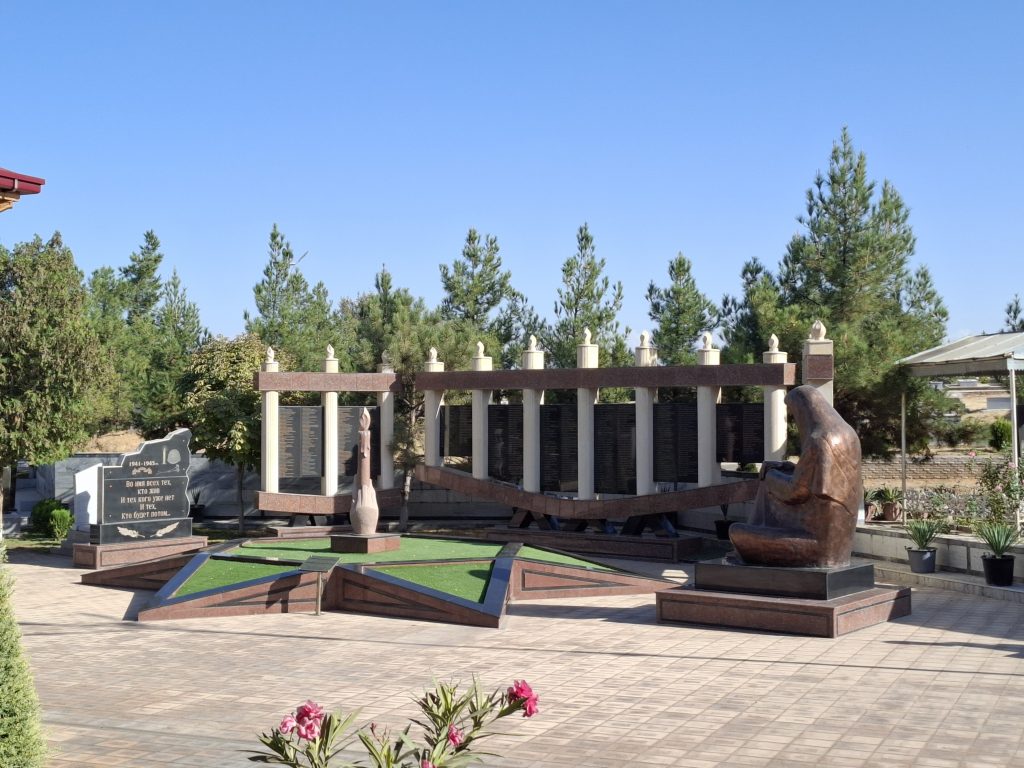
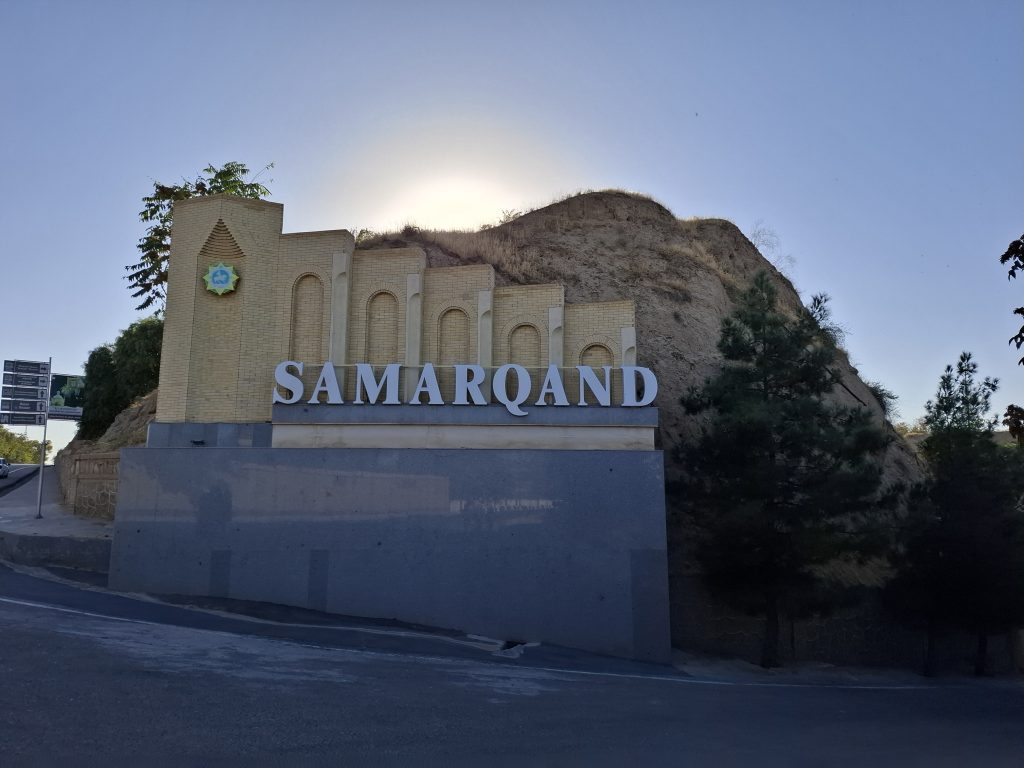
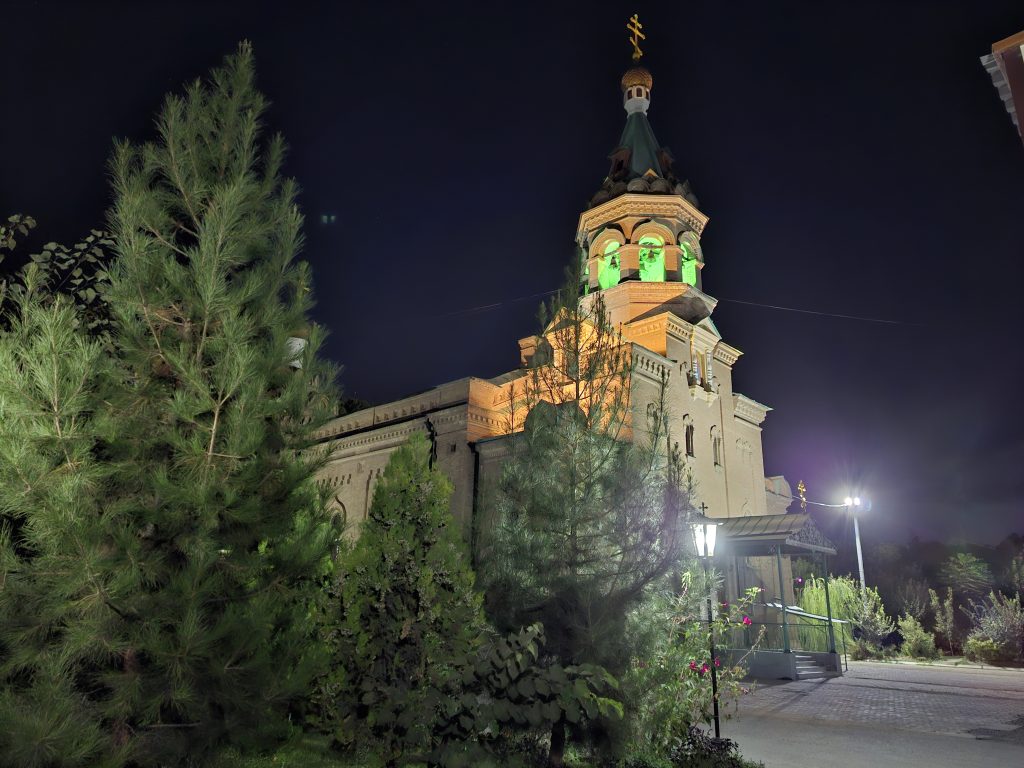
    Samarkand in the Uzbek SSR, was a place where imperial history, scientific modernization, and a new national narrative collided. For 70 years, the USSR transformed this Silk Road jewel.

    🏙️ A City Remodeled
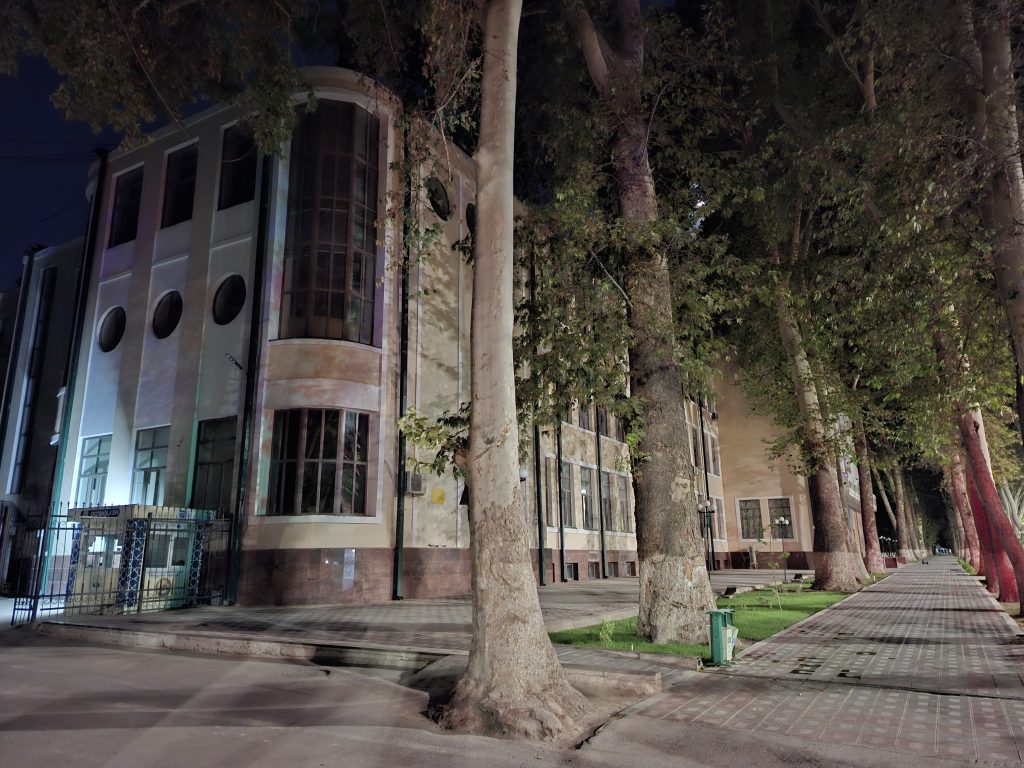
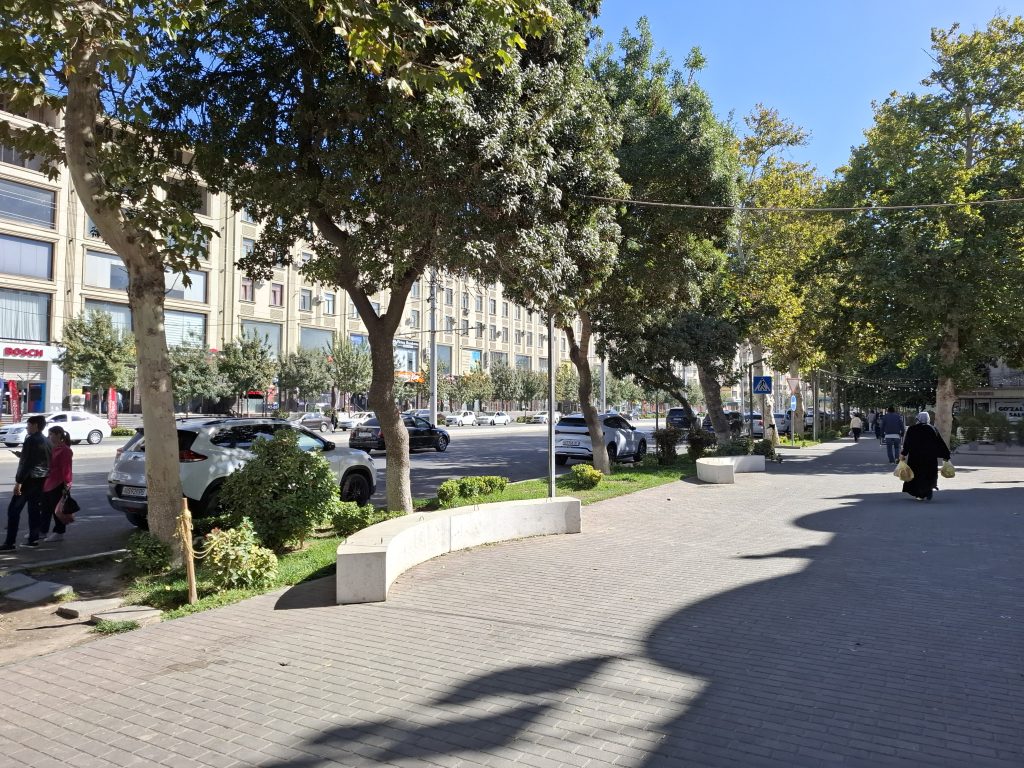
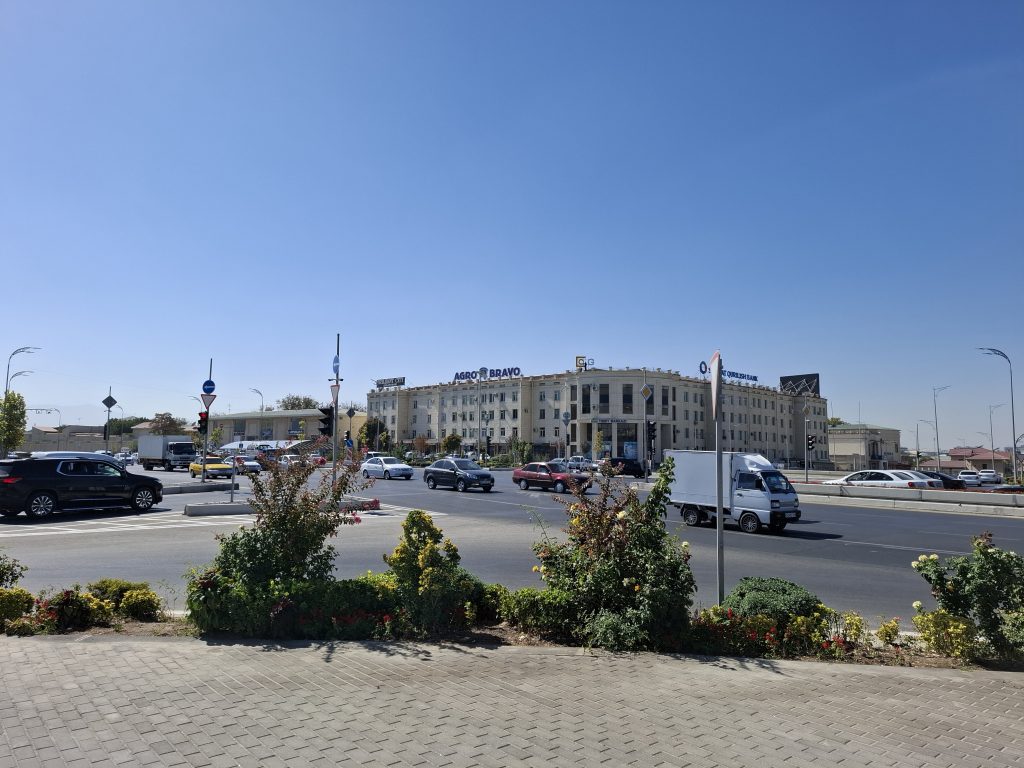
    The Soviets introduced a new urban grid with wide boulevards and apartment blocks, reshaping the traditional neighborhood structure. This period was one of significant “modernisation,” which altered the city’s social fabric and demographics.

    🎭 What to See: Layers of History
    Visiting today, you walk through these historical layers. Key sites and legacies from this era include:

    • Soviet-Era Restoration: The iconic monuments you see today, including the Registan Square madrasas and the Gur Emir mausoleum, owe much to extensive Soviet restoration projects that began in the 1920s.
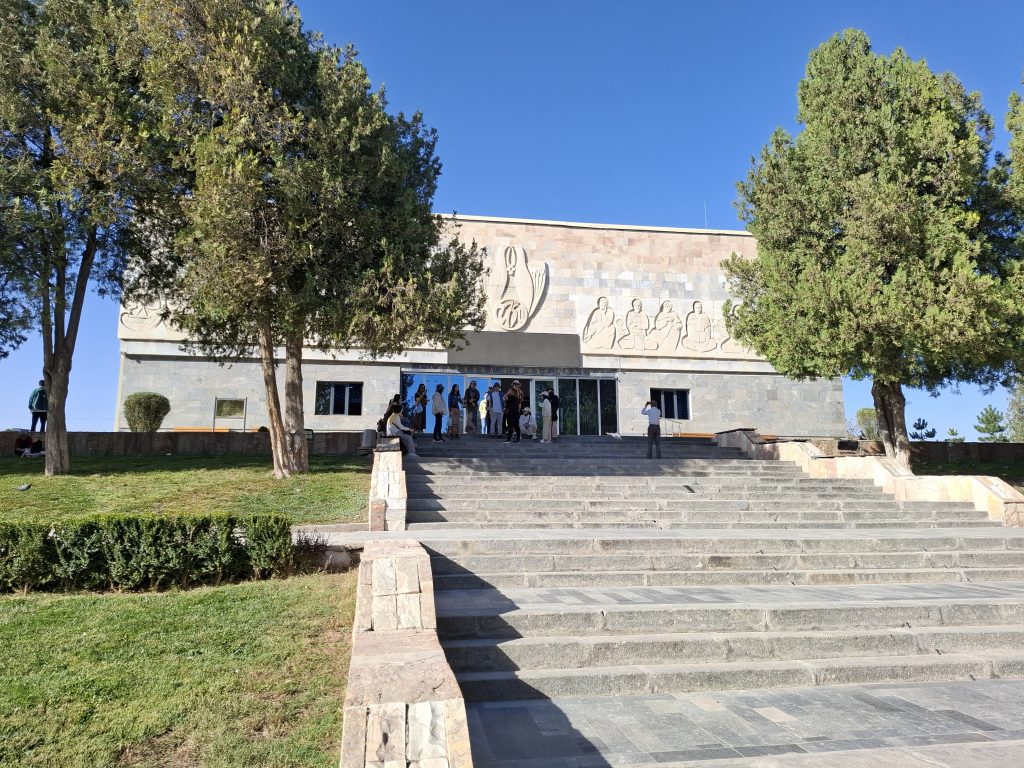
    • The Scientific Legacy: The Ulugh Beg Observatory, a 15th-century site of groundbreaking astronomy, was excavated and studied by Soviet archaeologists.
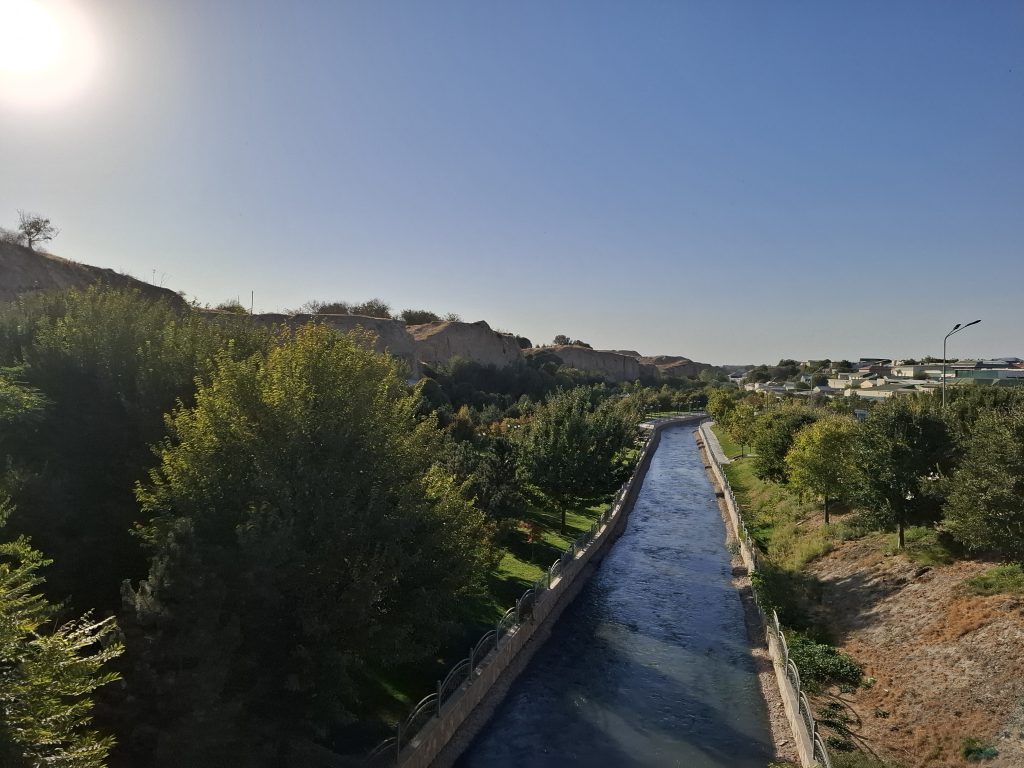
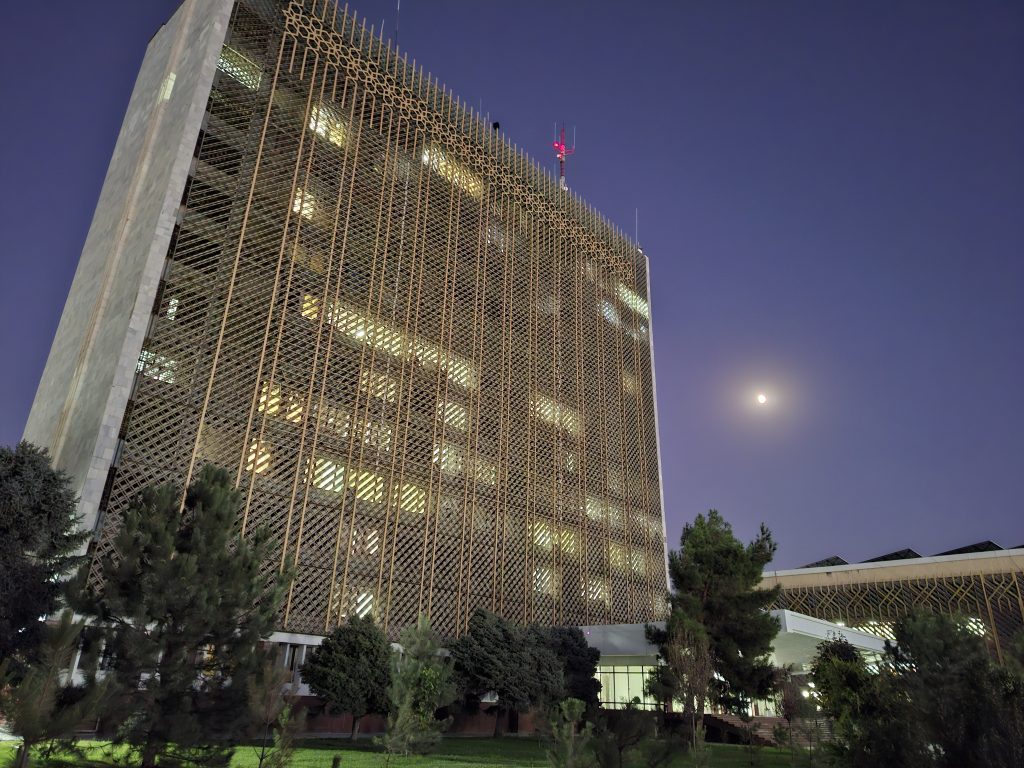
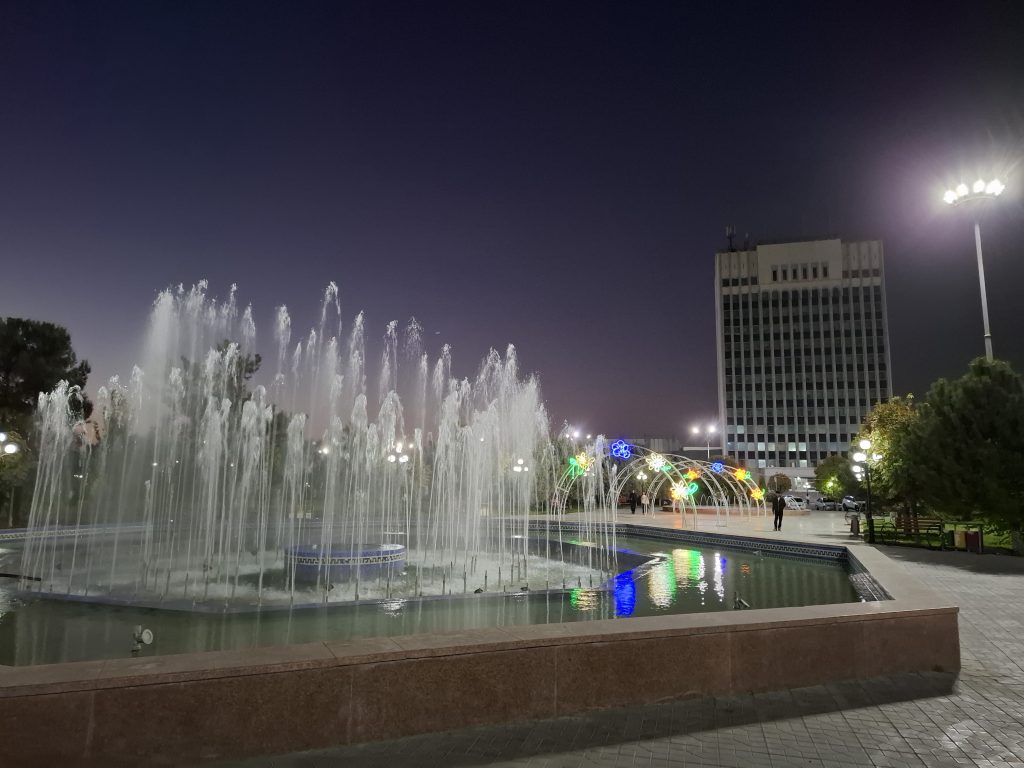
    • Urban Layout: The contrast between the old city and the orderly, planned districts built during the Soviet era is itself a key attraction, telling a story of 20th-century urban design.

    🌟 Travel Insight
    Samarkand in the Soviet years was a project to restore a glorious past, to build a modern city, and to redefine a Central Asian identity within a communist framework. To understand modern Uzbekistan, understanding this chapter is essential.