📜 Dr. Sun Yat-Sen (1866–1925)
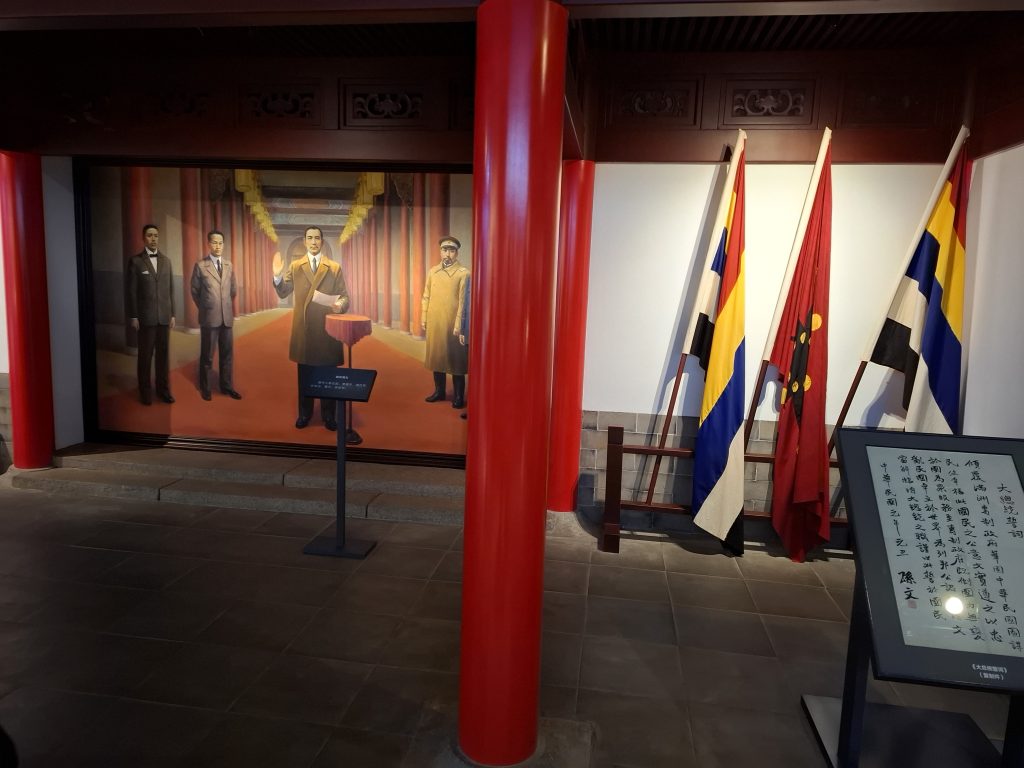
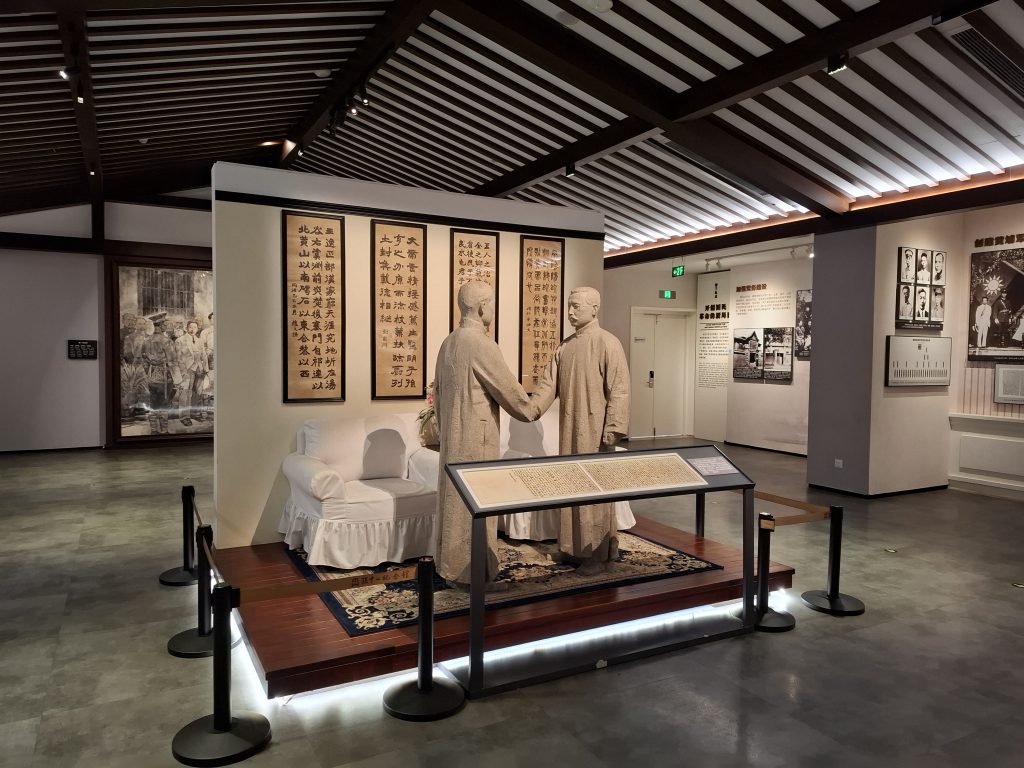
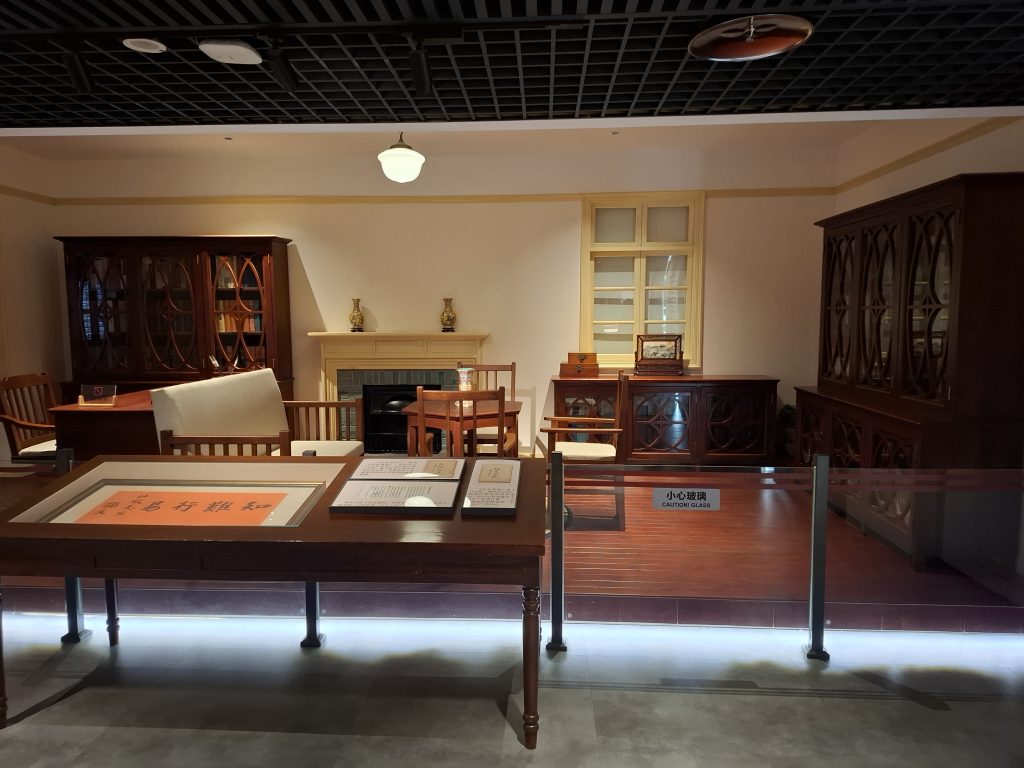
The Father of Modern China Dr. Sun Yat-Sen was a revolutionary leader, physician, and political philosopher who played a pivotal role in overthrowing the Qing Dynasty, ending over 2,000 years of imperial dynasties. He served as the first provisional president of the Republic of China (1912) and founded the Kuomintang (Nationalist Party). His Three Principles of the People (Nationalism, Democracy, Livelihood) became the guiding ideology for China’s modernization. Though his vision was fractured by warlords and conflict, he remains a unifying figure revered across the strait.
⛰ The Mausoleum
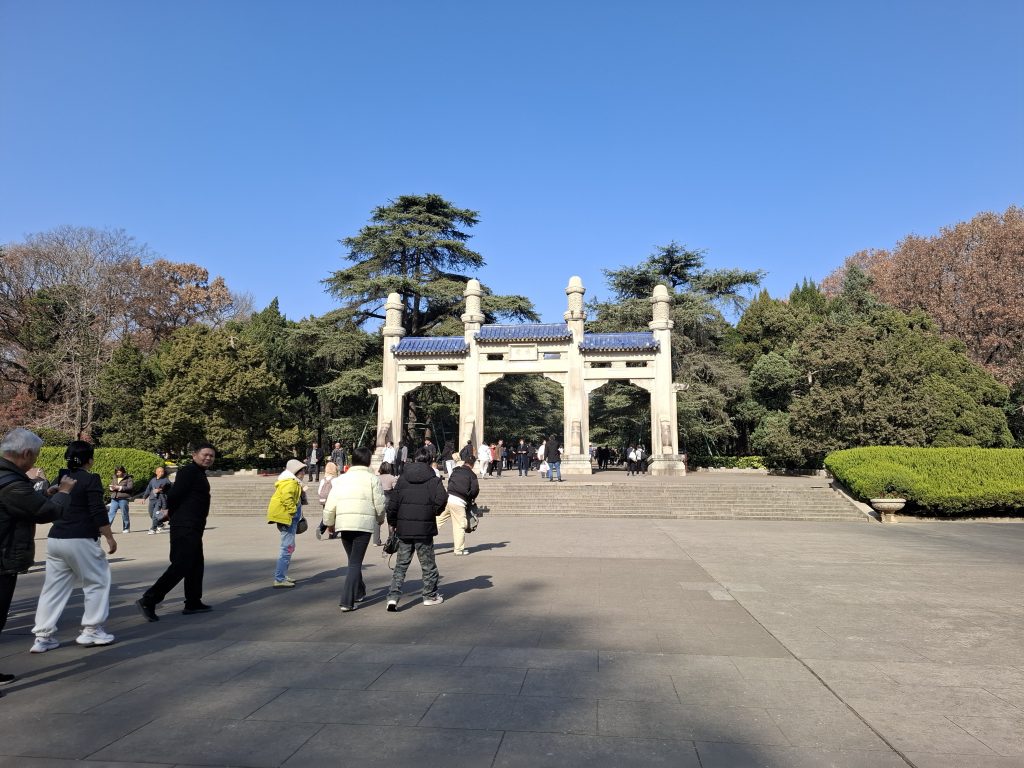
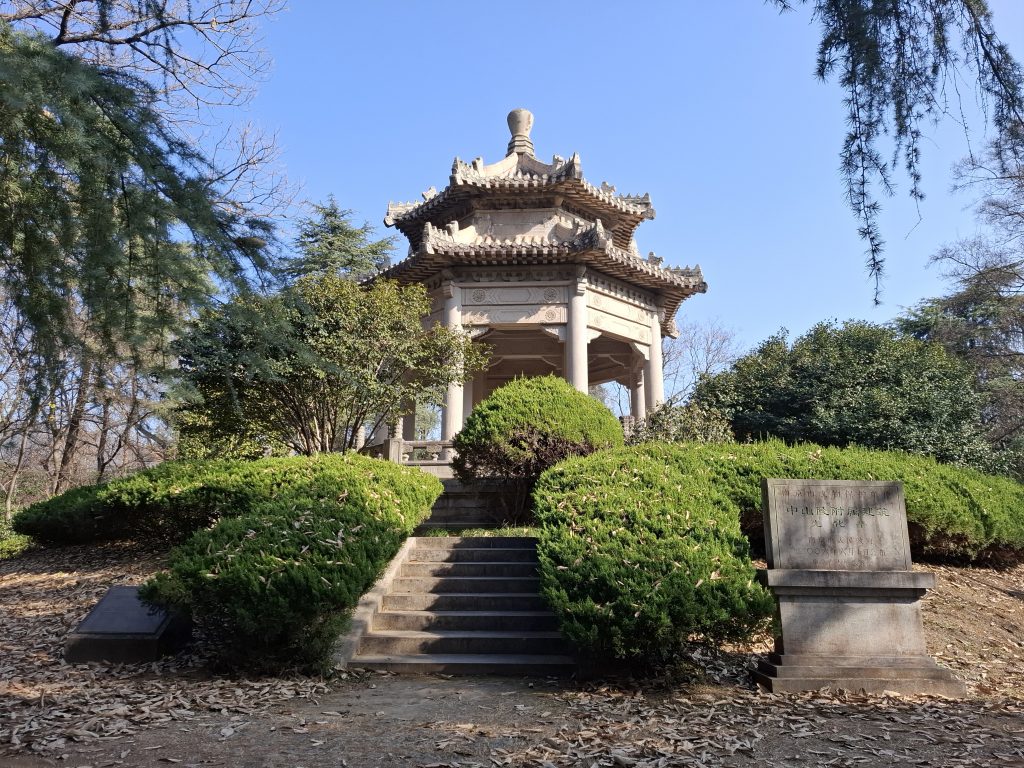
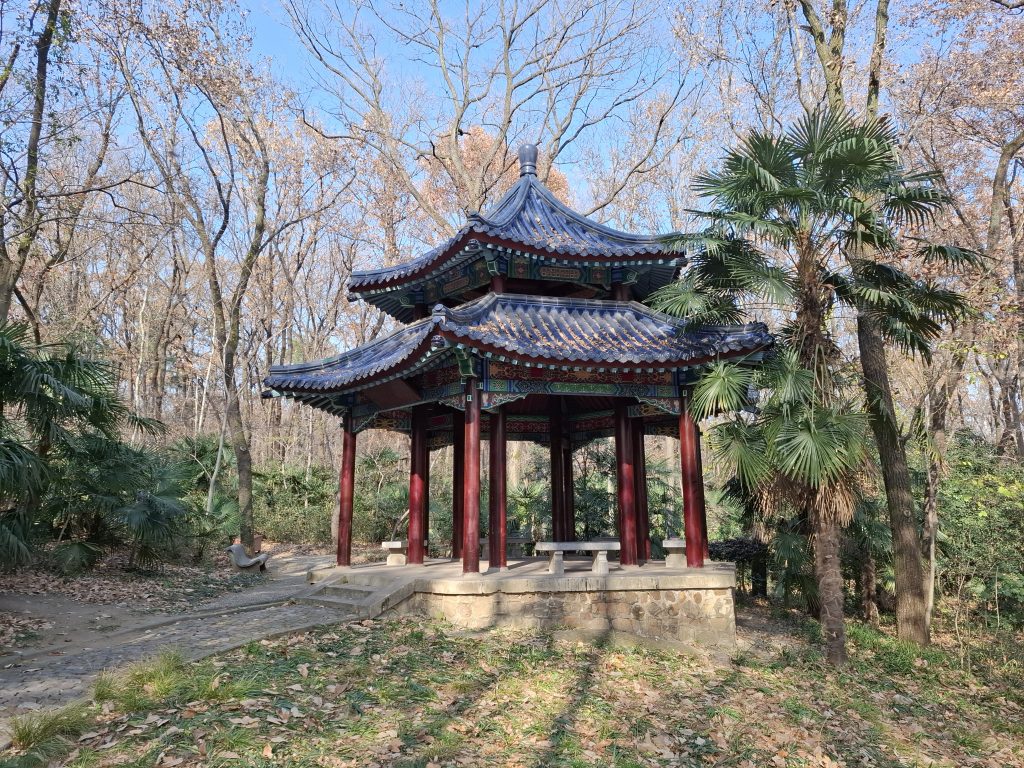
- Location: Nanjing’s Zhongshan Mountain (also called Purple Mountain), a vast 31-square-kilometer national park and a premier cultural destination, celebrated for its dense concentration of over 200 historical sites spanning 1,700 years. Its core attractions include two monumental mausoleums, ancient Linggu Tempe, Purple Mountain Observatory, picturesque Meiling Palace, and Plum Blossom Hill, which that hosts a famous international festival each spring .
- Built: 1926–1929.
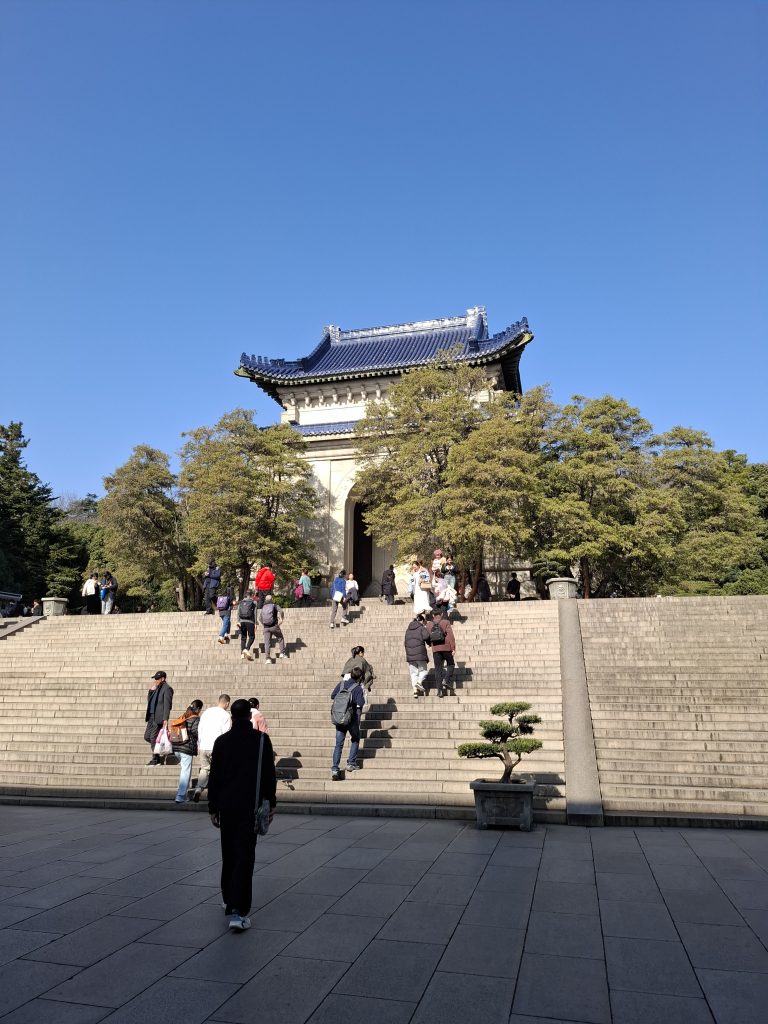
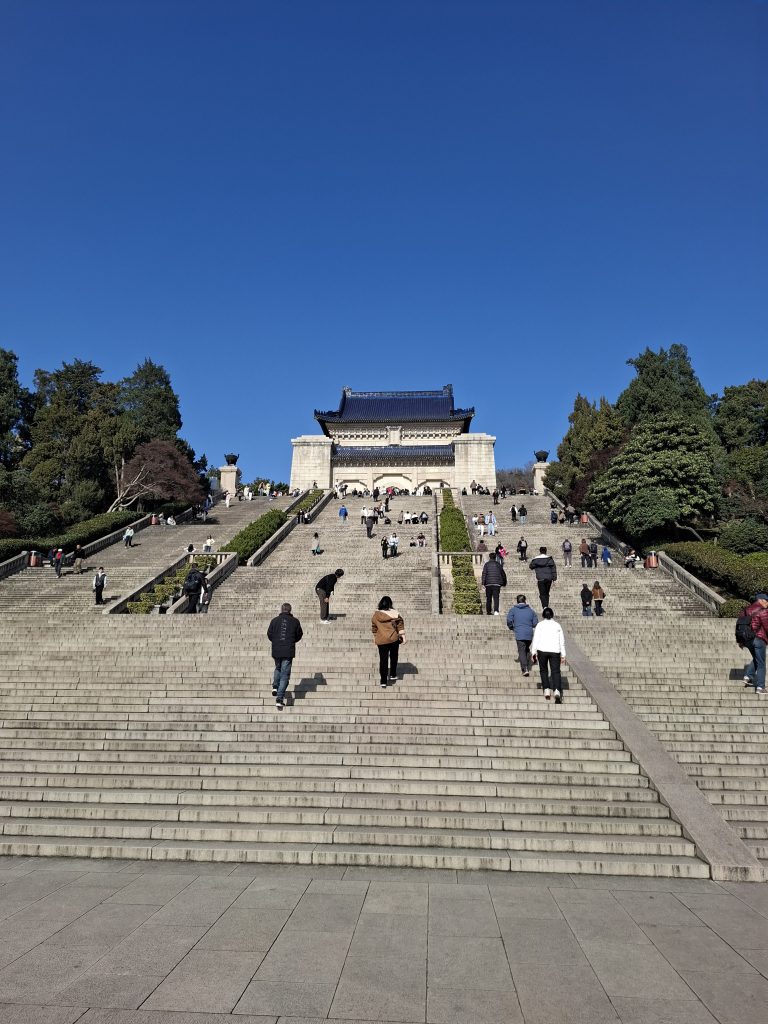
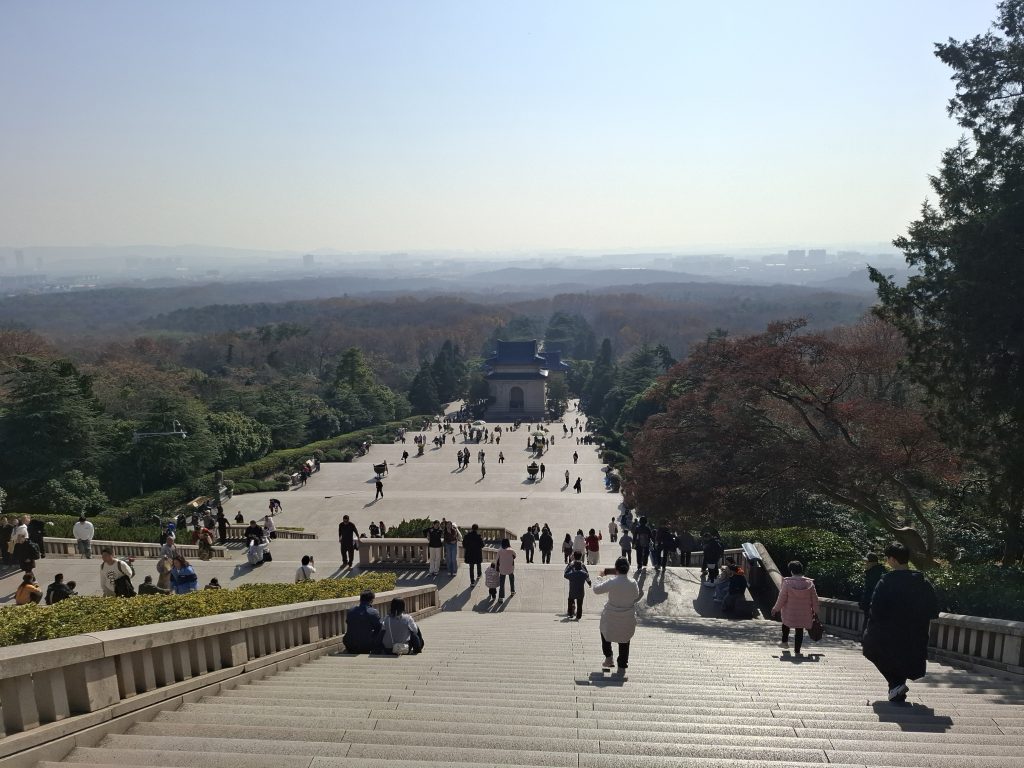
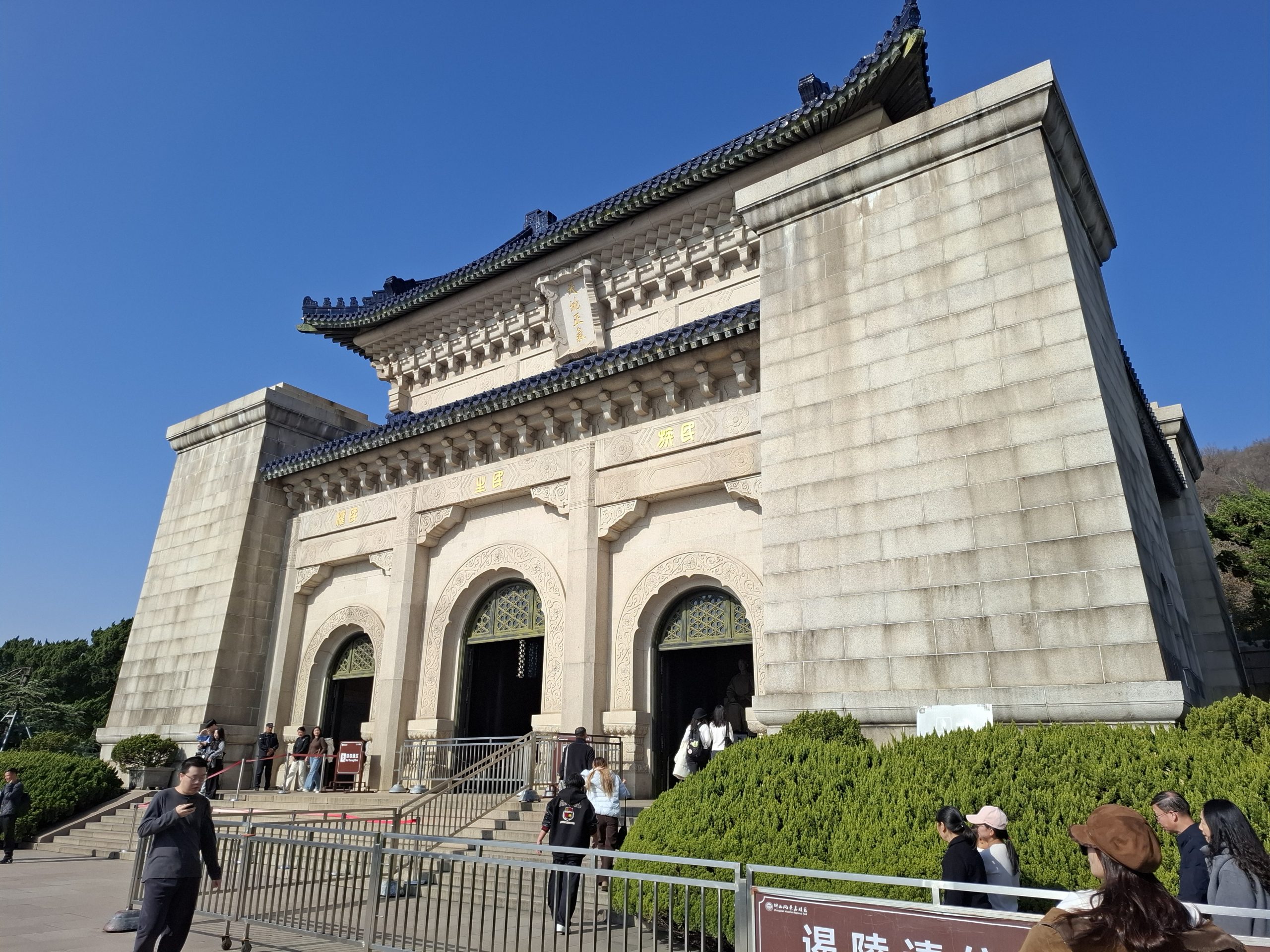
- Layout: A monumental complex along a central axis, symbolizing awakening and Sun’s call to the nation.
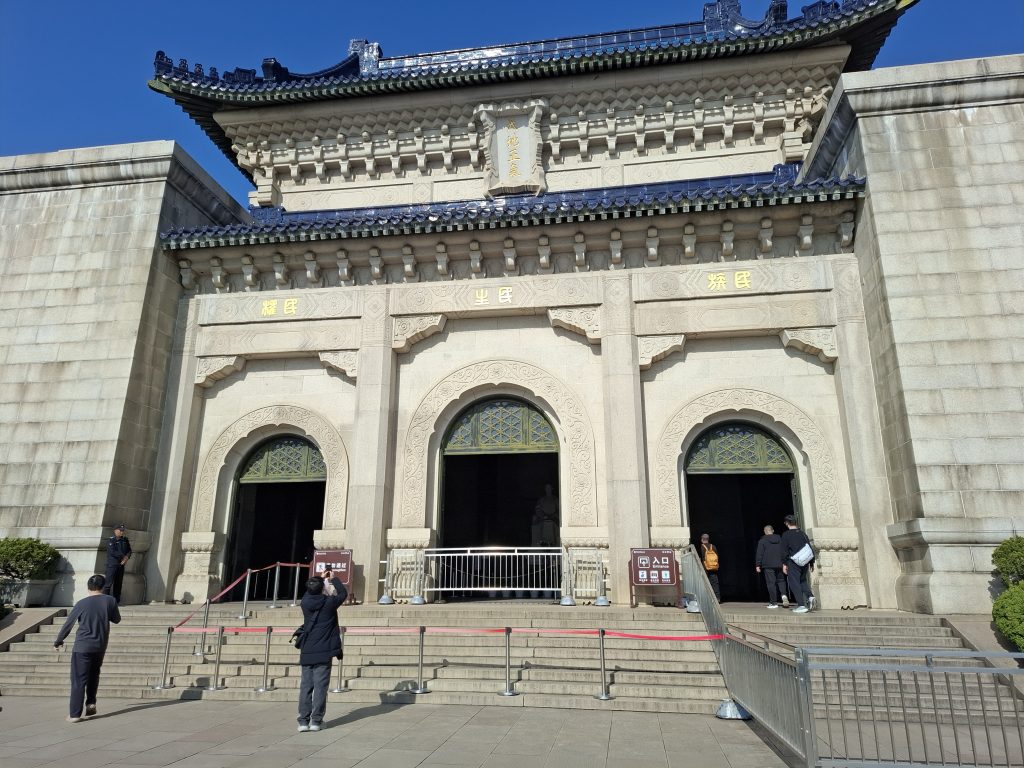
- Size: Covers 80,000 sqm. The 392-step staircase leads to the majestic vault, where Sun’s sarcophagus lies.
- Significance: A masterpiece of modern Chinese architecture blending traditional forms with western architecture and democratic symbolism. It represents Sun’s enduring legacy and Nanjing’s historical role as the republic’s capital.
The mausoleum is a symbol of China’s transition from empire to republic. It’s a site of national memory, where both official commemorations and quiet public reflection take place. For many, it embodies the unfinished quest for unity, strength, and people’s welfare that Sun championed.